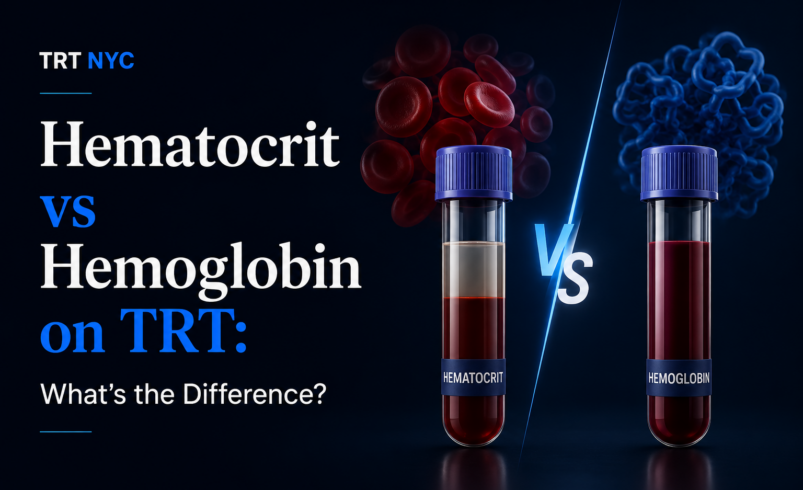
Hematocrit vs Hemoglobin on TRT: What’s the Difference?
 By TRT NYC Editorial Team
TL;DR — Key Takeaways
- Hemoglobin, the oxygen-carrying protein in red blood cells (measured in g/dL).
- Hematocrit, the percentage of your blood made of red blood cells.
- Both rise on TRT because testosterone boosts red blood cell production.
- Hematocrit is the primary metric doctors watch — ~52–54% is where they act.
- Both are managed the same way like hydration, dose changes, and blood donation.
Hemoglobin is the oxygen-carrying protein inside red blood cells (measured in g/dL), while hematocrit is the percentage of your blood made up of red blood cells. Both rise on TRT because testosterone boosts red blood cell production, and both are monitored but hematocrit is the primary metric, with about 52–54% the level where doctors usually act.
If your TRT bloodwork lists both “hemoglobin” and “hematocrit” climbing, it’s easy to confuse them. Here’s the simple difference and which one actually matters on testosterone. (For causes, risks, and how to lower it, see high hematocrit on TRT, for the full overview, our complete TRT guide.)
Hematocrit vs Hemoglobin: Quick Comparison
| Dimension | Hemoglobin | Hematocrit |
|---|---|---|
| What it is | Oxygen-carrying protein in red cells | % of blood that is red cells |
| Units | g/dL | % |
| High threshold (men) | Above ~18 g/dL flags | Above ~52–54% = act |
| Primary TRT metric? | Secondary | Yes (primary) |
| Why it rises on TRT | More red cell production | Same |
What Is Hemoglobin?
Hemoglobin is the iron-rich protein inside red blood cells that carries oxygen around your body. It’s measured in grams per deciliter (g/dL). When TRT increases red blood cell production, hemoglobin rises too, and a level above roughly 18 g/dL in men can flag erythrocytosis (too many red cells).
What Is Hematocrit?
Hematocrit is the percentage of your total blood volume that’s made up of red blood cells. So if your hematocrit is 50%, half your blood by volume is red cells. It’s the number most closely watched on TRT, which is why our main guide on high hematocrit on TRT focuses on it, doctors typically act around 52–54%.
Why Both Rise on TRT
They move together for the same reason, testosterone stimulates erythropoietin (EPO), the hormone that drives red blood cell production. More red cells means both a higher hematocrit and higher hemoglobin. That’s why this is one of the most predictable TRT side effects, and why monitoring both is part of keeping TRT safe.
Which Matters More on TRT?
In practice, hematocrit is the primary metric, the consensus threshold of about 54% is what usually triggers action (dose change, hydration, or phlebotomy). Hemoglobin is watched alongside it and tells a similar story, since the two are tightly linked. If either climbs too high, the concern is the same: thicker blood and higher clot risk, which is why it ties into preventing blood clots on TRT and even blood pressure.
How to Lower Hematocrit and Hemoglobin on TRT
Because they rise together, the fixes are the same:
- Stay well hydrated (dehydration falsely inflates both).
- Donate blood / therapeutic phlebotomy, see how often to donate blood on testosterone.
- Lower or split your dose for smaller spikes.
- Get regular CBC bloodwork, the right testing tracks both.
The Bottom Line
Hematocrit and hemoglobin are related but different: hemoglobin is the oxygen-carrying protein (g/dL), while hematocrit is the percentage of your blood that’s red cells. Both rise on TRT because testosterone increases red blood cell production, and both are monitored — but hematocrit is the primary number, with ~52–54% the level where doctors usually intervene. Manage them the same way: hydrate, donate blood when advised, adjust your dose, and keep up bloodwork.
👉 Keep an eye on both numbers, track your testosterone and red-cell levels with regular labs, an at-home test kit complements clinical CBCs and review high readings with a licensed provider.
Frequently Asked Questions
What’s the difference between hematocrit and hemoglobin?
Hemoglobin is the oxygen-carrying protein inside red blood cells, measured in g/dL. Hematocrit is the percentage of your blood volume made up of red blood cells. Hemoglobin is a specific protein; hematocrit is the overall proportion of red cells in blood.
Which matters more on TRT, hematocrit or hemoglobin?
Both are monitored, but hematocrit is the primary metric on TRT, with about 54% the threshold that usually triggers action. Hemoglobin is watched alongside it and tells a similar story, since the two are tightly linked and rise together.
What hematocrit level is too high on TRT?
Doctors often act around 52–54%, and a hematocrit above roughly 54% is the common consensus threshold to pause or reduce TRT, sometimes with phlebotomy, to lower clot risk. Your doctor sets your specific limit based on your health.
What hemoglobin level is too high on TRT?
In men, a hemoglobin above roughly 18 g/dL can flag erythrocytosis (too many red blood cells). It’s monitored alongside hematocrit, and because the two move together, a high hemoglobin usually accompanies a high hematocrit.
Why do hematocrit and hemoglobin rise on TRT?
Testosterone stimulates erythropoietin (EPO), the hormone that drives red blood cell production. More red cells means both a higher hematocrit and higher hemoglobin. It’s one of the most predictable effects of testosterone therapy, which is why it’s routinely monitored.
How do you lower hematocrit and hemoglobin on TRT?
Stay well hydrated, donate blood or have therapeutic phlebotomy, lower or split your dose for smaller spikes, and keep up regular CBC bloodwork. Because the two rise together, the same steps bring both down under your doctor’s guidance.
Written by the TRT NYC Editorial Team. Reviewed against current clinical guidelines and trials (Endocrine Society; TRAVERSE/NEJM). Last updated: June 2026.
Medical disclaimer: This article is for educational purposes only and is not medical advice, diagnosis, or treatment. Elevated blood counts should be evaluated by a clinician. trtnyc.com is an independent informational resource, not a medical provider. Always consult a licensed healthcare provider.