
TRT and Sleep Apnea: Can Testosterone Make It Worse?
 By TRT NYC Editorial Team
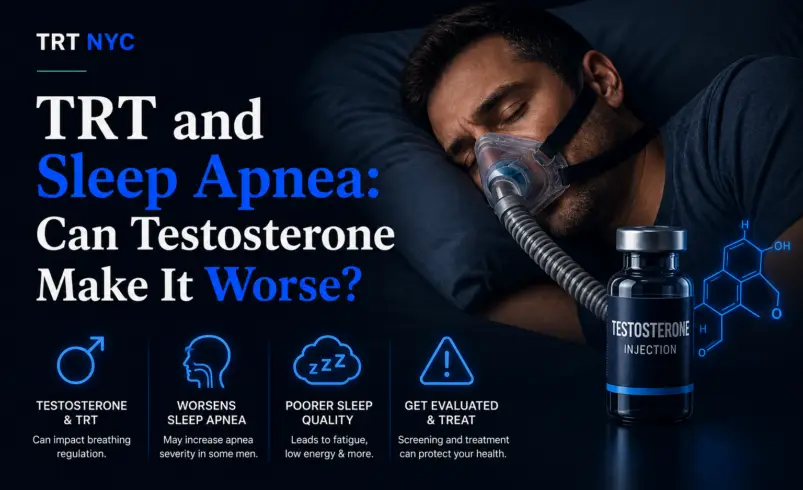
TL;DR — Key Takeaways
- TRT can worsen obstructive sleep apnea (OSA) in some men, especially at higher doses.
- Guidelines advise caution (or avoiding TRT) with severe, untreated OSA.
- Mechanisms, effects on airway muscles, neck fat, and breathing control.
- The effect is usually small and may be time-limited, and low T itself is linked to poor sleep.
- Screen for and treat sleep apnea first, then use TRT carefully and supervised.
TRT can worsen obstructive sleep apnea (OSA) in some men, especially at higher doses or with untreated apnea, so guidelines advise caution with severe, untreated OSA. The effect is usually small and may be time-limited, and low testosterone itself is linked to poor sleep. The safe approach: screen for and treat sleep apnea first, then use TRT carefully and supervised.
The link between testosterone and sleep apnea is real but often misunderstood. Here’s what the evidence and guidelines actually say. (For the full overview, see our complete TRT guide.)
Does TRT Cause or Worsen Sleep Apnea?
It can worsen existing sleep apnea more than cause new apnea out of nowhere. Major guidelines treat untreated or severe OSA as a reason for caution, even a relative contraindication, when starting TRT. That said, the evidence is limited, and testosterone likely plays a small, sometimes time-limited role in nudging sleep-disordered breathing. So it’s a real consideration, not a guarantee, and an important part of whether TRT is right for you.
How Testosterone Can Worsen Sleep Apnea
A few mechanisms are proposed:
| Factor | How TRT may affect OSA |
|---|---|
| Airway muscles | May increase airway collapsibility |
| Neck / upper-body fat | Can narrow the airway |
| Breathing control | May alter ventilatory drive |
| Dose | High short-term doses worse; low long-term may improve |
Note that last row: short-term, high-dose TRT is the most likely to worsen OSA, while lower, steady dosing may be gentler, another reason to dose conservatively and avoid spikes, the same principle behind managing TRT side effects generally.
The Two-Way Link: Low T and Sleep Apnea
It’s bidirectional, which surprises people:
- OSA can lower testosterone, poor, fragmented sleep suppresses testosterone, contributing to low testosterone symptoms.
- Obesity links both, excess weight drives both low T and OSA, and TRT-related changes tie into weight and body composition.
- Treating OSA (e.g., CPAP) and losing weight can improve testosterone naturally.
So sometimes the better first move is fixing sleep, not adding testosterone.
Is It Safe to Take TRT With Sleep Apnea?
It depends on whether your OSA is treated. If you have well-controlled sleep apnea (e.g., using CPAP), TRT can often be used carefully with monitoring. If your OSA is severe and untreated, guidelines urge caution, treat the apnea first. This is part of the broader question of whether TRT is safe for you specifically, and it interacts with other monitored risks like high hematocrit, which can also affect sleep and cardiovascular strain.
How to Stay Safe
- Get screened for sleep apnea before or early in TRT, especially if you snore, are overweight, or feel unrested.
- Treat OSA first (CPAP, weight loss) if it’s significant.
- Use a conservative dose and avoid big spikes.
- Monitor your sleep, symptoms, and bloodwork, see what testosterone test you need.
- Tell your doctor about any new or worsening snoring, daytime sleepiness, or fatigue on TRT.
The Bottom Line
TRT and sleep apnea have a genuine, two-way link: testosterone can worsen obstructive sleep apnea in some men, especially at higher doses or when OSA is untreated, which is why guidelines advise caution with severe, untreated apnea. The effect is usually small and may fade, and low testosterone itself is tied to poor sleep. The safe path is simple, screen for and treat sleep apnea, dose conservatively, and use TRT under medical supervision.
👉 Don’t let sleep apnea undermine your results, get screened if you snore or feel unrested, track your testosterone with an at-home test kit, and discuss both with a licensed provider.
Frequently Asked Questions
Does TRT cause sleep apnea?
TRT is more likely to worsen existing sleep apnea than to create it from nothing. Guidelines treat untreated or severe OSA as a reason for caution when starting TRT. The effect is usually small and may be time-limited, but it’s a real consideration worth screening for.
Can you take TRT if you have sleep apnea?
Often yes, if your sleep apnea is well-controlled (for example, with CPAP) and you’re monitored. If your OSA is severe and untreated, guidelines urge caution and treating the apnea first. It should be personalized with your doctor based on severity.
How does testosterone worsen sleep apnea?
Proposed mechanisms include effects on upper-airway muscles and collapsibility, changes in neck and upper-body fat that narrow the airway, and altered breathing control. Short-term high-dose TRT is the most likely to worsen OSA, while lower steady doses may be gentler.
Does low testosterone cause sleep apnea?
The link runs both ways. Sleep apnea and poor sleep can lower testosterone, and obesity drives both conditions. Treating OSA and losing weight can raise testosterone naturally, so sometimes fixing sleep is a better first step than adding testosterone.
Does TRT-related sleep apnea go away?
The effect of testosterone on sleep apnea is often small and may be time-limited, and lower long-term doses may even improve symptoms in some men. Treating the underlying OSA and using a conservative dose helps. Persistent worsening should be reviewed with your doctor.
Should I get tested for sleep apnea before TRT?
It’s wise, especially if you snore, are overweight, or feel unrested. Screening helps catch untreated OSA that TRT could worsen, and treating it first makes TRT safer. Your doctor can arrange a sleep assessment as part of your workup.
Written by the TRT NYC Editorial Team. Reviewed against current clinical guidelines and research (Endocrine Society; peer-reviewed OSA/testosterone literature). Last updated: June 2026.
Medical disclaimer: This article is for educational purposes only and is not medical advice, diagnosis, or treatment. Sleep apnea is a serious condition that should be evaluated by a clinician. trtnyc.com is an independent informational resource, not a medical provider. Always consult a licensed healthcare provider.