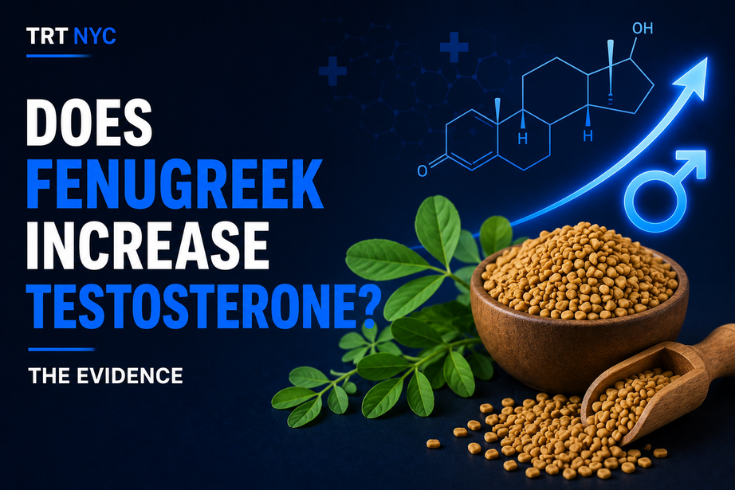
Does Fenugreek Increase Testosterone? The Evidence
 By TRT NYC Editorial Team
TL;DR — Key Takeaways
- Yes, modestly. Standardized fenugreek extracts (like Testofen) have moderate evidence for raising testosterone.
- A 12-week study (600 mg/day) significantly raised total and free testosterone and improved sexual function.
- It may work partly by limiting the enzymes that convert testosterone to estrogen and DHT.
- Libido results are mixed but often positive; studies are small and sometimes industry-funded.
- Dose: 250–600 mg/day standardized extract. A supportive booster, not a TRT replacement.
Fenugreek, especially standardized extracts like Testofen, has moderate evidence it can raise testosterone. In 12-week studies, ~600 mg/day increased total and free testosterone and improved sexual function. But trials are small and some industry-funded, so the effect is modest and unsettled. It’s a reasonable natural support, mainly for libido and mild testosterone help, not a TRT replacement.
Fenugreek is a kitchen spice turned popular “test booster” and it actually has some clinical backing. Here’s what the studies show. (Part of our guide on how to increase testosterone naturally; for the full picture, see our complete TRT guide.)
Does Fenugreek Increase Testosterone?
Yes, modestly, with decent (if imperfect) evidence. Standardized fenugreek extracts have raised testosterone and improved sexual function in several human trials. It sits alongside ashwagandha and tongkat ali as one of the better-evidenced natural boosters — though, like them, the effect is modest, not dramatic.
Key fact: In a 12-week study, 600 mg/day of standardized fenugreek (Testofen) significantly raised total and free testosterone and improved sexual function in aging men.
What the Studies Show
The human data is encouraging but has caveats:
- Total + free testosterone: A 12-week, double-blind RCT of 120 men (ages 43–70) found 600 mg/day of Testofen significantly increased both total and free testosterone, reduced low-T symptoms, and improved sexual function.
- Sexual function: Studies report improved libido, more frequent sexual activity, and more morning erections.
- Mixed results: One RCT in healthy men found fenugreek raised salivary testosterone but didn’t improve libido, so results aren’t perfectly consistent.
- Limitations: trials are small (50–120 people) and some are industry-sponsored, so read the hype cautiously.
How Fenugreek Might Work
Fenugreek’s proposed mechanism is interesting: its compounds (like furostanolic saponins) may inhibit the enzymes aromatase and 5-alpha-reductase, the ones that convert testosterone into estrogen and DHT. By slowing that breakdown, fenugreek could help preserve and modestly raise usable testosterone. This estrogen/DHT angle overlaps with topics like high estrogen on TRT, though in fenugreek’s case the effect is gentle.
How Much Fenugreek for Testosterone?
The evidence-based range:
- 250–600 mg/day of a standardized seed extract (e.g., Testofen), as a single or split dose.
- Most positive studies ran 8–12 weeks, so give it time.
- Take consistently and track your testosterone with the right test before and after, a reasonable option among the best supplements to take while on TRT.
Is Fenugreek Safe?
Generally safe at culinary and supplement doses, but note:
- Lowers blood sugar, caution if diabetic or on glucose-lowering meds.
- Can cause a maple-syrup body/urine odor and mild GI upset.
- Avoid in pregnancy.
- Choose a reputable, standardized product; consult your doctor if you take medications.
Conclusion
Does fenugreek increase testosterone? Modestly, standardized extracts like Testofen (around 600 mg/day for 12 weeks) have raised total and free testosterone and improved sexual function in studies, likely by limiting testosterone breakdown. But trials are small and sometimes industry-funded, so temper expectations. Fenugreek is a reasonable natural support, especially for libido and mild testosterone help, but it won’t fix genuinely low testosterone.
See our full guide on how to increase testosterone naturally for the levers that matter most, and explore everything on men’s testosterone health at TRT NYC.
👉 Check whether it’s working for you: test your testosterone before and after a couple of months with an at-home test kit, and see a licensed provider if your levels are low.
Frequently Asked Questions
Does fenugreek increase testosterone?
Modestly, with moderate evidence. Standardized extracts like Testofen (around 600 mg/day for 12 weeks) have significantly raised total and free testosterone and improved sexual function in studies. But trials are small and sometimes industry-funded, so the effect is real but not dramatic.
How much fenugreek for testosterone?
Most positive studies used 250–600 mg per day of a standardized seed extract (such as Testofen), for 8–12 weeks, as a single or split dose. Use a reputable, standardized product and track your testosterone before and after to see if it helps you.
Does fenugreek increase free testosterone?
Some studies say yes. A 12-week trial found standardized fenugreek raised both total and free testosterone versus placebo. Free testosterone is the active form, so this matters — but results across studies are mixed, so treat the effect as modest rather than guaranteed.
Does fenugreek help libido?
Often, yes. Studies report improved libido, more frequent sexual activity, and more morning erections with standardized fenugreek. However, results aren’t universal, one trial found it raised testosterone without improving libido, so individual responses vary.
Is fenugreek safe?
It’s generally safe at culinary and supplement doses, but it can lower blood sugar (caution if diabetic or on glucose-lowering medication), cause a maple-syrup body odor and mild GI upset, and should be avoided in pregnancy. Choose a reputable product and consult your doctor if you take medications.
Does fenugreek block estrogen or DHT?
Possibly, gently. Fenugreek’s compounds may inhibit aromatase and 5-alpha-reductase, the enzymes that convert testosterone into estrogen and DHT, which could help preserve usable testosterone. The effect is mild, not comparable to prescription medications that block these enzymes.
Written by: TRT NYC Editorial Team: Last updated: July 2026 · Reviewed against: peer-reviewed RCTs and supplement-safety guidance (see References).
Medical disclaimer: This article is for educational purposes only and is not medical advice. Supplements aren’t FDA-evaluated like medications. trtnyc.com is an independent informational resource, not a medical provider. Consult a licensed healthcare provider before starting any supplement.