
Can You Take Testosterone With Heart Disease? What to Know
 By TRT NYC Editorial Team
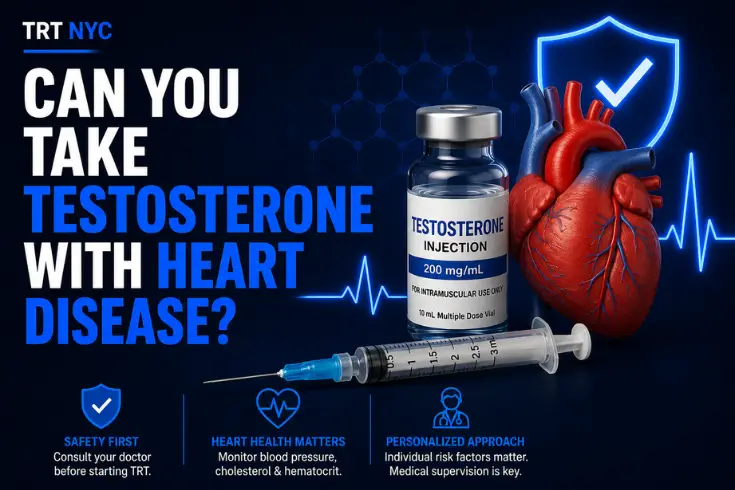
TL;DR — Key Takeaways
- Often yes, with caution and close monitoring, in men with genuine low testosterone.
- The large 2023 TRAVERSE trial found TRT did not increase heart attacks or strokes vs placebo.
- But it did raise the risk of atrial fibrillation (arrhythmia) and blood clots.
- TRT is not appropriate after a recent heart attack/stroke or with unstable heart disease.
- The decision is individual, made with your cardiologist and prescriber, not alone.
Often, yes, but with caution and close monitoring. The large 2023 TRAVERSE trial found testosterone therapy did not increase major cardiac events like heart attack or stroke in men with low T and heart-disease risk. But it did raise the risk of atrial fibrillation and blood clots, so it needs careful medical supervision.
For years, testosterone and heart health was one of the most confusing topics in men’s medicine. A landmark 2023 trial finally brought real clarity. Here’s where the evidence stands. (Part of our guide on whether TRT is safe; for the overview, our complete TRT guide.)
Can You Take Testosterone With Heart Disease?
For many men, yes, but it’s a careful, individualized decision. Having heart disease or cardiovascular risk factors doesn’t automatically rule out TRT, but it raises the bar for caution, monitoring, and specialist involvement. The key is genuine low testosterone, a stable heart condition, and a provider (often with your cardiologist) weighing the specific risks for you.
What the TRAVERSE Trial Showed
TRAVERSE is the most important cardiovascular safety study on TRT to date:
Key fact: In the 2023 TRAVERSE trial of 5,246 men with low testosterone and cardiovascular risk, testosterone therapy did not increase major cardiac events, 7.0% vs 7.3% on placebo, but it did raise arrhythmia and blood-clot risk.
Published in the New England Journal of Medicine (June 2023), it randomized men aged 45–80 with low testosterone (below 300 ng/dL) and existing or high cardiovascular risk to testosterone gel or placebo. On the main question, heart attacks, strokes, and cardiovascular death, testosterone was noninferior (essentially, no worse than) placebo.
The Important Caveats
TRAVERSE was reassuring on the big question but not a clean bill of health. The testosterone group had more cases of:
- Atrial fibrillation: (An irregular heart rhythm).
- Venous blood clots: (Pulmonary embolism / DVT).
These risks matter, especially since TRT can also raise hematocrit (thicker blood), which compounds clot risk. So the honest summary is: TRT doesn’t appear to cause heart attacks or strokes in men with low T, but it isn’t risk-free for the heart.
Who Should Be Most Cautious or Avoid It
TRT is generally not started in men who have had a recent heart attack, stroke, or who have unstable or uncontrolled heart disease. Extra caution applies if you have a history of blood clots, atrial fibrillation, or high hematocrit. Heart disease also travels with other conditions see TRT with high blood pressure, diabetes, and kidney disease so the whole picture must be considered.
Monitoring If You Proceed
If you and your doctors decide TRT is appropriate, monitoring should include:
- Hematocrit: (Clot/blood-thickness risk).
- Heart rhythm and symptoms: (Watch for palpitations, swelling, shortness of breath).
- Blood pressure: Prostate (prostate health), and general side effects.
Whether TRT fits depends on confirming it’s right for you with proper testing and, with heart disease, a conversation that includes your cardiologist.
The Bottom Line
Can you take testosterone with heart disease? For many men with genuine low testosterone and stable heart disease, yes, the 2023 TRAVERSE trial found TRT did not increase heart attacks or strokes. But it raised the risk of atrial fibrillation and blood clots, and it’s not for men with recent cardiac events or unstable disease. This is a decision to make carefully with your prescriber and cardiologist, with ongoing monitoring, never on your own.
For more men’s testosterone health guidance, explore everything at TRT NYC.
👉 Considering TRT with a heart condition? Check your testosterone with an at-home test kit, then review the results and your cardiac risk with your licensed provider and cardiologist.
Frequently Asked Questions
Can you take testosterone with heart disease?
For many men with genuine low testosterone and stable heart disease, yes, with caution and monitoring. Heart disease doesn’t automatically rule out TRT, but it requires careful, individualized assessment, often involving your cardiologist. It’s generally avoided after a recent heart attack or with unstable heart disease.
Does testosterone increase the risk of heart attack or stroke?
Based on the 2023 TRAVERSE trial, no, testosterone therapy was noninferior to placebo for major cardiac events (7.0% vs 7.3%) in men with low testosterone and cardiovascular risk. It did not increase heart attacks, strokes, or cardiovascular deaths, though it isn’t entirely risk-free.
What did the TRAVERSE trial find?
TRAVERSE, published in the New England Journal of Medicine in 2023, randomized 5,246 men with low testosterone and cardiovascular risk to testosterone gel or placebo. Testosterone did not increase major cardiac events but was associated with more atrial fibrillation and venous blood clots.
Can TRT cause blood clots or atrial fibrillation?
The TRAVERSE trial found a higher rate of both non-fatal arrhythmias (including atrial fibrillation) and venous blood clots in the testosterone group. TRT can also raise hematocrit, which further increases clot risk. These are important reasons for monitoring and caution, especially with existing risk factors.
Who should not take testosterone for heart reasons?
TRT is generally not started in men with a recent heart attack or stroke, unstable or uncontrolled heart disease, or a significant history of blood clots or atrial fibrillation. Men with high hematocrit also need it managed carefully. These decisions require specialist input.
Is TRT safe after a heart attack?
Not in the immediate period, TRT is typically avoided after a recent heart attack and in unstable heart disease. Whether it can be considered later, once the condition is stable, is an individual decision for your cardiologist and prescriber, weighing your testosterone levels and overall cardiac risk.
Written by: TRT NYC Editorial Team: Last updated: July 2026 · Reviewed against: the TRAVERSE trial (NEJM 2023) and expert statements (see References).
Medical disclaimer: This article is for educational purposes only and is not medical advice. Testosterone therapy with heart disease is a high-stakes decision that must be made with your physician and cardiologist. Do not start or stop any therapy on your own. trtnyc.com is an independent informational resource, not a medical provider.
References
- Cardiovascular Safety of Testosterone-Replacement Therapy (TRAVERSE). N Engl J Med 2023;389:107-117.
- Cardiovascular safety of testosterone therapy, insights from TRAVERSE: position statement, European Expert Panel for Testosterone Research.
- Endocrine Society, Testosterone Therapy in Men With Hypogonadism: Clinical Practice Guideline. endocrine.org