
6 Everyday Foods That Naturally Support Your Thyroid (And Why Your Diet Matters More Than You Think)
 By TRT NYC Editorial Team
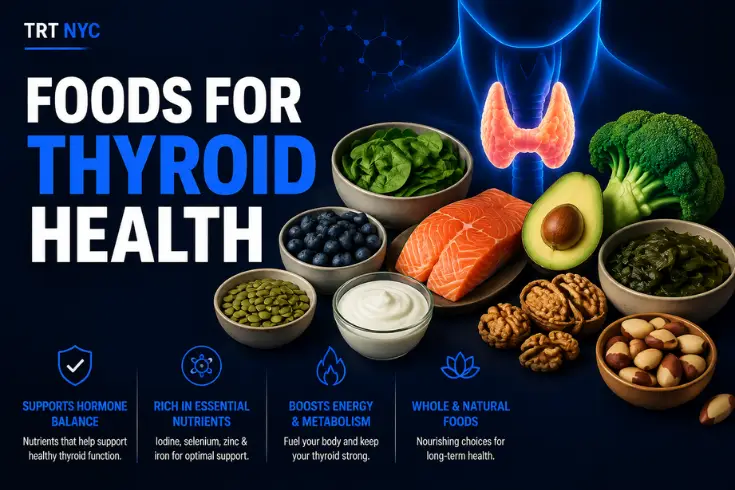
Feeling tired no matter how much you sleep, noticing the scale creep up without any changes to your routine, or finding more hair in your brush than usual? Your thyroid could be the reason, and what you eat matters more than most people realize. This small, butterfly-shaped gland in your neck controls your metabolism, energy levels, and even how your hair grows, and when it slows down, the effects show up everywhere at once.
The good news is that some of the most effective support for your thyroid isn’t found in a prescription, it’s already sitting in your kitchen. Six everyday foods, Brazil nuts, curd, eggs, pumpkin seeds, walnuts, and apples, are increasingly recognized for the specific nutrients they provide to support healthy thyroid function, especially for people managing hypothyroidism.
6 Thyroid-Supporting Foods at a Glance
| Food | Key Nutrient | How It Supports Your Thyroid |
|---|---|---|
| Brazil nuts | Selenium | Helps convert thyroid hormone into its active form |
| Curd (yogurt) | Iodine and probiotics | Supports hormone production and gut-thyroid balance |
| Eggs | Iodine, selenium, vitamin D | Provides core building blocks for thyroid hormone |
| Pumpkin seeds | Zinc | Supports hormone synthesis and immune regulation |
| Walnuts | Omega-3s and magnesium | Reduces inflammation that can affect thyroid function |
| Apples | Fiber and antioxidants | Supports metabolism and gut health tied to hormone balance |
What Is Hypothyroidism, and How Do You Know If You Have It?
Hypothyroidism, often called an underactive thyroid, happens when your thyroid gland doesn’t produce enough hormone to keep your body’s systems running at their normal pace. Because thyroid hormone regulates metabolism, growth, heart rate, and muscle function, even a small deficiency can create symptoms that ripple across your entire body.
The most common signs include persistent fatigue that doesn’t improve with rest, noticeable hair thinning or brittle strands, and gradual weight gain that happens even without changes to diet or exercise. Other symptoms often include sensitivity to cold, dry skin, constipation, and a foggy, unfocused feeling that’s easy to dismiss as ordinary stress. That mental fog in particular isn’t unique to thyroid issues, similar cognitive symptoms show up with other hormonal imbalances too, a connection explored in can low testosterone cause brain fog.
Hypothyroidism vs. Hyperthyroidism: Two Very Different Problems
It’s worth knowing that an underactive thyroid isn’t the only thyroid issue that can affect your energy and appearance. Hyperthyroidism, the opposite condition, occurs when your thyroid produces too much hormone, speeding up your metabolism rather than slowing it down. This can cause anxiety, a racing heart, trembling hands, and unintentional weight loss rather than weight gain. Anxiety driven by hormonal fluctuation isn’t limited to the thyroid either, it’s a pattern also seen with other hormone imbalances, discussed further in can low testosterone cause anxiety.
Since these two conditions require very different treatment approaches, getting an accurate diagnosis from a doctor is essential before making any major changes.
The 6 Foods That Naturally Support Your Thyroid
Small, consistent dietary shifts can meaningfully support thyroid function over time, especially when paired with proper medical care:
Brazil Nuts
Just one or two Brazil nuts a day provide a significant dose of selenium, a mineral your thyroid needs to convert inactive thyroid hormone into its active, usable form. Selenium deficiency has been linked to impaired thyroid function, making this one of the most efficient foods on the list.
Curd (Yogurt)
Fermented dairy like curd offers both iodine, a core building block of thyroid hormone, and probiotics that support gut health. Since a healthy gut microbiome plays a role in regulating hormone metabolism throughout the body, curd offers a two-for-one benefit.
Eggs
Eggs are a rare food that delivers iodine, selenium, and vitamin D all in one package, three nutrients directly tied to healthy thyroid hormone production. Vitamin D in particular has drawn growing research interest for its broader role in hormonal regulation, a topic covered in does vitamin D increase testosterone.
Pumpkin Seeds
These small seeds are packed with zinc, a mineral essential for synthesizing thyroid hormone and supporting healthy immune function. Zinc’s role extends well beyond the thyroid, it’s studied for its broader impact on hormone production throughout the body, explored further in does zinc increase testosterone.
Walnuts
Rich in omega-3 fatty acids and magnesium, walnuts help reduce the chronic inflammation that can interfere with healthy thyroid function over time. Magnesium also supports the broader hormonal and muscular systems in the body, a connection detailed in does magnesium increase testosterone.
Apples
Often overlooked in thyroid conversations, apples provide fiber and antioxidants that support digestion and help regulate blood sugar, both of which indirectly support stable metabolic and hormonal function.
Why Your Thyroid Affects So Much More Than You Think
The thyroid doesn’t work in isolation, it’s part of a much larger endocrine system that includes your adrenal glands, pancreas, and reproductive hormones, all communicating and influencing one another constantly. This is why thyroid symptoms so often overlap with symptoms of other hormonal imbalances, fatigue, weight changes, hair loss, and mood shifts can stem from thyroid dysfunction, but they can just as easily point to another hormone system that’s out of balance.
For some people, diet and lifestyle changes aren’t enough to fully correct a hormone deficiency, and medical treatment becomes necessary. Just as hypothyroidism is commonly treated with synthetic thyroid hormone, other hormonal deficiencies are managed through their own replacement therapies, an approach explained in more detail in is testosterone replacement therapy safe. Understanding how interconnected your hormone systems are can help explain why addressing one imbalance sometimes improves symptoms you didn’t even realize were related.
When Should You See a Doctor About Your Thyroid?
If you’re experiencing several of the symptoms above at once, especially fatigue, hair loss, and weight gain occurring together, it’s worth scheduling a simple blood test to check your thyroid-stimulating hormone, or TSH, levels. This test can confirm whether your thyroid gland is underperforming and guide next steps, which may include medication, dietary changes, or both.
Don’t wait for symptoms to become severe before seeking answers. Thyroid dysfunction is highly treatable once identified, and catching it early can prevent months or years of unexplained fatigue and frustration.
Building a Thyroid-Friendly Plate
You don’t need a complete diet overhaul to start supporting your thyroid, small, consistent additions make the biggest difference. Try adding a handful of pumpkin seeds to your morning yogurt, snacking on walnuts instead of processed foods, keeping eggs in your regular breakfast rotation, and finishing meals with an apple instead of something sugary. One or two Brazil nuts a few times a week is typically enough to meet your selenium needs without overdoing it.
These changes are simple, sustainable, and backed by real nutritional science, but they work best as a complement to medical care, not a replacement for it.
Frequently Asked Questions
Can thyroid problems cause weight gain?
Yes, hypothyroidism commonly causes weight gain, usually around 5 to 10 pounds, largely due to a buildup of salt and water in the body along with a slowed metabolism.
What are the signs that my thyroid is off?
Common signs include persistent fatigue, hair thinning, unexplained weight changes, sensitivity to cold, dry skin, constipation, and brain fog. Hyperthyroidism instead often causes anxiety, rapid heartbeat, and weight loss.
What are common signs of thyroid problems?
Beyond fatigue and weight changes, signs can include brittle nails, dry or scaly skin, irregular periods, muscle weakness, hair loss, mood changes, and difficulty regulating body temperature.
Can thyroid problems contribute to belly fat?
Yes, an underactive thyroid can lead to fluid retention and a slower metabolism, both of which can contribute to increased abdominal fat, particularly when combined with reduced activity levels.
What foods should I avoid with hypothyroidism?
Highly processed foods, excess soy, and large amounts of raw cruciferous vegetables like cabbage and broccoli can interfere with thyroid hormone absorption and are best consumed in moderation.
Can hypothyroidism cause hair loss to be permanent?
In most cases, hair loss from hypothyroidism is reversible once thyroid hormone levels are properly treated and stabilized, though regrowth can take several months.
How long does it take for thyroid diet changes to show results?
Dietary improvements typically take several weeks to a few months to show noticeable results, since thyroid hormone levels and metabolism adjust gradually rather than overnight.
Is hypothyroidism more common in women?
Yes, hypothyroidism is significantly more common in women than men, particularly after age 60, and is often linked to autoimmune conditions like Hashimoto’s thyroiditis.
Disclaimer
This article is for informational and educational purposes only and is not a substitute for professional medical advice, diagnosis, or treatment. Always consult a qualified healthcare provider before making significant changes to your diet or starting any new supplement, especially if you suspect a thyroid condition.
Sources
- Healthline, What Can Cause Weight Gain, Hair Loss, and Fatigue?
- American Thyroid Association, Hypothyroidism
- Mayo Clinic, Hypothyroidism: Symptoms and Causes
- NIH Office of Dietary Supplements, Selenium and Iodine Fact Sheets
- Cleveland Clinic, Thyroid Disease