
Benefits of TRT: What Testosterone Therapy Does for Men
 By Harshit
What Is Testosterone Replacement Therapy?
Testosterone replacement therapy (TRT) is a medically supervised treatment that restores testosterone levels in men whose bodies no longer produce adequate amounts of the hormone naturally. This condition known clinically as hypogonadism affects millions of men worldwide and becomes increasingly common after age 30, when testosterone levels naturally begin to decline at roughly 1% per year.
Understanding the benefits of TRT starts with knowing how it works. Testosterone replacement therapy (TRT) is available in several forms: intramuscular or subcutaneous injections, topical gels, transdermal patches, and implanted pellets. A licensed physician determines the most suitable delivery method based on your health history, lab results, and personal lifestyle.
Who May Benefit From TRT?
You may be a candidate for testosterone therapy if you consistently experience one or more of the following:
- Persistent fatigue and low motivation throughout the day
- Reduced sex drive or difficulty with sexual performance
- Loss of muscle mass despite regular exercise and proper nutrition
- Increased body fat, particularly around the abdomen
- Brain fog, poor concentration, or memory lapses
- Depressed mood, irritability, or emotional flatness
- Reduced bone density or unexplained fractures
A blood test confirming low testosterone typically below 300 ng/dL — is required before treatment begins. Clinical evaluation by a qualified physician is essential; self-diagnosis alone is not sufficient grounds for starting therapy.
Top Benefits of TRT for Males
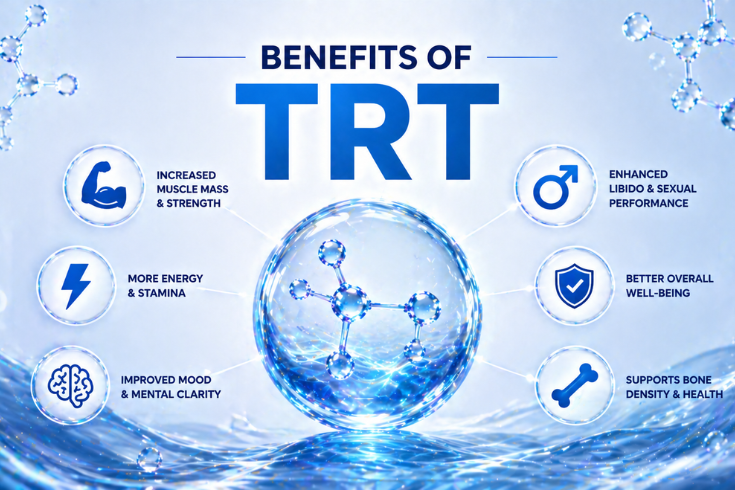
Understanding the benefits of TRT goes beyond general claims of feeling “more like yourself.” Clinical research and real-world patient outcomes point to measurable improvements across physical health, mental well-being, and sexual function.
1. Increased Energy and Reduced Fatigue
One of the most consistently reported benefits of TRT is a meaningful improvement in daily energy levels. Men on testosterone therapy frequently describe feeling more alert, motivated, and capable of sustained physical and mental effort. Chronic fatigue linked to low testosterone can erode work performance and personal relationships and many patients notice improvement within the first few weeks of starting therapy.
2. Improved Libido and Sexual Function
Low testosterone is a primary driver of decreased sexual desire in men. Among the most well-documented benefits of TRT for males is the restoration of sex drive and, in many cases, meaningful improvements in sexual performance. While testosterone therapy is not a standalone treatment for vascular-related erectile dysfunction, correcting hormone levels often leads to significant gains in sexual confidence and satisfaction.
3. Increased Muscle Mass and Physical Strength
Testosterone plays a central role in protein synthesis and muscle development. Men with low hormone levels often struggle to build or maintain muscle — even with consistent training. Among the physical benefits of TRT is enhanced muscle growth, faster workout recovery, and improved overall strength. These outcomes are especially significant for men who have experienced noticeable muscle loss due to hormonal decline.
4. Reduction in Body Fat
Hormonal imbalance from low testosterone is closely associated with increased fat accumulation, particularly visceral fat around the abdomen. The metabolic benefits of TRT treatment include promoting lean muscle growth while gradually reducing fat stores. This is not a weight-loss shortcut — but improving hormone balance creates a more favorable environment for healthy body composition, especially when combined with exercise and proper nutrition.
5. Better Mood and Emotional Stability
Low testosterone has a well-established connection to depression, irritability, anxiety, and emotional instability. Many men report that improvements in mental well-being rank among the most impactful outcomes of testosterone therapy. Stable hormone levels are associated with better emotional regulation, greater resilience under stress, and a more positive overall outlook. Men previously struggling with mood disorders linked to hormonal decline often find meaningful relief through a well-managed protocol.
6. Sharper Cognitive Function
Testosterone influences brain function, including memory, concentration, and spatial reasoning. Cognitive decline is an often-overlooked symptom of low testosterone — men frequently dismiss these changes as stress or aging without realizing hormonal imbalance may be the root cause. Many men on testosterone therapy report improved mental clarity, faster thinking, reduced brain fog, and a greater ability to stay focused and productive throughout the day. These cognitive improvements often develop alongside physical changes and can significantly impact professional performance and day-to-day quality of life.
7. Stronger Bone Density
Testosterone is essential for maintaining bone mineral density. Men with chronically low levels face an elevated risk of osteoporosis and stress fractures. Among the longer-term benefits of TRT is the preservation and gradual improvement of bone strength — an outcome that becomes increasingly important with age and is often underappreciated at the start of therapy.
8. Improved Sleep Quality
Hormonal imbalance can disrupt sleep architecture and contribute to restlessness, difficulty falling asleep, or waking throughout the night. Some men report meaningful improvements in sleep depth and duration following the start of testosterone therapy, particularly when poor sleep was driven by the fatigue, mood disruption, and physical restlessness associated with low testosterone. It is important to note that results in this area vary by individual, and men with suspected sleep apnea should be properly screened before and during therapy, as testosterone replacement therapy can worsen this condition in some cases.
Benefits of TRT Injections vs. Other Delivery Methods
There are several ways to receive testosterone therapy, each with distinct advantages. Understanding the benefits of TRT injections helps men and their physicians choose the most appropriate delivery method.
| Delivery Method | Key Advantages | Considerations |
| Injections (IM or SubQ) | Precise dosing, cost-effective, long-acting | Requires periodic self-administration |
| Topical Gels | Easy daily application, stable levels | Transfer risk to others, skin irritation |
| Skin Patches | Consistent delivery, no injection needed | Visible patch, potential skin reactions |
| Pellet Implants | Long-lasting (3–6 months), low maintenance | Requires minor outpatient procedure |
Injectable testosterone such as testosterone cypionate or enanthate — is one of the most widely researched and cost-effective protocols available. Injections allow for precise dose control and predictable absorption, making them a preferred choice for many physicians. Your provider will recommend the best delivery option based on your lifestyle, tolerance, and clinical profile.
TRT Benefits and Risks: What You Need to Know
Any honest review of TRT benefits and risks must present both sides. While the advantages of testosterone therapy are real and clinically supported, TRT is a medical treatment that requires proper oversight — not a supplement or quick fix.
Potential Risks to Discuss With Your Doctor
- Polycythemia: TRT can increase red blood cell production, raising clotting risk if not monitored
- Reduced sperm production: Therapy suppresses the body’s natural hormone signal, which may affect fertility
- Acne and oily skin: Elevated androgens may trigger skin changes in some individuals
- Sleep apnea: TRT may worsen pre-existing sleep apnea — screening is recommended
- Cardiovascular considerations: Men with heart disease history should consult a cardiologist before starting
The key to maximizing the benefits of TRT treatment while minimizing risk is consistent medical monitoring. This includes regular blood panels covering hematocrit, PSA levels, and full hormone profiles. A carefully managed protocol is significantly safer than unsupervised or self-administered therapy.
TRT vs. No Treatment: Side-by-Side Comparison
| Symptom / Outcome | With TRT (Medically Managed) | Without Treatment |
| Energy Levels | Significantly improved | Continues to decline |
| Libido | Restored in most cases | Remains low or worsens |
| Muscle Mass | Maintained or increased | Progressive loss likely |
| Body Fat | Reduced over time | Tends to accumulate |
| Mood Stability | Improved for most patients | Ongoing disruption |
| Bone Density | Preserved or improved | Risk of gradual loss |
| Cognitive Function | Sharper, more focused | May continue declining |
How Long Before You Feel Results?
Men considering testosterone therapy frequently ask how quickly they will notice changes. Here is a general clinical timeline based on patient outcomes:
- 2–4 weeks: Early improvements in mood, energy, and libido are often reported
- 6–8 weeks: Noticeable changes in body composition, strength, and sexual function
- 3–6 months: Significant gains in muscle mass, fat reduction, and bone density
- 12+ months: Full benefit profile, including sustained cognitive and psychological gains
Consistency is essential. Skipping doses or stopping therapy abruptly can reverse progress and cause unwanted hormonal fluctuation. Results build gradually — and the most meaningful improvements tend to emerge over three to six months of steady, physician-supervised treatment. Men who stick to their protocol and attend regular follow-up appointments consistently report the strongest outcomes. Patience, combined with proper medical oversight, is the foundation of a successful testosterone therapy experience.
Conclusion: Is Testosterone Therapy Right for You?
The benefits of TRT are clinically meaningful and well-supported for men living with low testosterone. From renewed energy and sexual vitality to stronger muscles, better mood, and preserved bone health, testosterone therapy can represent a genuine turning point in a man’s quality of life.
At the same time, these advantages must always be weighed against individual health factors, potential risks, and long-term goals. Testosterone therapy is a structured medical protocol — not a shortcut. Proper diagnosis, ongoing monitoring, and a collaborative relationship with your physician are what separate safe, effective treatment from risky self-experimentation.
If you are experiencing symptoms of low testosterone and want to explore your options, the most important first step is an open, informed conversation with a qualified healthcare professional.
Ready to Find Out If TRT Is Right for You?
If you’re experiencing symptoms of low testosterone, the next step is simple: get tested. Our board-certified physicians provide personalized TRT protocols based on your blood work, health history, and goals fully supervised, fully monitored, and tailored to you.
Know your levels. Know your body. Visit trtnyc.com and follow for more TRT tips.
Frequently Asked Questions About the Benefits of TRT
What are the main benefits of TRT for males?
The benefits of TRT for males include restored energy and sex drive, improved muscle mass and strength, reduced body fat, better mood and cognitive function, and stronger bone density. Results are most consistent when therapy is medically supervised and individualized to the patient.
Are the benefits of TRT permanent?
The benefits of TRT are sustained for as long as therapy continues under medical supervision. If testosterone therapy is stopped, levels typically return to pre-treatment lows and symptoms may gradually return. Long-term maintenance is standard practice for men diagnosed with hypogonadism.
What are the specific advantages of TRT injections?
Injectable testosterone offers precise dosing control, reliable absorption, and cost-effectiveness compared to other delivery methods. Injections are typically administered every one to two weeks, either intramuscularly or subcutaneously, and allow physicians to make accurate adjustments based on blood work. It is one of the most extensively studied forms of testosterone therapy and remains a preferred protocol among physicians for its predictability and long track record of clinical use.
Can testosterone therapy improve depression?
Yes. Improved mood is among the recognized outcomes of testosterone therapy for males with confirmed low hormone levels. Low testosterone is closely linked to depressive symptoms, and many men report meaningful emotional improvements after starting therapy. However, TRT is not a substitute for mental health treatment when depression has other underlying causes.
Is TRT safe for long-term use?
When properly managed, long-term testosterone therapy is considered safe for most men. Regular lab work and physician check-ins are essential for monitoring cardiovascular, hematologic, and prostate health throughout treatment. Key markers — including hematocrit, PSA, and total testosterone levels — should be reviewed every three to six months during the first year and periodically thereafter. Men with pre-existing health conditions should work closely with a specialist to ensure therapy is appropriate and well-tolerated over time.
Does TRT affect fertility?
TRT can reduce sperm production by suppressing the body’s natural hormone signaling. Men who want to preserve fertility should discuss alternatives — such as clomiphene citrate or hCG therapy — with their physician before starting testosterone replacement.
Medical Disclaimer: This content is for educational purposes only and does not constitute medical advice. Always consult a licensed healthcare provider before starting any hormone therapy.