Does Finasteride Lower Testosterone? What to Know
TL;DR — Key Takeaways No, finasteride does not lower testosterone. It often slightly raises it (~10–20%). It blocks the enzyme (5-alpha-reductase)…
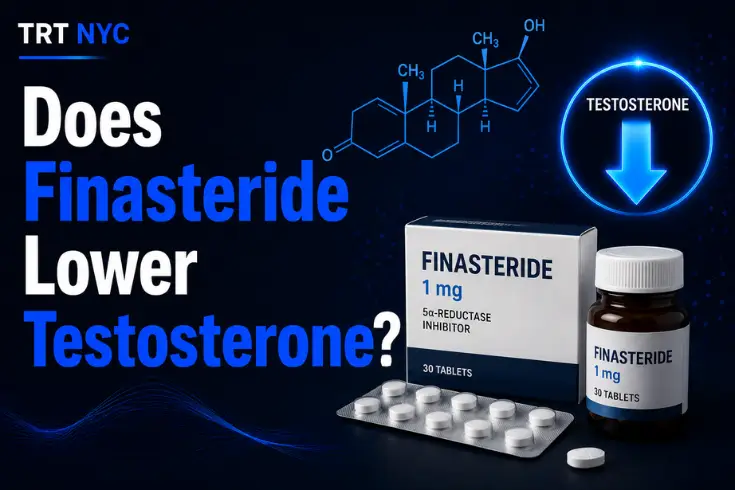
TL;DR — Key Takeaways
- No, finasteride does not lower testosterone. It often slightly raises it (~10–20%).
- It blocks the enzyme (5-alpha-reductase) that converts testosterone → DHT, cutting DHT ~70%.
- That’s how it treats hair loss and enlarged prostate (BPH).
- Sexual side effects (in a minority) relate to lower DHT, not a testosterone deficiency.
- Rarely, effects persist after stopping, the debated “post-finasteride syndrome.”
No, finasteride doesn’t lower testosterone; it often slightly raises it. It blocks the enzyme that converts testosterone into DHT, so DHT drops ~70% while testosterone stays the same or rises a bit. That’s how it treats hair loss and enlarged prostate. Its sexual side effects, in a minority of men, relate to lower DHT, not low testosterone.
This one surprises people: the “finasteride crashes your testosterone” fear is backwards. Here’s what actually happens. (Part of our guide on what lowers testosterone; for the overview, our complete TRT guide.)
Does Finasteride Lower Testosterone?
No. Finasteride is a 5-alpha-reductase inhibitor, it blocks the enzyme that converts testosterone into DHT (dihydrotestosterone). So it lowers DHT, not testosterone. In fact, because less testosterone gets “used up” making DHT, testosterone often rises slightly.
Key fact: Finasteride doesn’t lower testosterone, it blocks testosterone’s conversion to DHT, cutting DHT ~70% while testosterone often rises 10–20%.
What Finasteride Actually Does to Your Hormones
The mechanism is precise:
- DHT drops ~70%: (At the 5 mg dose), this is the intended effect.
- Total testosterone typically rises ~10–20%: staying within the normal range.
- Meta-analysis nuance: The testosterone rise is inconsistent, men with low baseline testosterone tend to see an increase, while men with normal/high levels may see little change.
Lowering DHT is exactly how finasteride treats male pattern hair loss (DHT drives it see TRT and hair loss) and benign prostatic hyperplasia (BPH).
Then Why Do Some Men Report Sexual Side Effects?
This is the key nuance. A minority of men experience ED or low libido on finasteride, but it’s driven by the DHT drop, not low testosterone. DHT has a higher affinity for androgen receptors and is more effective at supporting erectile function (via nitric oxide) than testosterone itself. So even with higher testosterone, lower DHT can affect sexual function in susceptible men. This overlaps with erectile dysfunction and TRT topics, but the cause here is DHT, not a testosterone deficiency.
What About Gynecomastia and Estrogen?
Because finasteride can raise testosterone slightly, a bit more can be aromatized into estradiol (estrogen), which, in rare cases, contributes to gynecomastia. It’s uncommon, and relates to the estrogen balance we cover in will increasing testosterone reduce gynecomastia.
What Is Post-Finasteride Syndrome?
In rare instances, some men report persistent sexual, mood, or physical symptoms even after stopping finasteride, labeled “post-finasteride syndrome” (PFS). It’s debated and not fully understood, and it’s not explained by low testosterone (which normalizes). If you have persistent symptoms after stopping, see a doctor rather than self-diagnosing.
Can You Take Finasteride With TRT?
Yes, they’re sometimes combined. On TRT, some men add finasteride to reduce DHT-driven hair loss. Since TRT already sets your testosterone and finasteride mainly cuts DHT, they can work together under medical guidance, relevant if you’re weighing whether TRT is right for you and worried about hair.
Conclusion
Does finasteride lower testosterone? No, it lowers DHT (~70%) and often raises testosterone slightly (~10–20%), because it blocks testosterone’s conversion to DHT. That’s how it treats hair loss and BPH. The sexual side effects some men report come from the DHT drop, not from low testosterone. If you experience persistent symptoms, talk to your doctor, but don’t blame low testosterone, because finasteride doesn’t cause it.
For the real causes of low testosterone, see what lowers testosterone and how to increase testosterone naturally and explore everything on men’s testosterone health at TRT NYC.
👉 Curious what your levels actually are? Check your testosterone (and DHT) with an at-home test kit and discuss finasteride with a licensed provider.
Frequently Asked Questions
Does finasteride lower testosterone?
No. Finasteride blocks the enzyme that converts testosterone to DHT, so it lowers DHT (about 70%), not testosterone. Testosterone typically stays the same or rises slightly (~10–20%). The idea that finasteride causes low testosterone is a misconception.
Does finasteride increase testosterone?
Often modestly. Because less testosterone is converted to DHT, serum testosterone tends to rise about 10–20%, staying within the normal range. The effect is inconsistent, though, men with low baseline testosterone see more of an increase than men with normal levels.
Does finasteride lower DHT?
Yes, substantially. At the 5 mg dose, finasteride reduces DHT by roughly 70%. This DHT reduction is the intended effect and is how finasteride treats male pattern hair loss and enlarged prostate (BPH), since DHT drives both conditions.
Does finasteride cause ED or low libido?
In a minority of men, yes, but via lower DHT, not low testosterone. DHT binds androgen receptors more strongly and supports erectile function, so even with higher testosterone, reduced DHT can affect sexual function in susceptible men. Most users don’t experience this.
What is post-finasteride syndrome?
It’s a debated, not-fully-understood condition where some men report persistent sexual, mood, or physical symptoms even after stopping finasteride. It’s rare and isn’t explained by low testosterone, which normalizes. Persistent symptoms after stopping warrant medical evaluation.
Can you take finasteride with TRT?
Yes, they’re sometimes combined. On TRT, some men add finasteride to reduce DHT-driven hair loss. Since TRT sets testosterone and finasteride mainly lowers DHT, they can be used together under medical guidance, depending on your goals and how you respond.
Written by: Tejanshu Jaluthria: Last updated: July 2026 · Reviewed against: peer-reviewed pharmacology and clinical references (see References).
Medical disclaimer: This article is for educational purposes only and is not medical advice. Don’t start or stop finasteride without your doctor. trtnyc.com is an independent informational resource, not a medical provider.