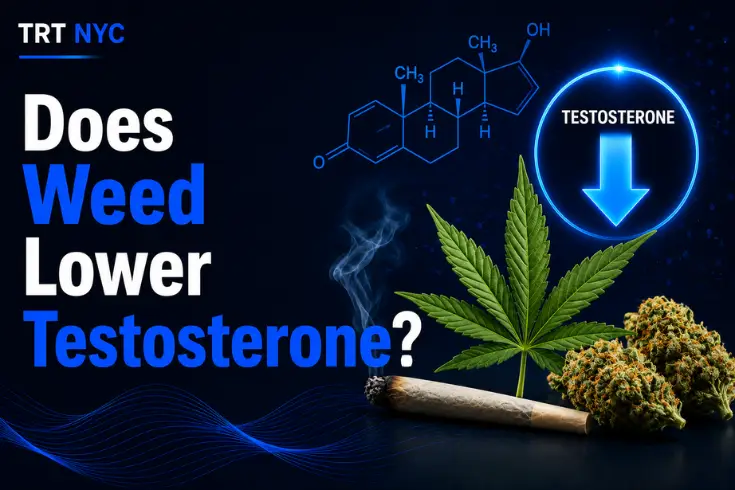
Does Weed Lower Testosterone? What the Evidence Says
 By Tejanshu Jaluthria
TL;DR — Key Takeaways
- The evidence is mixed, weed doesn’t clearly lower testosterone, but heavy/chronic use may.
- THC can cause a short-term dip by blocking the brain’s GnRH signal (→ lower LH → less testosterone).
- Some studies show lower testosterone with heavy use; others (large population studies) show little or no difference.
- The clearer harm is to sperm, heavy cannabis use reduces sperm count and quality.
- Occasional use likely has minimal lasting hormonal effect.
The evidence is mixed, weed doesn’t clearly lower testosterone, but heavy use might. THC can cause a short-term dip by suppressing the brain’s hormone signals, and some studies link heavy use to lower testosterone, while big population studies found little difference. Clearer: heavy cannabis use can reduce sperm count and quality. Occasional use likely has minimal hormonal effect.
Does your weed habit affect your T? The honest answer is “it depends”, mostly on how much. Here’s what the research shows. (Part of our guide on what lowers testosterone; for the overview, our complete TRT guide.)
Does Weed Lower Testosterone?
Not clearly, but heavy or chronic use may. The research is genuinely inconsistent: some studies show cannabis lowers testosterone, others show no change or even slightly higher levels in users. What’s more consistent is that dose matters, occasional use looks minimal, while heavy, chronic use is more likely to be harmful.
Key fact: THC can transiently lower testosterone by blocking the brain’s GnRH signal, heavy use is linked to lower testosterone and worse sperm, but light use shows mixed, minimal effects.
How Weed Could Lower Testosterone
The proposed mechanism is clear even if the outcomes aren’t: THC blocks the release of GnRH (the brain signal that starts the testosterone cascade), which lowers LH and FSH, reducing testosterone production by the testes’ Leydig cells. That’s why acute studies, smoking one joint or IV THC, have shown a short-term testosterone dip. Whether that translates to lower baseline testosterone with regular use is where studies disagree.
What the Studies Actually Show (Both Sides)
- Against: An OHSU primate study using heavy THC doses found edecreased testosterone and >50% testicular shrinkag. A study of 2,000+ infertile men found cannabis use was linked to lower testosterone and worse sperm morphology.
- For / neutral: A large Danish study found higher testosterone with greater marijuana frequency (likely confounded), and other studies found no significant change In testosterone or semen among users.
So it’s a real “the evidence is mixed” topic, with the negative signals concentrated in heavy use.
The Clearer Concern: Sperm and Fertility
Even where testosterone data conflict, the sperm findings lean negative: heavy cannabis use is associated with lower sperm count, concentration, and quality. If you’re trying to conceive, this matters more than the testosterone question and it ties directly into TRT and fertility. Cutting back is the sensible move when fertility is a goal.
Does Quitting Weed Raise Testosterone?
If heavy use was suppressing your levels, cutting back or quitting may help them recover, the acute suppression is reversible. But since occasional use has little effect, quitting won’t dramatically “boost” testosterone in a light user. Either way, the bigger levers are the ones in how to increase testosterone naturally, sleep, fat loss, and training.
Conclusion
Does weed lower testosterone? The evidence is mixed. Acute THC can cause a short-term testosterone dip by blocking the brain’s GnRH signal, and heavy, chronic use is linked to lower testosterone and testicular shrinkage in some studies, while large population studies show little difference. The clearer, more consistent harm is to sperm count and quality. Occasional use likely has minimal lasting hormonal effect; if you’re a heavy user or trying to conceive, cutting back is wise.
For the full picture on causes and fixes, see what lowers testosterone and how to increase testosterone naturally and explore everything on men’s testosterone health at TRT NYC.
👉 Curious how your habits affect your levels? Check your testosterone with an at-home test kit and talk to a licensed provider if it’s low.
Frequently Asked Questions
Does weed lower testosterone?
The evidence is mixed. Weed doesn’t clearly lower testosterone, but heavy or chronic use may, and acute THC can cause a short-term dip. Large population studies show little difference, while some studies of heavy users show lower testosterone. Occasional use likely has minimal effect.
Does THC affect testosterone?
Yes, at least acutely. THC blocks the release of GnRH, the brain signal that drives testosterone production, lowering LH and FSH and reducing testosterone from the testes. This causes a short-term dip after use; whether it lowers baseline testosterone long-term is less clear.
Does smoking weed affect sperm and fertility?
This is the clearer concern. Heavy cannabis use is associated with lower sperm count, concentration, and quality. If you’re trying to conceive, reducing or stopping cannabis is a sensible step, since the sperm findings are more consistent than the testosterone data.
Does heavy cannabis use lower testosterone more?
Likely yes. The negative signals in the research are concentrated in heavy, chronic use, including studies showing lower testosterone and, in animal research with heavy doses, significant testicular shrinkage. Occasional use appears to have far less impact.
Does quitting weed raise testosterone?
If heavy use was suppressing your testosterone, cutting back or quitting may help it recover, since the acute suppression is reversible. In light users, where the effect is minimal, quitting won’t dramatically raise testosterone. Lifestyle factors matter more overall.
Does weed cause gynecomastia (man boobs)?
The link is weak and unproven. Some speculate THC could influence hormone balance, but there’s no solid evidence that cannabis directly causes gynecomastia. Gynecomastia is more reliably driven by an estrogen-to-testosterone imbalance from other causes.
Written by: Tejanshu Jaluthria: Last updated: July 2026 · Reviewed against: peer-reviewed research and systematic reviews (see References).
Medical disclaimer: This article is for educational purposes only and is not medical advice. trtnyc.com is an independent informational resource, not a medical provider. Always consult a licensed healthcare provider about your testosterone or fertility.