
4 Natural Remedies for Period Cramps That Actually Work (Plus Fast Relief Tips)
 By TRT NYC Editorial Team
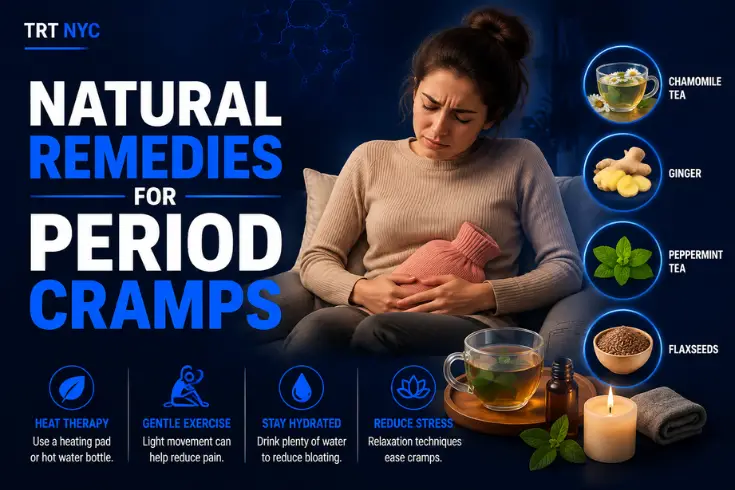
Periods don’t have to mean suffering through the day. Between missed work, canceled plans, and curling up with a heating pad, period cramps can derail even the best-planned week. The good news is that relief doesn’t always require reaching for a pill bottle. A handful of natural, evidence-backed remedies can ease cramping just as effectively, and when paired with the right fast-acting methods, you can get ahead of the pain before it takes over your day.
Period Cramp Relief at a Glance
Not every remedy works the same way or at the same speed. Here’s how the most effective options stack up.
| Remedy | How It Works | Best For |
| Heat therapy | Relaxes uterine muscles and improves blood flow | Fast relief within 15 to 20 minutes |
| NSAIDs (ibuprofen, naproxen) | Blocks prostaglandin production at the source | Moderate to severe cramps |
| Dark chocolate | Magnesium content helps relax cramping muscles | Mild to moderate cramps, natural approach |
| Green tea | Antioxidants and compounds that fight inflammation | Ongoing inflammation and bloating |
| Gentle movement or yoga | Releases natural endorphins that block pain signals | Mild cramps and muscle tension |
| Hydration | Reduces bloating and eases muscle tightness | Overall symptom management |
Why Do Period Cramps Actually Happen?
Before finding the right remedy, it helps to understand what’s causing the pain in the first place. Period cramps are driven by prostaglandins, hormone-like compounds your uterus produces to help shed its lining each month. The more prostaglandins your body releases, the more intensely your uterine muscles contract, and the more pain you feel. This is also why cramps can sometimes feel like contractions: your uterus is, quite literally, contracting.
Higher prostaglandin levels are also linked to other common period symptoms like nausea, headaches, and lower back pain. Understanding this mechanism is key, because most effective treatments, whether natural or over-the-counter, work by either lowering prostaglandin production or counteracting its effects on your muscles.
Fast Relief: Heat Therapy and Pain Relievers
When cramps hit hard and you need relief now, two methods consistently outperform the rest.
Heat therapy: Is one of the fastest, most accessible ways to ease cramping. Placing a heating pad or hot water bottle on your lower abdomen or back for 15 to 20 minutes helps relax the uterine muscles and improves blood flow to the area, easing tension almost immediately.
Pain relievers: Specifically nonsteroidal anti-inflammatory drugs (NSAIDs) like ibuprofen or naproxen, work by blocking the production of prostaglandins before they can trigger intense contractions. For the best results, take them at the very first sign of cramping, or even just before your period is expected to start, rather than waiting until the pain becomes severe.
4 Natural Remedies That Actually Work
If you’d rather manage cramps without reaching for medication every month, these four natural approaches are backed by both tradition and science.
Dark Chocolate: It’s not just a comfort food, dark chocolate is genuinely useful during your period. It’s rich in magnesium, a mineral known to help relax muscle tissue, including the uterine muscles responsible for cramping. Magnesium also plays a broader role in regulating muscle and nerve function throughout the body, a connection explored further in does magnesium increase testosterone.
Green Tea: Packed with antioxidants and natural anti-inflammatory compounds, green tea helps calm the inflammation that contributes to cramping and bloating. Vitamin D is another nutrient increasingly studied for its anti-inflammatory effects on the body, a connection covered in does vitamin D increase testosterone.
Heat Therapy: Beyond fast relief, applying heat consistently throughout your period, not just when pain spikes, can help keep uterine muscles relaxed and prevent cramps from intensifying in the first place.
Gentle Movement: Light stretching, walking, or restorative yoga poses might be the last thing you feel like doing, but movement triggers the release of endorphins, your body’s natural painkillers. Even ten minutes of gentle activity can meaningfully reduce cramp intensity.
Staying hydrated throughout your cycle supports all four of these remedies, since dehydration tends to worsen both bloating and muscle tension.
The Hormonal Side of Period Pain
Period cramps aren’t just about prostaglandins, they’re also tied to the broader hormonal shifts happening throughout your cycle. In the days before your period, progesterone levels drop sharply, which triggers the uterine lining to shed and prostaglandins to spike. This hormonal drop-off is a big part of why cramps, mood changes, and fatigue often cluster together right before your period starts. Understanding how progesterone compares to other hormones in the body can offer useful context for anyone tracking cycle symptoms, covered further in is progesterone the same as testosterone.
Progesterone itself doesn’t appear out of nowhere, it’s synthesized from a precursor hormone called pregnenolone, which the body converts through several stages before it becomes usable. This process is explained in more depth in pregnenolone benefits for men, which breaks down how this “parent hormone” fits into the broader hormonal picture.
When Period Cramps Aren’t Just Normal Cramps
Most period pain is uncomfortable but manageable with the remedies above. However, certain patterns are worth flagging to a doctor rather than pushing through on your own. If over-the-counter medication like Midol or ibuprofen isn’t providing any relief, if cramps are severe enough to interfere with daily activities month after month, or if pain is accompanied by heavy bleeding, fever, or symptoms that worsen over time, it may point to an underlying condition like endometriosis, fibroids, or adenomyosis rather than typical menstrual cramping. Conditions like these often involve a complex interplay between multiple hormones rather than a single cause, a dynamic explored from a different angle in progesterone and testosterone together.
Tracking your symptoms and timing can help a healthcare provider identify patterns faster, so don’t hesitate to bring notes on when your pain starts, how long it lasts, and what has or hasn’t helped.
Building a Cramp-Relief Routine That Works for You
The most effective approach to period pain usually isn’t a single remedy, it’s a combination. Starting an NSAID at the first sign of cramping, applying heat consistently, adding magnesium-rich foods like dark chocolate, sipping green tea throughout the day, and fitting in light movement all work together to address pain from multiple angles at once. Zinc is another mineral worth keeping on your radar during your cycle, since it’s frequently studied alongside magnesium for its role in muscle and hormonal function, a topic covered in does zinc increase testosterone. Staying hydrated ties every piece of this routine together, helping reduce the bloating and tension that make cramps feel worse.
Period pain is common, but it doesn’t have to be something you simply endure every month. With the right combination of fast relief and natural support, most people can significantly reduce how much cramps disrupt their day.
Frequently Asked Questions
Why isn’t Midol helping my cramps?
Midol primarily targets bloating and mild pain, and may not contain enough of an NSAID like ibuprofen to block prostaglandin production effectively for moderate to severe cramps. Switching to a dedicated NSAID taken earlier in your cycle often works better.
What could be causing my unbearable period cramps?
Severe cramps can result from high prostaglandin levels, but persistent, intense pain may also signal conditions like endometriosis, fibroids, or adenomyosis, which require medical evaluation rather than home remedies alone.
Why does heat help period cramps?
Heat increases blood flow to the pelvic area and helps relax contracting uterine muscles, which reduces the intensity of cramping and eases surrounding muscle tension.
Why do my period cramps feel like contractions?
Because they technically are. Prostaglandins cause the uterus to contract in order to shed its lining, producing a sensation very similar to labor contractions, just on a smaller scale.
How can I stop period cramps fast without medicine?
Applying a heating pad, doing gentle stretching or yoga, staying hydrated, and eating magnesium-rich foods like dark chocolate can all provide meaningful relief without medication.
Is it normal to have period cramps every month?
Mild to moderate cramps are common and considered normal for most menstruating people. However, cramps that consistently disrupt daily life or worsen over time should be discussed with a doctor.
Can diet affect how severe period cramps are?
Yes, diets high in anti-inflammatory foods like leafy greens, nuts, and green tea are associated with milder cramps, while excess sugar, caffeine, and processed foods can worsen inflammation and bloating.
What foods make period cramps worse?
Highly processed foods, excess salt, caffeine, and alcohol can increase bloating, inflammation, and dehydration, all of which tend to intensify cramping during your period.
Disclaimer
This article is for informational and educational purposes only and is not a substitute for professional medical advice, diagnosis, or treatment. If you experience severe, persistent, or unusual period pain, consult a qualified healthcare provider or gynecologist.
Sources
- Cool Springs OB/GYN, Tips to Make Periods Less Painful
- Mayo Clinic, Menstrual Cramps: Symptoms and Causes
- American College of Obstetricians and Gynecologists (ACOG), Dysmenorrhea: Painful Periods
- Cleveland Clinic, Menstrual Cramps
- NIH MedlinePlus, Premenstrual Syndrome and Cramps
- Harvard Health Publishing, Natural Remedies for Period Pain