
7 Silent Signs of Low Testosterone in Men Most Guys Dismiss as ‘Just Getting Older’
 By Trevor Jaxon
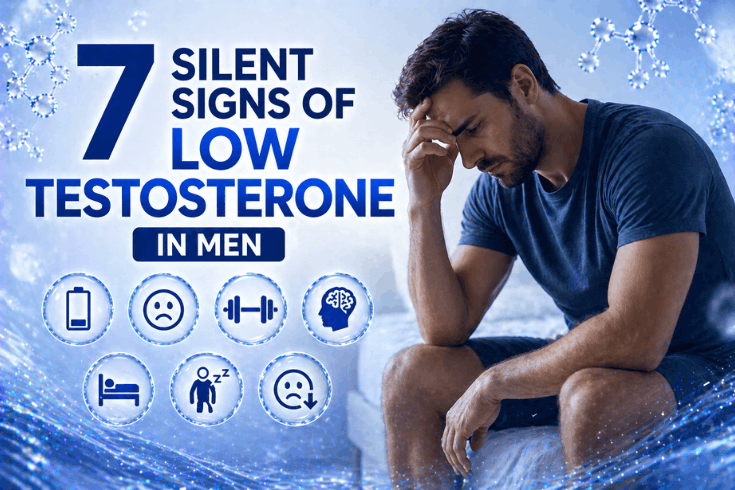
You’re Not Just Getting Older It Might Be Low T
You hit snooze three times. You drag yourself through the day on coffee. You’ve gained weight around your belly despite eating the same way you always have. Your patience is thin, your focus is shot, and the drive you used to have professionally and personally feels like a distant memory. Most men write this off. “This is just what 40 feels like,” they tell themselves.
But what if it isn’t? The signs of low testosterone in men are everywhere once you know what to look for yet they are among the most commonly dismissed symptoms in men’s health. According to the American Urological Association, Low T affects an estimated 2 in 10 men over the age of 40, and a significant number of them go undiagnosed for years because their symptoms look exactly like “normal aging.”
This article breaks down the 7 silent signs of low testosterone in men, why each one happens, and what steps you should take if you recognize yourself in this list.
What Is Low Testosterone and Why Does It Matter?
Testosterone is the primary male sex hormone. It drives muscle growth, bone density, energy production, mood regulation, cognitive function, and sex drive. Most men produce the majority of their testosterone during deep sleep, and levels naturally begin a gradual decline of about 1% per year after age 30.
Normal testosterone levels fall between 300 and 1,000 ng/dL. When levels drop below that threshold — or even within the low-normal range with significant symptoms — men can experience a wide range of physical, mental, and emotional changes that are often subtle at first.
The problem is not the decline itself. The problem is when men assume nothing can be done about it.
7 Silent Signs of Low Testosterone in Men
1: Persistent Fatigue That Sleep Cannot Fix
The most common and underrecognized of all the signs of low testosterone in men is fatigue — not the kind that goes away after a good night’s sleep, but the kind that sits in your bones regardless of how many hours you log in bed.
Men with Low T describe it as feeling perpetually drained. Getting through a regular workday feels disproportionately exhausting. Activities you used to enjoy feel like effort. Even motivation to do simple things drops off significantly.
Testosterone is directly involved in energy production and red blood cell synthesis. When levels decline, the body loses some of its ability to maintain and sustain energy at a cellular level — leaving men running at a fraction of their normal capacity. Why men dismiss it: “I’m stressed.” “Work is demanding right now.” “I just need a vacation.”
2: Unexplained Weight Gain Especially Around the Midsection
Belly fat that accumulates despite no dramatic change in diet or exercise is one of the most telling yet overlooked early signs of low testosterone in men — particularly in men over 40.
Testosterone regulates where the body stores fat. When levels fall, the body preferentially stores fat around the abdomen. Simultaneously, muscle mass begins to decrease, which slows the metabolism further and compounds the problem. To make it worse, abdominal fat cells contain an enzyme called aromatase that converts testosterone directly into estrogen — deepening the hormonal imbalance even further.
Low testosterone symptoms, fatigue, and weight gain appearing together as a cluster should never be dismissed as coincidence. In men over 40, this combination is one of the clearest indicators that hormonal testing is warranted. Why men dismiss it: “My metabolism is slowing down. “I’m not as active as I used to be.”
3: Brain Fog and Difficulty Concentrating
Struggling to focus? Forgetting things more often? Feeling mentally slower than you used to? Brain fog is a hallmark low T symptom that rarely gets connected to hormones. Testosterone receptors exist throughout the brain, and the hormone plays a key role in cognitive function, memory, and mental clarity.
When testosterone declines, many men notice:
- Difficulty concentrating at work
- Forgetting words or names mid-sentence
- Reduced mental sharpness and decision-making speed
- A general sense of “mental cloudiness”
Why men dismiss it: “I’ve just been stressed.” “I have too much on my plate.”
4: Low Sex Drive (That You’ve Stopped Talking About)
A declining libido is one of the most recognized early signs of low testosterone in men — but it’s also one of the most underreported, because men rarely bring it up voluntarily.
It’s not just about frequency. Men with Low T often report:
- Little to no interest in sex, even with an attractive partner
- Reduced sexual thoughts or fantasies
- Difficulty becoming aroused
- Emotional disconnection during intimacy
Testosterone is the primary driver of male sex drive. When it drops, so does libido — often gradually enough that men don’t notice the shift until they look back months or years later.
Why men dismiss it: “I’m just tired.” “We’ve been together a long time.” “This is normal at my age.”
5: Mood Changes Irritability, Anxiety, or Feeling ‘Flat’
This is perhaps the most surprising sign on this list. Many men with Low T don’t just feel physically tired they feel emotionally different. This can show up as:
- Increased irritability or a short fuse
- Unexplained sadness or low mood
- Reduced motivation and sense of purpose
- Emotional flatness — feeling numb or indifferent to things you used to care about
- Anxiety or restlessness
Testosterone influences serotonin and dopamine pathways in the brain. Low levels are closely linked to depression and anxiety in men a connection that is frequently missed in clinical settings.
This is one of the most underdiagnosed low testosterone symptoms in men over 40, because it’s often attributed to work stress, relationship issues, or midlife crisis.
Why men dismiss it: “I’m just going through a rough patch.” “This is just life.”
6: Loss of Muscle Mass and Strength
Even if you’re still working out, you might notice that gains are harder to come by — or that you’re losing muscle you worked years to build.
Testosterone is the primary anabolic hormone in the male body. It signals muscle protein synthesis and supports muscle fiber maintenance. When levels are low:
- Muscles shrink even with regular exercise
- Strength decreases noticeably
- Recovery after workouts takes much longer
- Body composition shifts from lean to soft
For men who’ve been active most of their lives, this change is deeply unsettling — but it’s rarely connected to hormones without testing.
Why men dismiss it: “I’m just not training as hard.” “Recovery gets harder as you get older.”
7: Poor Sleep Quality and Insomnia
Low testosterone and poor sleep create a vicious cycle that’s hard to break without addressing the hormone issue directly.
Men with Low T often experience:
- Difficulty falling or staying asleep
- Waking up multiple times during the night
- Reduced deep (REM) sleep
- Feeling unrested regardless of hours slept
Sleep deprivation further suppresses testosterone production (most testosterone is produced during deep sleep), which makes the problem progressively worse over time.
This is one of the most common low testosterone symptoms in men over 40 — yet it’s almost always attributed to stress, caffeine, or screen time.
Why men dismiss it: “I just can’t wind down at night.” “I’ve always been a light sleeper.”
Who Is Most at Risk for Low Testosterone?
Age Especially After 40
Testosterone drops roughly 1% per year after age 30. By the mid-40s, the cumulative decline becomes clinically significant for many men. Most dismiss the symptoms as aging when in reality, Low T is a measurable and treatable condition. Low testosterone symptoms in men over 40 are among the most underdiagnosed in men’s health.
Excess Body Fat Particularly Belly Fat
Visceral fat cells contain an enzyme called aromatase that converts testosterone directly into estrogen. The more belly fat you carry, the more testosterone you are actively losing. This is why low testosterone symptoms, fatigue, and weight gain almost always appear together they are the same hormonal problem expressing itself in multiple ways.
Chronic Stress and High Cortisol
Cortisol and testosterone compete for the same hormonal building blocks. Under chronic stress, the body prioritizes cortisol suppressing testosterone production in the process. Men in high-pressure careers or running on poor sleep are carrying a continuous hormonal tax without realizing it.
Sedentary Lifestyle
Resistance training is one of the most powerful natural stimulants of testosterone. Without it, muscle mass decreases, body fat increases, and testosterone declines faster. Even 2–3 sessions per week of weight training can make a measurable difference in hormone levels.
Poor Sleep or Untreated Sleep Apnea
Most daily testosterone is produced during deep sleep. Poor sleep habits cut that window short. Untreated sleep apnea is especially damaging — it causes hundreds of micro-awakenings per night that silently suppress testosterone production, often for years.
Conclusion:
The signs of low testosterone in men are real, measurable, and more common than most people realize but they are also easy to explain away, one symptom at a time. Fatigue becomes “I’m stressed.” Weight gain becomes “I’m getting older.” A disappearing sex drive becomes “I’m just tired.” Mood changes become “I’m going through a phase.” And before long, years have passed and a man has quietly accepted a version of himself that is running significantly below capacity. You do not have to accept that as your baseline.
Low T is a clinical condition with a clinical solution. A simple blood test can tell you within days whether your hormone levels are where they should be. If they are not, modern TRT (Testosterone Replacement Therapy) protocols have helped men in their 40s, 50s, and beyond reclaim the energy, focus, strength, and drive they thought they had permanently lost. The first step is recognizing that what you are experiencing might not be “just aging” — it might be something that can actually be fixed.
Your energy, your mood, and your quality of life are worth taking seriously. Don’t let Low T go unaddressed — the right treatment can make a real difference in how you feel, think, and perform every day. Visit TRTNYC.com for more information and to book your consultation today.
Frequently Asked Questions
What are the most common signs of low testosterone in men?
The most frequently reported signs include persistent fatigue, unexplained weight gain around the abdomen, low libido, brain fog, mood changes, muscle loss, and poor sleep quality.
At what age do signs of low testosterone in men typically appear?
Many men begin noticing symptoms in their late 30s or early-to-mid 40s. However, Low T can occur at any age depending on lifestyle, health status, and other risk factors.
Can low testosterone cause depression in men?
Yes. Low T is strongly associated with depression, irritability, low motivation, and emotional flatness in men. These mood symptoms are frequently misattributed to stress or external circumstances rather than a hormonal cause.
How is low testosterone diagnosed?
Through a blood test measuring total testosterone, free testosterone, and in some cases SHBG (sex hormone-binding globulin) and LH levels. Levels below 300 ng/dL are generally considered clinically low.
Can low testosterone be treated?
Absolutely. Testosterone Replacement Therapy (TRT) is a well-established, medically supervised treatment that has helped hundreds of thousands of men restore energy, body composition, mood, and quality of life. A qualified men’s health provider can evaluate whether TRT is appropriate for your situation.
Medical Disclaimer: The information provided on this page is for educational purposes only and does not constitute medical advice, diagnosis, or treatment recommendations. Always consult a qualified and licensed healthcare provider before beginning any hormone therapy or making changes to your current treatment plan. TRT NYC is a medical practice licensed in New York State. Individual outcomes vary based on individual health factors.