TRT Before and After: Real Results and a Month-by-Month Timeline
 By Tejanshu Jaluthria
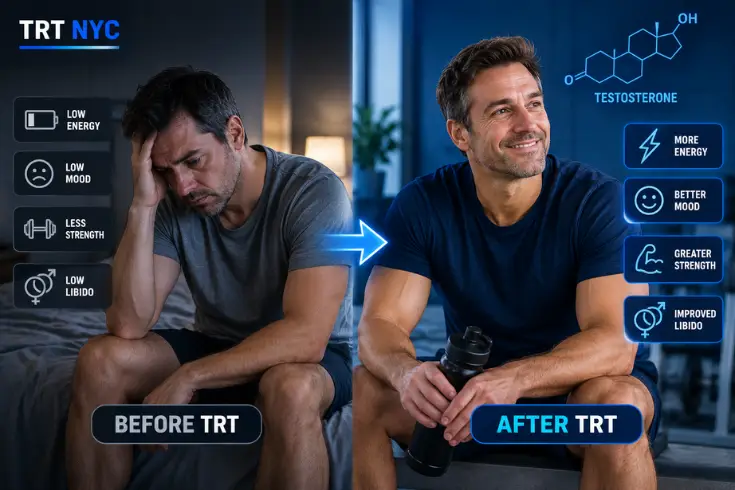
If you’re searching “TRT before and after,” you want one thing: to know exactly what changes once testosterone replacement therapy brings your levels back to normal, and how fast it happens. This guide walks through the real month-by-month timeline, from the first mood shift at week 2 to full body-composition change by month 12, so you know what’s realistic before you commit to anything.
Short answer: most men feel a mood and energy lift within 2–4 weeks, libido returns by around week 6, visible muscle and fat changes build over 3–6 months, and the full transformation, muscle, fat, bone density, settles in over 6–12 months. How big your personal “before and after” turns out to be depends on how low your testosterone was to start, and how consistently you train, eat, and sleep alongside treatment.
This isn’t a hype piece. TRT restores what your body should already have, it’s not a shortcut to a bodybuilder physique, and anyone promising an 8-week transformation is selling something. Here’s what actually happens, stage by stage.
TRT Before and After: Myth vs. Reality
| The Myth | The Reality |
| “I’ll look visibly different in a month” | You’ll feel different in a month (sleep, mood, energy). Visible muscle/fat change takes 3+ months. |
| “TRT alone builds the muscle” | TRT makes muscle-building possible and faster; your training and protein intake do the actual building. |
| “Those Instagram transformations are just TRT” | Most involve months of dedicated training, dieting, and often doses well above a standard replacement range. |
| “If my dose matches a stranger online, I’m good” | Dose is individual, based on your labs, weight, and symptoms, not a number you saw in a comment section. |
| “More testosterone = faster results” | Beyond a healthy range, more T doesn’t mean more benefit, it means more risk (hematocrit, estrogen, heart). |
TRT Before and After: What Actually Changes?
When testosterone is restored to a healthy range, changes show up across several systems, usually in this order:
- Mood & mental clarity: less irritability, sharper focus, more drive
- Energy: deeper, steadier energy instead of an afternoon crash
- Libido & erections: desire typically returns first; erection quality follows over several weeks
- Strength & muscle: better gym performance shows up before visible muscle does
- Body fat: especially stubborn visceral fat around the midsection
- Sleep quality: often improves alongside energy
- Long-term markers: bone density and metabolic health trend better over months, per the Endocrine Society’s clinical practice guideline on testosterone therapy
For a deeper look at exactly how fast these kick in, see our full breakdown of how long TRT takes to work.
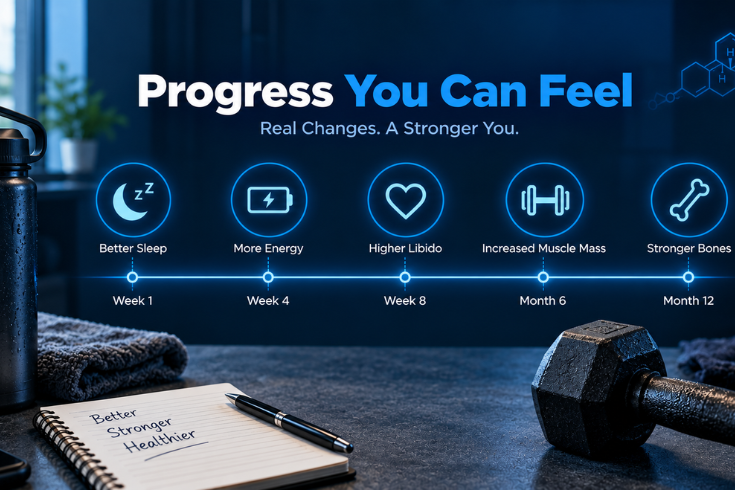
TRT Before and After Timeline (Month by Month)
| Timeframe | What You’ll Likely Notice |
| Weeks 1–2 | Sleep improves, fatigue eases, mood starts to lift |
| Weeks 3–4 | Steadier energy, sharper focus, less brain fog |
| Weeks 5–8 | Libido returns, erections improve, workouts feel stronger |
| Months 2–3 | Early waistline fat loss, visible strength gains, first dose recheck |
| Months 3–4 | Faster recovery, measurable lean muscle gains with training |
| Months 4–6 | Noticeable body recomposition, more defined physique, stable mood/libido |
| Months 6–12 | Peak body composition, improving bone density and metabolic markers |
Notice the order: how you feel changes first, how you look changes last. That’s normal physiology, not a sign TRT “isn’t working.
TRT Before and After: 1 Month
One month in, don’t expect a visual transformation, expect a mental one. By week 4, most men report better sleep, less afternoon fatigue, and a noticeably calmer, more motivated mood. Libido is usually just starting to stir, and the gym may feel slightly easier, but visible muscle or fat change this early is uncommon, your testosterone hasn’t fully stabilized at a therapeutic level yet. If the mirror looks the same at one month, that’s expected. Judge this stage by how you feel, not how you look.
TRT Before and After: 2 Months
By eight weeks, the picture starts to change. Libido and erection quality are typically noticeably better, and many men report their first real jump in workout performance. If erections aren’t improving as expected at this stage, it’s worth reading our guide on erectile dysfunction while on TRT, sometimes estrogen or dose needs adjusting, not just time. This is also when clinics usually run a follow-up blood panel to fine-tune your dose. Subtle fat loss around the waistline can start here too, though it’s more “clothes fit better” than “visible in a photo” at this stage.
TRT Before and After: 3 Months
Three months is the milestone most men fixate on, and it’s where a “before and after” starts to look real. Energy, libido, mood, and focus are usually clearly, undeniably better. Strength in the gym is up. Early fat loss, especially around the waist, is often visible in photos taken under the same lighting and pose. The dramatic muscle change everyone pictures is still building, but most men describe feeling like a genuinely different person by month 3. This is also a standard point for a lab recheck, so your provider can adjust dose or manage estrogen if needed.
TRT Before and After: 6 Months
By six months, body composition changes are usually obvious to other people, not just to you. Mood, libido, and energy have typically plateaued at their new, higher baseline, this stage is less about new changes and more about months 1–4 compounding into something visible. One thing worth ruling out if progress stalls or reverses: some men gain water weight or fat if their dose or diet isn’t dialed in, our guide on does TRT cause weight gain breaks down when that’s a real concern versus normal fluctuation.
TRT Before and After: Body Composition (Muscle & Fat)
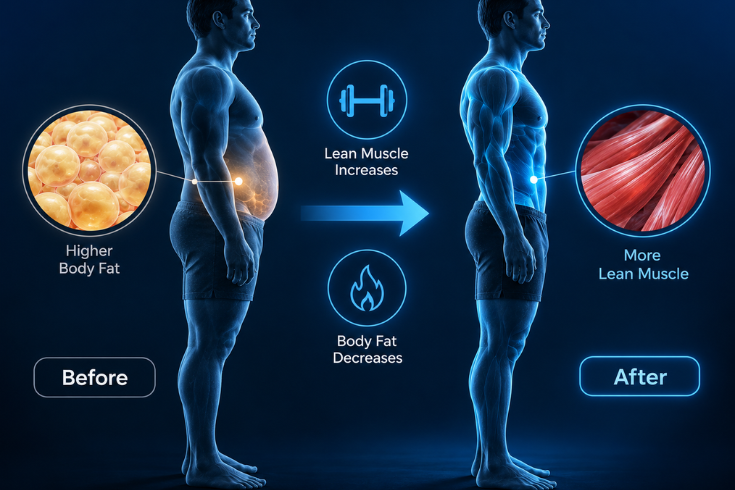
The body-composition shift is the most sought-after “before and after.” Testosterone is anabolic, it supports muscle protein synthesis and reduces fat, particularly visceral belly fat. The result is recomposition, more lean muscle, less fat, often at a similar scale weight. The landmark Bhasin et al. study in the New England Journal of Medicine found the biggest gains came from testosterone combined with strength training, not testosterone alone. For realistic expectations at a standard dose, see our guide on whether 100mg of testosterone a week builds muscle, and pair therapy with a proper TRT-specific training approach.
TRT Before and After: Face Changes
Some men notice “TRT face,” usually a leaner, more defined face as overall body fat (including facial fat) drops over months. If estrogen is well-managed, the face also looks less puffy since water retention falls. On the flip side, TRT can make skin oilier and trigger acne early on. We cover this in more depth, including the puffiness-vs-estrogen link, in does TRT change your face. Be realistic: dramatic “jawline transformation” claims online are mostly fat loss plus better photos and lighting, TRT supports it indirectly, it doesn’t reshape bone.
TRT Before and After Pictures: Are They Real?
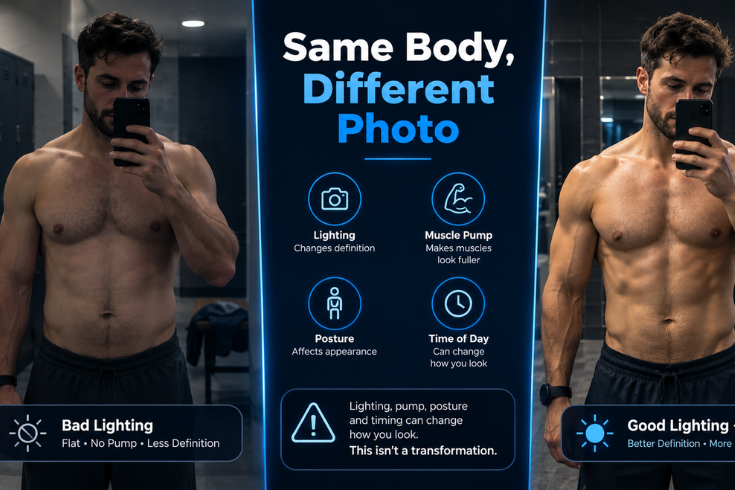
Search “TRT before and after” and you’ll hit a wall of dramatic transformation photos, some real, most misleading. Before you compare yourself to a stranger’s post, know this:
- Lighting, pose, and muscle pump change how a physique looks far more than people realize
- Many “TRT” before-and-afters are actually months of dedicated training and a calorie deficit stacked on top of therapy, not testosterone alone
- Some posted transformations involve doses well above a standard replacement range, which isn’t TRT anymore, it’s a different risk profile entirely
- Genuine TRT before and after photos, taken months apart under similar conditions, look like steady improvement, not a magazine cover
Want an honest comparison? Take a photo on day one, same lighting, same pose, and revisit it at months 3 and 6. That will tell you more than anyone else’s photo ever could.
TRT Before and After Over 40

Men over 40 often see the most dramatic before and after, simply because their testosterone deficit tends to be larger. Testosterone declines roughly 1–2% per year after 30, so by the mid-40s and 50s many men are well below baseline and dealing with several symptoms at once. It’s part of why so many men in this age group ask us whether HRT can make you look younger, and the honest answer is: indirectly, yes, through better sleep, less fat, and improved skin, not through reversing age itself. The payoff is often worth it: many men describe feeling “10–15 years younger” once levels are restored.
What Affects Your TRT Before and After Results?
Two men on the same dose can end up with very different “after” photos. The biggest factors:
- Starting level: the lower you began, the bigger the change
- Consistency: steady dosing, no skipped injections
- Strength training: the single biggest lever for muscle/body recomp
- Diet & protein: you can’t out-TRT a bad diet
- Sleep: recovery and hormone health depend on it
- Estrogen management: balanced estradiol for libido, mood, and a non-puffy look
- Dose optimization: guided by follow-up labs, not guesswork or online forums
Realistic Expectations (and Honest Limits)
TRT restores normal testosterone, it’s not a shortcut to a bodybuilder physique, and it won’t fix everything. As Mayo Clinic notes, testosterone therapy also carries real risks, prostate effects, blood cell changes, and cardiovascular considerations, which is exactly why treating normal aging with TRT “just in case” isn’t advisable. The eye-popping before-and-after photos online are often cherry-picked or involve higher-than-TRT doses. Genuine TRT results are real but gradual, and they’re biggest in men who truly had low testosterone. Always treat under a licensed provider, and confirm low testosterone first.
A Realistic Example
A 46-year-old starts TRT with testosterone around 240 ng/dL, plus fatigue, low libido, and stubborn belly fat. Weeks 3–4: energy and mood are noticeably better. Month 2–3: libido is back, workouts feel strong, waist is shrinking. Month 6: he’s added visible lean muscle, dropped fat, and his labs sit in a healthy range. He didn’t “transform overnight,” he combined optimized TRT with lifting four days a week, more protein, and better sleep. That’s a realistic before and after.
Conclusion
TRT before and after is a real, staged transformation: mood and energy first (weeks), libido and erections next (~6 weeks), then muscle and fat changes over 3–6 months, with full benefits by a year. The size of your “after” depends on how low you started and how hard you train, eat, and sleep. Curious what treatment actually runs, check our TRT cost breakdown before you start. Restore your levels under a doctor, stay consistent, and set realistic expectations, TRT brings back your normal, and the work brings the rest.
👉 Curious where you stand? Check your levels first with an at-home testosterone test kit, then read the complete testosterone replacement therapy guide to understand the process.
Frequently Asked Questions
How long does TRT take to show before and after results?
Mood and energy often improve within 2–6 weeks, libido and erections by around 6 weeks, and visible muscle and fat changes over 3–6 months. Full benefits, including body composition and bone density, build across 6–12 months.
What to expect after 1 month on TRT?
Don’t expect visible muscle or fat changes yet. By week 4 you should notice better sleep, less afternoon fatigue, and a steadier, calmer mood. Libido is usually just beginning to return. Physical changes take longer because your body needs more time to stabilize at a therapeutic testosterone level.
Is 3 months of TRT enough?
Enough to feel like a different person, yes. Energy, mood, libido, and focus are typically clearly better, and early fat loss is often visible. It’s not enough time for full body-composition change; muscle and fat shifts continue building through month 6 and beyond.
What are realistic TRT before and after results?
More energy, restored libido, better mood and focus, gradual muscle gain, and fat loss especially around the belly. TRT restores normal testosterone, so changes are meaningful but not superhuman, and they’re largest in men who genuinely started low.
Does TRT change your face?
It can, indirectly. As body fat drops over months, the face often looks leaner and more defined, and less puffy if estrogen is managed. TRT can also make skin oilier or cause acne.
Does TRT build muscle and burn fat?
Yes, it supports lean muscle growth and reduces fat, especially visceral fat, leading to body recomposition. But at a TRT dose, your training and diet do most of the work, testosterone makes it more effective, not automatic.
How long to lose belly fat on TRT?
Visceral (belly) fat is usually one of the more responsive areas to testosterone therapy, but it’s gradual. Most men notice their waistline changing around month 2–3, with more meaningful loss by month 6, especially when TRT is paired with resistance training and a reasonable diet.
Is 200mg of testosterone a month a lot?
This depends on individual factors, weight, ester type, starting testosterone, and treatment goals. As general context, standard TRT weekly doses often range from about 100–200mg per week, so 200mg spread across an entire month would generally sit on the lower end of typical replacement dosing for many protocols. This isn’t a benchmark to self-diagnose against; only your bloodwork and provider can tell you if your dose is right.
Are TRT before and after photos online real?
Some are, but many are misleading, cherry-picked, taken far apart with strict dieting and training, or involving higher doses or other compounds. Treat dramatic photos with skepticism and focus on realistic, gradual results.
Written by Tejanshu Jaluthria /Last updated: September 2026
Medical disclaimer: This article is for educational purposes only and is not medical advice, diagnosis, or treatment. Individual results vary significantly and are not guaranteed. trtnyc.com is an independent informational resource, not a medical provider. Always consult a licensed healthcare provider before starting testosterone therapy.