
When to Take Anastrozole With Testosterone (and When Not To)
 By TRT NYC Editorial Team
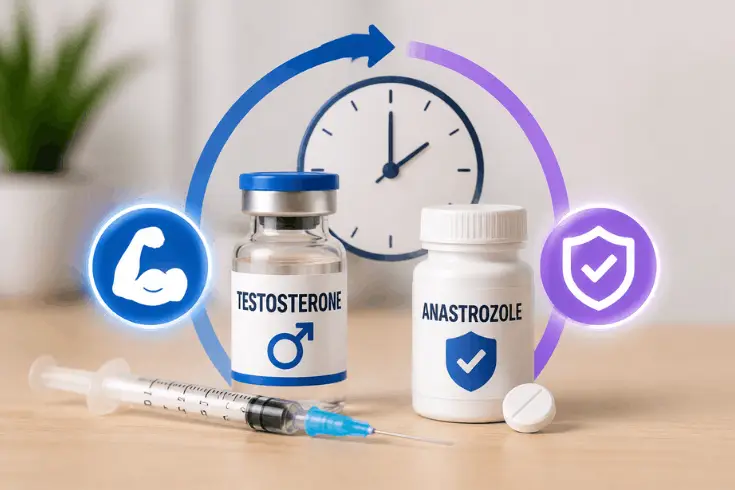
Take anastrozole with testosterone only when your estradiol (E2) is genuinely high and causing symptoms — and when you do, take it on your injection day or 24–48 hours after, when testosterone converts to estrogen the fastest. Most men on TRT don’t need it at all. Here’s the right timing and dose, plus how to know if you actually need it.
If you’re on TRT and someone handed you anastrozole, the real question isn’t just when to take it — it’s whether you should. Anastrozole is an aromatase inhibitor: a prescription medication that blocks the enzyme that turns testosterone into estrogen. On TRT, doctors sometimes add it off-label to bring down high estradiol. But you take it only when your estrogen is truly high and causing symptoms, timed around your testosterone dose — not automatically with every shot. This guide gives you the timing and dose, and the part most pages skip: when to skip it entirely.
When to Take Anastrozole With Testosterone (Quick Answer)
Take anastrozole only if a sensitive estradiol blood test shows your estrogen is high and you have estrogen-related symptoms like gynecomastia, nipple tenderness, or heavy bloating. When it’s warranted, take it on the same day as your testosterone injection or within 24–48 hours after, since that’s when aromatization (testosterone turning into estrogen) peaks. Typical doses are small — often 0.25–0.5 mg once or twice a week — and always adjusted to follow-up labs. If your estrogen is normal or you have no symptoms, the right move is usually not to take it at all.
When You Actually Need Anastrozole on TRT (and When to Skip It)
Here’s the most important thing to understand: anastrozole is overprescribed on TRT. Plenty of clinics hand it out by default, but estrogen isn’t the enemy — men need healthy estradiol for libido, erections, mood, bone strength, and heart health. You only want this drug when high estrogen is actually causing you problems.
| Take anastrozole when… | Skip / don’t take it when… |
| Estradiol is high on a sensitive test AND you have symptoms | Your estradiol is normal, even if “on the higher side” |
| You have gynecomastia (breast tissue) or nipple tenderness | You have no estrogen symptoms at all |
| You have heavy water retention or bloating tied to high E2 | Your symptoms could actually be low E2 (they overlap) |
| Your prescriber confirms the need with bloodwork | A clinic prescribed it “by default” with no labs |
If you’re just starting treatment, get the foundation right first — our TRT guide covers what normal looks like before you add anything to the protocol.
When to Take Anastrozole With Your Testosterone Shot (Timing & Dose)
Once your provider confirms you need it, timing is simple and tied to your injection schedule.
- On twice-weekly injections: take a small dose (often 0.25 mg) on each injection day, or the day after. This matches the rise in estrogen that follows each shot.
- On once-weekly injections: many take it the day of or 1–2 days after the shot, when estradiol climbs the most.
- Dose low and adjust: a common starting point is 0.25–0.5 mg once or twice a week. Some protocols scale to testosterone dose, but starting low protects you from crashing your estrogen.
- Recheck labs in 4–6 weeks: anastrozole keeps working in your system, so changes show up on bloodwork, not by feel. Adjust based on your sensitive estradiol result, not guesswork.
The golden rule: start with the smallest dose that controls your symptoms. It’s far easier to nudge a dose up than to recover from an estrogen crash.
High Estradiol vs Low Estradiol: Why the Symptoms Trick You
Here’s the trap that sends men to anastrozole when they don’t need it: the symptoms of high estrogen and low estrogen overlap. Feeling moody and tired? That can be either. Guys assume “high estrogen,” take an aromatase inhibitor, crash their E2, and feel worse.
| High estradiol symptoms | Low estradiol (crash) symptoms |
| Puffy, bloated, water retention | Dry, achy, cracking joints |
| Nipple tenderness or gynecomastia | Zero libido, weak erections |
| Moodiness, feeling emotional | Low mood, irritability, anxiety |
| Higher blood pressure from fluid | Brain fog and fatigue |
| — | Bone loss over time |
Because the lists blur together, you can’t diagnose your estrogen by feel — you need a blood test. If estrogen control through diet is more your goal, note that supplements like DIM are also widely misunderstood; see what DIM actually does to your hormones before reaching for anything.
The Estrogen Crash: Why Too Little Estrogen Is Worse
Crashing your estradiol is usually worse than having it a bit high. When anastrozole drives E2 too low, libido tanks, erections suffer, joints ache, mood drops, and — over time — bone density falls. That’s why hormone specialists increasingly push back on routine use. A widely cited survey of ISSM members on estrogen management in hypogonadism reflects this divided, cautious view, and the Endocrine Society recognizes healthy estradiol as essential to male health, not something to crush toward zero. The takeaway: treat symptoms backed by labs, not a number you’re chasing — and if you’ve over-suppressed, stopping or lowering the dose usually brings you back.
A real example: a 44-year-old on 200 mg/week gets nipple tenderness and bad bloating; his sensitive estradiol comes back at 65 pg/mL. His doctor adds 0.25 mg anastrozole on each injection day and rechecks in five weeks — symptoms resolve. Contrast that with a guy whose clinic put him on anastrozole by default with no labs: his E2 dropped to single digits, his libido vanished, and simply stopping the drug fixed him.
Test Before You Take Anastrozole (Use the Sensitive Estradiol Test)
Never dose anastrozole off symptoms alone — test first. And ask specifically for the sensitive (LC-MS/MS) estradiol test, not the standard estradiol assay, which was designed for women and can read inaccurately in men. The sensitive test gives the real number anastrozole decisions should be based on. Pair it with total and free testosterone so you see the full picture; our testosterone testing guide explains which panel to request, and checking free testosterone and SHBG shows how much usable testosterone you’ve got driving that estrogen in the first place.
The Bottom Line on Taking Anastrozole With Testosterone
When to take anastrozole with testosterone comes down to two things: take it on or just after your injection day when aromatization peaks — but only if a sensitive estradiol test and real symptoms say you need it. Most men on TRT don’t. Estrogen isn’t the enemy; crashing it causes more problems than mildly high levels. Test first, dose low, recheck labs, and treat symptoms, not numbers.
Not sure if you actually need anastrozole — or worried you’ve crashed your estrogen? Book a TRT visit with TRT NYC and we’ll run a sensitive estradiol test, match your symptoms to your real numbers, and dose (or stop) anastrozole based on bloodwork — so you balance estrogen instead of crushing it.
Frequently Asked Question
How much anastrozole should you take on TRT?
Doses are small — often 0.25 to 0.5 mg once or twice a week — and always tailored to your estradiol labs. Some protocols scale the dose to your testosterone amount, but starting low is safer because it’s easy to over-suppress estrogen. Your prescriber sets the exact dose from bloodwork.
Do you need anastrozole on TRT?
Most men don’t. You only need it if a sensitive estradiol test shows high estrogen and you have symptoms like gynecomastia or heavy bloating. Routine, “just in case” use isn’t supported and risks crashing the estrogen men need for libido, mood, and bone health.
What are the symptoms of high estradiol on TRT?
Common signs include water retention and puffiness, nipple tenderness or breast tissue growth (gynecomastia), moodiness, and higher blood pressure from fluid. But these overlap with low-estrogen symptoms, so you can’t diagnose high E2 by feel — confirm it with a sensitive blood test.
What happens if your estrogen gets too low?
Crashing estradiol causes low libido, weak erections, achy joints, low mood, brain fog, fatigue, and — long term — bone loss. Too-low estrogen is generally worse than mildly high estrogen, which is why anastrozole should be dosed conservatively and only when truly needed.
How often should you take anastrozole?
When needed, most men take it once or twice a week, often timed to their injection days. It’s not a daily medication for TRT, and the frequency is adjusted based on follow-up estradiol labs. Less is usually more.
Can you take anastrozole the same day as your testosterone shot?
Yes — taking it on injection day or 24–48 hours after is a common approach, because that’s when testosterone converts to estrogen the fastest. The goal is to blunt the estrogen rise that follows your shot, not to suppress estrogen around the clock.
What estradiol level is too high on TRT?
There’s no universal cutoff, but providers often consider treatment when sensitive estradiol is elevated (commonly above ~40–60 pg/mL) and symptoms are present. The number alone isn’t enough — many men feel great at the higher end. Symptoms plus labs guide the decision.
When should you take anastrozole with testosterone?
Take it only when high estradiol is confirmed by a sensitive test and you have symptoms, timed on your injection day or shortly after. If your estrogen is normal or you feel fine, the right answer is usually not to take it at all.