The Best Supplements to Take While on TRT (and 4 to Avoid)
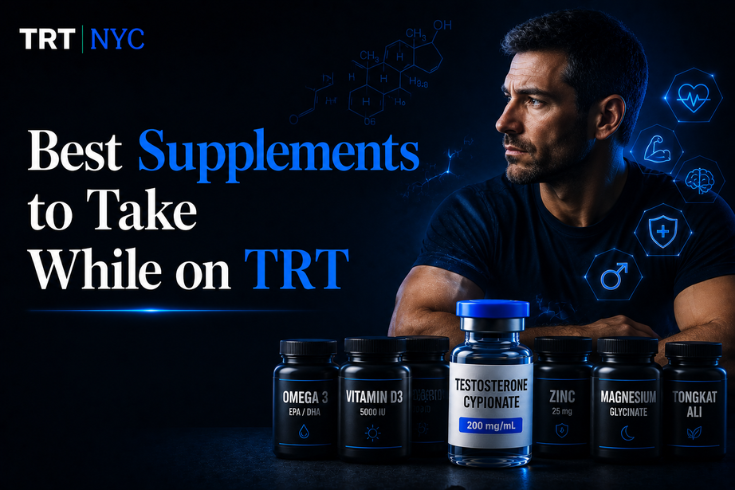
The best supplements to take while on TRT aren’t testosterone boosters — those are pointless once you’re already supplementing testosterone directly. The supplements actually worth your money do three different jobs: they manage the side effects of testosterone therapy, support healthy estrogen balance, and fill the nutritional gaps that affect how well you feel on treatment.
This list covers seven supplements genuinely worth taking each graded by how strong the evidence is — plus four you should actively avoid, led by one that can make a serious TRT side effect significantly worse. Every recommendation here is about supporting and protecting your therapy, not “boosting” a hormone you’re already taking.
How These Supplements Were Chosen
Before the list, the filter because most “TRT supplement” articles fail this test. Every supplement here had to do something useful for a man who is already on testosterone therapy. That immediately rules out the entire category of testosterone boosters — the herbs and compounds marketed to raise your natural production. When you’re injecting or applying testosterone directly, raising your own production is irrelevant. Any list that recommends “T-boosters” alongside TRT doesn’t understand what TRT is.
The supplements that earned a place do one of three jobs:
- Manage TRT’s side effects: especially the cardiovascular and blood-related ones
- Support healthy estrogen balance: modestly, as a complement to (not a replacement for) your prescribed protocol
- Cover nutritional gaps: the deficiencies that quietly affect your energy, recovery, and mood on treatment
Each supplement below is graded Strong (worth it for most men on TRT), Moderate (worth it for many), or Situational (worth it for some). That honesty is the point not everything popular is worth your money.
The 7 Best Supplements to Take on TRT
- Omega-3 Fish Oil Evidence: Strong
This is the single most valuable supplement for most men on TRT, because it directly addresses TRT’s main cardiovascular concern. TRT can raise hematocrit and blood viscosity (thicker blood), and omega-3 fatty acids specifically EPA and DHA support cardiovascular health, reduce inflammation, and help with blood flow. Dose: 2–3 grams of combined EPA/DHA daily, from a high-quality fish oil or from regularly eating wild-caught fatty fish. This is the one most men on TRT should not skip.
- Vitamin D Evidence: Strong (if you’re deficient)
Vitamin D functions as a hormone in the body and supports bone health, mood, immune function, and testosterone metabolism. The catch is in the qualifier: it’s strongly worth taking if you’re deficient, which a large share of men are — but megadosing when you’re already sufficient does little. Dose: 1,000–4,000 IU daily, ideally guided by a blood test that shows your actual level. Bone health matters especially on TRT, making this a high-value supplement for most men.
- Magnesium Evidence: Moderate
Magnesium supports sleep quality, muscle recovery, and may help lower SHBG (sex hormone-binding globulin), the protein that binds testosterone and reduces the free, active fraction. Most men are mildly deficient, and the recovery and sleep benefits compound the gains from TRT and training. Dose: 200–400 mg daily, preferably as magnesium glycinate or citrate (better absorbed and gentler on the stomach), taken in the evening to support sleep.
- Zinc Evidence: Moderate
Zinc is an essential mineral involved in testosterone metabolism and immune function, and it modestly supports the aromatase enzyme balance — the pathway that converts testosterone into estrogen. This makes it a useful, gentle support for estrogen management. Dose: 15–30 mg of elemental zinc daily; do not exceed 40 mg without medical guidance, as excess zinc interferes with copper absorption. Important honesty: zinc helps at the margins, but it is not a replacement for a prescribed aromatase inhibitor (more on that below).
- Boron Evidence: Moderate
Boron is a trace mineral that may modestly increase free testosterone and support healthy estrogen levels by influencing SHBG and aromatase activity. It’s a low-cost, low-risk addition that complements zinc for men focused on estrogen balance. Dose: 3–10 mg daily. Like zinc, treat it as gentle support, not a drug-strength effect.
- Ashwagandha Evidence: Situational
Ashwagandha is an adaptogen that lowers cortisol, the stress hormone. For men whose stress, sleep, or mood is a limiting factor, reducing chronic cortisol can help them feel and recover better on TRT. It won’t raise your testosterone meaningfully (you’re already on TRT), but the stress and sleep benefits are real. Dose: 300–600 mg of a standardized extract (such as KSM-66) daily. Caution: it can affect thyroid function, so men with thyroid conditions should check with a provider first.
- CoQ10 or NAC Evidence: Situational
Both are antioxidants worth considering for specific men. CoQ10 supports cardiovascular health and cellular energy — relevant given TRT’s cardiovascular monitoring needs. NAC (N-acetylcysteine) supports liver function and acts as an antioxidant. Neither is essential for everyone, but both are reasonable situational additions for men prioritizing cardiovascular or liver support. Dose: CoQ10 100–200 mg daily; NAC 600–1,200 mg daily.
The Truth About “Natural Aromatase Inhibitors”
A quick but important reality check, because this is where men waste money and miscalculate.
Zinc and boron are frequently marketed as “natural aromatase inhibitors” supplements that lower estrogen the way the prescription drug anastrozole does. They do nudge estrogen balance in a helpful direction, which is why they’re on this list. But the effect is modest, and they are not a substitute for a prescribed aromatase inhibitor when one is genuinely needed.
If your bloodwork shows your estradiol is significantly elevated on TRT and you have high estrogen symptoms, zinc and boron will not bring it down to target — that requires medical management, whether through dose adjustment or a prescribed aromatase inhibitor like anastrozole. Treat these supplements as supportive background, not as your estrogen-control strategy.
The 4 Supplements to Avoid on TRT
Just as important as what to take is what to stop. These four range from “pointless” to “potentially harmful.”
Iron the one that can genuinely hurt you
This is the most important avoid on the list. TRT already stimulates red blood cell production and raises hematocrit — the thickening of the blood that drives TRT’s clot risk. Adding iron supplements when your ferritin is normal or high pushes hematocrit higher and worsens that risk. Unless a blood test confirms you are genuinely iron-deficient, skip iron entirely on TRT and check the label of any multivitamin, because many contain it. For the full picture, see our guide on how to prevent blood clots on TRT.
DHEA
DHEA is a hormone precursor — a potent compound in its own right that converts into other hormones, including testosterone and estrogen. Adding it on top of a carefully calibrated TRT protocol throws off your hormone balance unpredictably, potentially raising your estrogen and complicating your monitoring. Your provider has dialed in your hormones; DHEA undials them.
Over-the-counter testosterone boosters
These are pointless once you’re on TRT — they claim to raise the production of a hormone you’re already supplementing directly. Worse, some contain proprietary blends with ingredients that can interfere with your protocol or distort your labs. There is no scenario where a man on properly dosed TRT benefits from an OTC T-booster.
High-dose biotin
Biotin itself isn’t dangerous, but high doses (common in hair, skin, and nail supplements) can distort the results of many lab tests — including some hormone assays. On TRT, where accurate monitoring is everything, false lab readings can lead to wrong dosing decisions. If you take biotin, stop it several days before any bloodwork, or avoid high doses entirely.
Test Before You Supplement
The smartest principle for supplementing on TRT: let your bloodwork guide you, not a generic list — including this one. Your TRT monitoring already involves regular blood tests. Use them. A vitamin D test tells you whether you need 1,000 or 4,000 IU — or none. A ferritin test tells you whether iron is genuinely low (rare on TRT) or whether you should avoid it entirely. Your hematocrit tells you how aggressively you need cardiovascular support. Your estradiol tells you whether estrogen management is even necessary.
Megadosing supplements you don’t need wastes money at best and, in the case of iron, causes harm. The men who get the most from supplementation on TRT are the ones who test, identify their actual gaps, and supplement to fill them — then retest to confirm it worked.
Quick Reference: Supplements on TRT
| Supplement | Evidence | Dose | What it does on TRT |
| Omega-3 (fish oil) | Strong | 2–3g EPA/DHA daily | Cardiovascular protection, blood viscosity |
| Vitamin D | Strong (if deficient) | 1,000–4,000 IU daily | Bone, mood, immune, T metabolism |
| Magnesium | Moderate | 200–400 mg daily | Sleep, recovery, lowers SHBG |
| Zinc | Moderate | 15–30 mg daily | Modest estrogen support, immune |
| Boron | Moderate | 3–10 mg daily | Modest free-T/estrogen support |
| Ashwagandha | Situational | 300–600 mg daily | Cortisol/stress reduction |
| CoQ10 / NAC | Situational | 100–200 mg / 600–1,200 mg | Cardiovascular / liver support |
| Iron | Avoid | — | Worsens hematocrit/clot risk |
| DHEA | Avoid | — | Disrupts managed hormone balance |
| OTC T-boosters | Avoid | — | Pointless on TRT; possible interference |
| High-dose biotin | Avoid | — | Distorts lab results |
Frequently Asked Questions
What supplements should I avoid while on TRT?
Avoid four: iron (it worsens TRT’s tendency to raise hematocrit and clot risk unless you’re confirmed deficient), DHEA (a hormone precursor that disrupts your managed hormone balance), over-the-counter testosterone boosters (pointless when you’re already on testosterone, and potentially interfering), and high-dose biotin (it distorts lab test results, complicating your monitoring). Iron is the most important — check your multivitamin label, since many contain it.
Can I take iron supplements on TRT?
Only if a blood test confirms you’re genuinely iron-deficient. TRT stimulates red blood cell production and raises hematocrit, and adding iron when your ferritin is normal or high pushes hematocrit higher and increases clot risk. For most men on TRT, iron supplementation is unnecessary and potentially harmful. Always check whether your multivitamin contains iron, and confirm your ferritin status before supplementing.
Do supplements actually lower estrogen on TRT?
Zinc and boron modestly support healthy estrogen balance by influencing the aromatase enzyme, which is why they’re worth taking. But the effect is gentle — they are not a replacement for a prescribed aromatase inhibitor. If your estradiol is significantly elevated with symptoms, that requires medical management (dose adjustment or a prescribed medication), not supplements. Treat zinc and boron as supportive background, not an estrogen-control strategy.
Should I take a multivitamin while on TRT?
A multivitamin can help cover general nutritional gaps, but check the label carefully for one critical issue: iron. Many men’s multivitamins contain iron, which you should avoid on TRT unless confirmed deficient. A multivitamin without iron, or targeted individual supplements based on your bloodwork (vitamin D, magnesium, omega-3), is generally a better approach than a generic iron-containing multivitamin.
Do testosterone boosters work if you’re already on TRT?
No. Testosterone boosters are designed to stimulate your body’s own testosterone production — which is irrelevant when you’re supplementing testosterone directly through TRT. You’re already providing the hormone these products claim to help you make. They offer no benefit on TRT, waste money, and some contain ingredients that can interfere with your protocol or distort your lab results.
What supplements help with high hematocrit on TRT?
No supplement reliably lowers hematocrit the real management tools are dose adjustment, delivery method changes, hydration, and sometimes therapeutic phlebotomy. Omega-3 fish oil supports blood flow and cardiovascular health, which is helpful background, but it’s not a treatment for elevated hematocrit. The most important supplement-related action for hematocrit is avoiding iron, which makes it worse. See our guide on preventing blood clots on TRT for the full management approach.
Is fish oil good to take with TRT?
Yes omega-3 fish oil is arguably the best supplement for most men on TRT. It supports cardiovascular health, reduces inflammation, and helps with blood flow, directly addressing TRT’s main cardiovascular consideration. Aim for 2–3 grams of combined EPA and DHA daily from a high-quality supplement or regular fatty fish. It’s a strong-evidence, high-value addition for nearly everyone on testosterone therapy.
The right supplement stack on TRT depends on your labs your hematocrit, your vitamin D, your ferritin, your estrogen — not a generic list. Book a consultation with TRTNYC to get the bloodwork that shows which supplements you actually need, which to avoid, and how to support your therapy based on your real numbers.