
What Size Needle to Draw Testosterone From a Vial?
 By TRT NYC Editorial Team
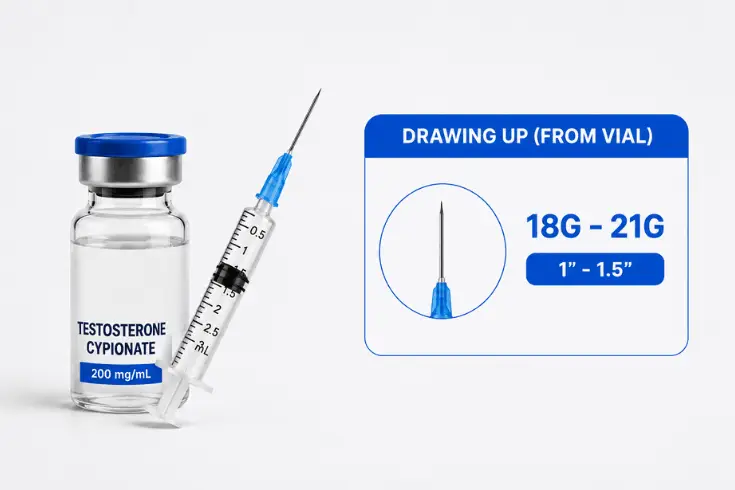
Use a thick 18–21 gauge needle, 1 to 1.5 inches long, to draw testosterone from the vial — then swap it for a thinner needle to inject. Testosterone sits in oil, so it’s too thick to pull quickly through a fine needle. A wide draw needle gets the dose loaded in seconds. Here’s the best gauge to pick, the 18-vs-21 trade-off, and how to draw without wrecking your vial.
If you tried to draw your dose with a skinny insulin pin and it crawled (or wouldn’t move at all), you’re not doing anything wrong — you just used the wrong needle. A draw needle is the thick needle you use to pull testosterone out of the vial, not the one you inject with. Because testosterone is suspended in oil, it moves slowly through fine needles, so you draw with a wide 18–21 gauge needle and then switch to a thinner one to actually inject. Below is the exact size, an 18-vs-20-vs-21 chart, and the simple fix for protecting your vial stopper.
What Size Needle to Draw Testosterone From a Vial? (Quick Answer)
The best size needle to draw testosterone from a vial is an 18 to 21 gauge needle, about 1 to 1.5 inches long. The wide bore pulls the thick oil fast, and the length is enough to reach the bottom of the vial. Remember: gauge runs backwards, so a lower number (18G) is a thicker needle. After you draw, take that needle off and put on a fresh, thinner one (23–27G) to inject.
Best Gauge to Draw Testosterone From a Vial (18 vs 20 vs 21)
All three draw gauges work — they just trade speed for stopper wear and waste. Here’s the quick comparison.
| Draw gauge | Speed | Stopper wear | Oil waste (dead space) | Best for |
| 18G | Fastest | Highest (beats up the stopper) | Most (more oil stuck in the needle) | Very thick oil, fast draws |
| 20G | Fast | Moderate | Moderate | Best all-round balance |
| 21G | Slower (still fine) | Lowest | Least | Protecting the stopper, saving oil |
For most men, 20 or 21 gauge is the sweet spot fast enough to draw without effort, gentle on the rubber stopper, and less oil left behind in the needle. Go 18G only if your oil is especially thick and slow. Whatever you draw with, the injection needle is a different (thinner) size see our full guide on what size needle for a testosterone injection to match the two.
Draw Needle vs Injection Needle: Always Switch Before You Inject
The number one beginner mistake is drawing and injecting with the same needle. Don’t. Here’s the simple routine:
- Draw with the thick needle (18–21G). It pulls the oil up in seconds.
- Pull that needle off and put on a fresh, thinner injection needle. Pushing through the rubber stopper dulls the tip — injecting with that same dull needle hurts more and roughs up your tissue over time.
- Inject with the sharp, thin needle. It glides in because the oil is already loaded.
Swapping needles also keeps things cleaner, since the draw needle has already passed through the vial top. If you’re brand new to all of this, our TRT guide covers the basics before your first shot.
Will a Big Draw Needle Damage the Vial Stopper? (Coring Fix)
A wide draw needle can chew up the rubber stopper over many punctures — and worse, it can “core,” meaning it slices off tiny rubber bits that fall into your oil. Research on multi-dose vials found that larger-bore and blunt needles cause more rubber coring than smaller, sharp ones. That’s a real reason not to default to the biggest needle you can find.
You can avoid most coring with two habits: use a sharp draw needle (not a worn one), and insert it at a slight angle with bevel up rather than punching straight down. If you ever see floating specks in your vial, don’t use it.
Should You Use a Blunt Fill Needle to Draw Testosterone?
A blunt fill needle is a needle made specifically for drawing from vials — it has a dull tip so it won’t stick your finger and is designed to reduce coring. Many people like a blunt 18G fill needle for drawing, then switch to a sharp thin needle to inject. It’s a solid, safe option if your pharmacy carries them. Store your vial properly between draws so the oil stays clean — here’s how to tell if your testosterone cypionate has expired.
Why Testosterone Is Hard to Draw (and How Long It Takes)
Testosterone is dissolved in a carrier oil, which is far thicker than water-based meds — that’s why it resists a thin needle. With a proper 18–21G draw needle, pulling a typical dose takes just a few seconds. With a fine insulin pin, the same draw can take three to four minutes and may bend the needle. So if drawing feels like a fight, the needle is the problem, not you. Want to confirm your dose is actually landing right? The proper testosterone test tells you whether your protocol is on target.
A real example: a guy new to TRT tries to draw his cypionate with a 25G insulin syringe, waits forever, and gives up thinking the oil is bad. He switches to a 20G draw needle and the same dose loads in five seconds — then he caps it, swaps to a 25G to inject, and he’s done.
The Bottom Line on the Best Needle to Draw Testosterone
To draw testosterone from a vial, use a thick 18–21 gauge needle, 1 to 1.5 inches long — with 20–21 gauge being the best balance of speed, low stopper wear, and minimal waste. Then always switch to a fresh, thinner needle to inject. Use a sharp or blunt fill needle to avoid coring, and if drawing feels slow, the fix is a wider needle, not more effort.
Tired of fighting your vial or guessing on needles? Book a TRT visit with TRT NYC and get a ready-to-go injection kit — the right draw and inject needles, the exact gauges for your dose, and a nurse to show you how to draw cleanly without coring or waste.
Frequently Asked Question
Can you draw and inject testosterone with the same needle?
You can, but you shouldn’t. Drawing through the rubber stopper dulls the needle, so injecting with it hurts more and causes more tissue trauma. Draw with a thick needle, then switch to a fresh, thinner one to inject — it’s cleaner and far more comfortable.
Is 18 or 21 gauge better for drawing testosterone?
21 gauge is gentler on the vial stopper and wastes less oil, while 18 gauge draws faster but beats up the stopper and leaves more oil in the needle. For most men, 20 or 21 gauge is the sweet spot fast enough without the downsides of an 18G.
What length needle do you need to draw from a vial?
A 1 to 1.5 inch needle is ideal for drawing, so it reaches the bottom of the vial as it empties. Length doesn’t affect comfort here since you’re not injecting with it — gauge (thickness) is what controls draw speed.
Does drawing with a large needle damage the vial stopper?
It can. Big-bore needles wear the rubber faster and can core, dropping tiny rubber bits into the oil. Use a sharp draw needle, insert at a slight angle, and step down to 20–21G if you want to protect the stopper. Discard the vial if you see floating particles.
How long does it take to draw testosterone?
With a proper 18–21G draw needle, just a few seconds. With a thin insulin needle, the same draw can take three to four minutes because the oil is so thick. If drawing feels slow, switch to a wider needle.
What is a blunt fill needle?
A blunt fill needle is a dull-tipped needle made for drawing medication from vials. It won’t easily prick your finger and is designed to reduce rubber coring. Many people use a blunt 18G to draw, then switch to a sharp thin needle to inject.
Why is testosterone so hard to draw?
Because it’s dissolved in oil, which is much thicker than water-based medications. That thickness resists fine needles, so you need a wider 18–21G draw needle to pull it quickly. The thickness is normal, not a sign anything is wrong.
What gauge needle do you use to draw testosterone?
An 18 to 21 gauge needle. The wide bore pulls the oily testosterone fast, then you switch to a thinner 23–27G needle to inject. Draw thick, inject thin is the rule.