Does Testosterone Expire? Shelf Life, Storage & Safety
 By Tejanshu Jaluthria
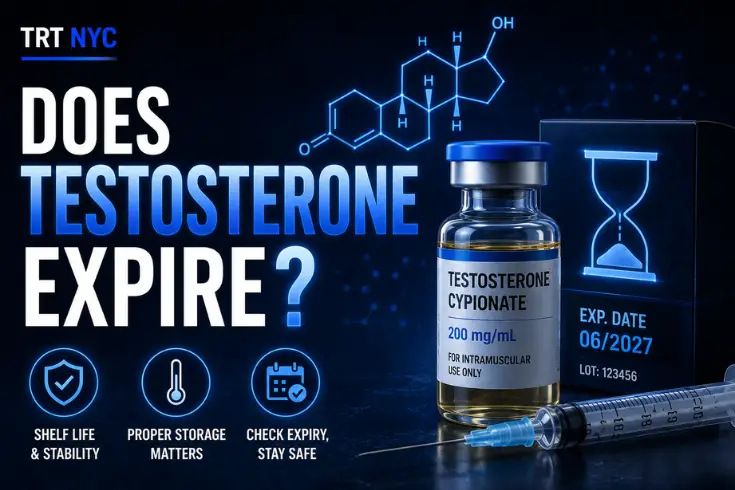
Yes, testosterone expires. Like any prescription medication, it loses potency over time and once a vial is opened, can lose sterility, which is the bigger risk. Unopened injectable testosterone typically lasts about two years from manufacture, while an opened multi-dose vial should usually be discarded around 28 days after the first puncture. Here’s the full shelf life by form, how to store it, and exactly when to throw it out.
If you’ve found an old vial of testosterone in a drawer, or you’re staring at a half-used bottle wondering whether it’s still good, you need a straight answer before you inject anything. Testosterone is a prescription hormone that, like all drugs, carries an expiration date set by its manufacturer, the date marking how long the product stays potent and sterile when stored correctly. Injectable testosterone (cypionate and enanthate), gels, creams, and pellets each have their own shelf life, and that timeline shrinks dramatically once a vial is opened. This guide gives you the numbers by form, the storage rules that keep testosterone from expiring early, and a clear “toss it if…” checklist.
Does Testosterone Expire? The Short Answer
Yes, testosterone does expire, and you should pay attention to two different dates. The first is the manufacturer’s expiration date on an unopened vial, tube, or packet, which is typically one to two years out (and sometimes longer for certain injectables). The second is the much shorter beyond-use date that starts the moment you open or puncture the product. After expiration, testosterone can lose strength and, in opened vials, sterility, so expired or questionable product should be replaced, not injected.
How Long Does Testosterone Last Before It Expires? (Shelf Life by Form)
The shelf life of testosterone depends on the formulation and whether it’s been opened. Here’s how the common forms compare.
| Testosterone form | Unopened shelf life (typical) | After opening / first use |
| Cypionate (injectable vial) | ~2 years from manufacture (FDA-labeled 24 months) | Discard ~28 days after first puncture (follow your label) |
| Enanthate (injectable vial) | ~2–5 years depending on product | Discard ~28 days after first puncture |
| Testosterone gel (packets/pump) | ~1–2 years | Use within the labeled period; packets are single-use |
| Compounded testosterone cream | Shorter (pharmacy beyond-use date) | Follow the pharmacy’s printed date |
| Testosterone pellets | Per manufacturer; implanted by a provider | N/A — implanted fresh |
Does Injectable Testosterone Expire? (Cypionate and Enanthate Shelf Life)
Injectable testosterone expires, and the cypionate label is specific about it. According to the FDA prescribing information for testosterone cypionate, the product carries a 24-month expiration period from manufacture when stored at controlled room temperature (roughly 68–77°F / 20–25°C), protected from light. Testosterone enanthate is similar, with some products labeled for longer. These oil-based esters are chemically stable, so an unopened, properly stored vial may retain most of its potency for a while past the printed date — but “may” is doing a lot of work there, and the manufacturer only guarantees it to the date on the box. For a deeper look at the most common injectable, see our dedicated guide on whether testosterone cypionate expires.
How Long Does Testosterone Last After Opening the Vial?
Once you puncture the vial, the unopened expiration date no longer applies. A multi-dose testosterone vial gets a much shorter beyond-use date — commonly around 28 days after the first needle entry, because every time you draw a dose, you risk introducing bacteria into the vial. At that point the main concern shifts from potency to sterility: even if the testosterone is still strong, a contaminated vial can cause infection. Your pharmacy or prescriber may print a specific beyond-use window, so follow the label you were given rather than guessing.
Do Testosterone Gels, Creams, and Pellets Expire?
Testosterone gels, creams, and pellets all expire too. Gel packets and pumps carry a manufacturer expiration date, usually one to two years out, and single-use packets shouldn’t be saved once opened. Compounded testosterone cream typically has a shorter beyond-use date set by the compounding pharmacy, because compounded products aren’t made for long shelf storage — always follow the printed pharmacy date. Pellets are implanted fresh by a provider, so storage at home isn’t a factor.
How to Store Testosterone So It Doesn’t Expire Early
Storage is what decides whether your testosterone reaches its labeled shelf life or degrades months early. Heat, light, and freezing are the enemies.
Store testosterone at controlled room temperature, roughly 68–77°F (20–25°C), away from direct sunlight, a bedroom drawer or closet works far better than a steamy bathroom cabinet or a hot car. A common question is whether testosterone needs to be refrigerated: for standard injectable cypionate and enanthate, no, room temperature is correct, and refrigeration isn’t required unless your specific product says so. Just as important, never freeze testosterone. Freezing can damage the oil and the hormone, and a vial that has frozen — even once, even if it later thawed, should not be used.
- Keep it in its original, labeled container so you can track the date.
- Store away from heat sources, windows, and humidity.
- Don’t transfer it between containers, which adds contamination risk.
- If injectable testosterone gets cold and cloudy, gently warm it to room temperature before judging it, but discard it if cloudiness or particles remain.
Signs Your Testosterone Has Expired or Gone Bad
Sometimes testosterone should be thrown out even before its date and the vial usually tells you. Discard it if you see any of these signs:
- Cloudiness or haziness that doesn’t clear after warming to room temperature.
- Floating particles, sediment, or crystallization in the oil.
- A change in color (testosterone is normally clear to pale yellow).
- A cracked vial, damaged stopper, or compromised seal.
- An unusual or off smell.
- It’s past the unopened expiration date, or past the ~28-day beyond-use date after opening.
A real example: a 45-year-old man finds a cypionate vial he stored in his bathroom cabinet about 14 months ago. It’s within the printed date, but the oil looks cloudy with tiny particles and the bathroom runs hot and humid after showers. Even though it hasn’t “expired” on paper, the cloudiness and poor storage mean it should be discarded, not injected.
Is It Safe to Use Expired Testosterone?
Using expired testosterone is not recommended, and the reason depends on the situation. With an unopened, well-stored vial slightly past its date, the most likely problem is gradual potency loss — your dose may be weaker than the label says, leading to inconsistent results and less symptom relief. With an opened vial past its beyond-use date, the real danger is sterility: a contaminated injection can cause a local or bloodstream infection, which is far more serious than an under-dose. Because you can’t see bacteria and you can’t measure potency at home, the safe move is to replace anything expired or questionable rather than gamble with it. If your results have stalled, confirm it with testosterone replacement therapy follow-up rather than assuming the vial is fine.
What to Do With Expired Testosterone (and How to Replace It)
Don’t pour expired testosterone down the drain or toss loose needles in the trash. Take expired vials and used syringes to a pharmacy take-back program or a sharps disposal site, and dispose of medication per FDA take-back guidance. Then replace it through your prescriber. If you’ve been using product of uncertain age or storage, it’s worth confirming your levels are where they should be, the righ testosterone test shows whether weak or expired medication has let your levels drift.
The Bottom Line on Whether Testosterone Expires
Testosterone expires, and two dates matter: the manufacturer’s unopened expiration date (usually one to two years, with cypionate FDA-labeled at 24 months) and the much shorter beyond-use date about 28 days, that begins when you open the vial. Past those dates you risk weaker dosing and, with opened vials, contamination. Store it at room temperature out of the light, never freeze it, throw it out at the first sign of cloudiness or particles, and replace anything expired instead of injecting it.
If your testosterone is past its date, looks off, or you’re not sure how old it is, don’t risk an under-dosed or non-sterile injection. Book a TRT consultation with TRT NYC to get a fresh, properly stored prescription, confirm your dose with bloodwork, and replace anything that’s expired.
Frequently Asked Question
How long is testosterone good after the expiration date?
An unopened, properly stored vial may retain much of its potency for a period past the printed date, but the manufacturer only guarantees it to that date, and there’s no reliable way to verify strength at home. Once opened, the expiration date no longer applies — the ~28-day beyond-use window does. The safe answer is to replace it rather than rely on past-date product.
Is it safe to use expired testosterone?
No, it’s not recommended. Slightly expired unopened vials mainly risk reduced potency and inconsistent dosing, while opened vials past their beyond-use date risk contamination and infection. Because you can’t confirm potency or sterility yourself, expired testosterone should be replaced.
How long does a testosterone vial last after opening?
A multi-dose testosterone vial is typically discarded around 28 days after the first puncture, though your pharmacy or prescriber may specify a different window. Each needle entry risks introducing bacteria, so the limit is about sterility, not just potency. Always follow the beyond-use date on your label.
Does testosterone need to be refrigerated?
No, standard injectable testosterone like cypionate and enanthate is stored at room temperature (about 68–77°F), not refrigerated, unless your specific product states otherwise. Never freeze it, freezing damages the product, and a vial that has frozen should be discarded even after thawing.
What happens if you use expired testosterone?
With a slightly past-date unopened vial, you may get a weaker-than-expected dose and inconsistent symptom relief. With an opened, past-beyond-use vial, you risk injecting a non-sterile product, which can cause infection. Neither outcome is worth the risk when replacement is straightforward.
How can you tell if testosterone has gone bad?
Discard it if the oil is cloudy or hazy after warming, contains particles or crystals, has changed color, smells off, or the vial or seal is damaged. Any of these means throw it out — even if it hasn’t reached the printed expiration date.
Does testosterone gel or cream expire?
Yes. Gel packets and pumps carry a manufacturer expiration date (usually one to two years), and single-use packets shouldn’t be saved after opening. Compounded testosterone cream has a shorter pharmacy beyond-use date, so follow the printed date on the tube or jar.
How should you store testosterone to make it last?
Keep it in its original labeled container at room temperature, out of direct sunlight, and away from heat and humidity, a drawer or closet beats a bathroom or car. Don’t freeze it and don’t transfer it between containers. Good storage is what lets testosterone reach its full labeled shelf life.