How to Lower SHBG and Increase Free Testosterone
 By Tejanshu Jaluthria
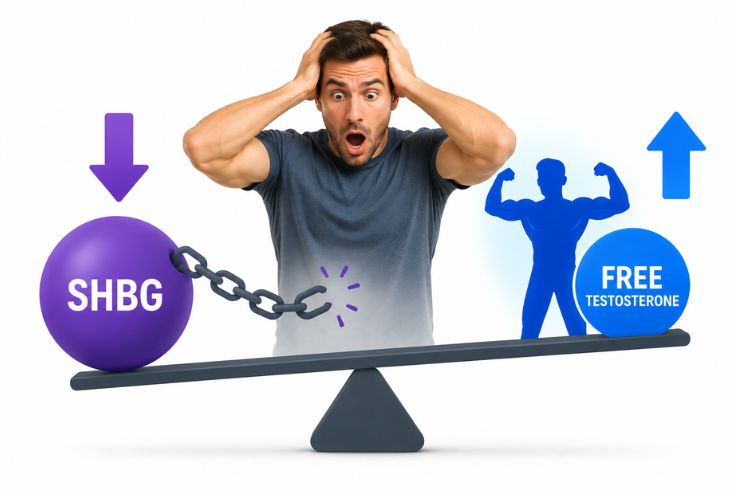
If your bloodwork shows high SHBG and low free testosterone — even with a “normal” total testosterone — this guide gives you a step-by-step plan to fix it. Before you start, you’ll need one thing: recent labs showing your SHBG, total testosterone, and free testosterone. SHBG (sex hormone-binding globulin) is a protein made mostly by your liver that binds to testosterone and holds it inactive; only the small unbound portion — free testosterone — actually drives libido, energy, and muscle. When SHBG runs high, it locks up too much testosterone, so your free level falls even though your total reads fine. The plan below walks you through how to lower SHBG and increase free testosterone in the right order. One rule to keep in mind the whole way: the goal is optimal SHBG, not the lowest possible number — driving it too low is its own health problem, which we’ll cover at the end.
Step 1 Test First and Find Out Why Your SHBG Is High
Start by getting the full picture, not just a single testosterone number. Order SHBG, total testosterone, and free testosterone, and add TSH (thyroid), vitamin D, and basic liver markers to your panel.
Why this comes first: the correct fix depends entirely on why your SHBG is elevated. High SHBG can be driven by an overactive thyroid, aging (it climbs naturally after about 60), liver issues, low body weight or aggressive dieting, or certain medications. Each of those calls for a different response — so handing yourself a generic supplement stack before you know the cause is the most common way to waste months.
What goes wrong if you skip this: a man whose SHBG is high because of a statin or an undiagnosed thyroid problem will get nowhere swallowing boron. The result you’re after from Step 1 is concrete: a baseline SHBG number and a working theory of the cause. If you’re fuzzy on what these markers even mean, start with what SHBG is and how to test your testosterone properly.
Step 2 Fix the Root Cause Driving SHBG Up
Address the underlying driver before you optimize anything else. Depending on what Step 1 revealed:
- Thyroid: an overactive thyroid (hyperthyroidism) raises SHBG — treating it is the fix, not supplements.
- Underweight or crash dieting: severe calorie restriction and being significantly underweight reliably push SHBG up. Eating enough to restore a healthy weight often lowers it on its own.
- Medications: statins, beta-blockers, some anticonvulsants, estrogenic drugs, and certain antidepressants can elevate SHBG. Never stop a prescription on your own — but do review the list with your prescriber.
- Liver and alcohol: support liver health and cut heavy drinking; both influence how much SHBG your liver produces.
Why this matters: lifestyle levers can’t outrun an untreated cause. The result of Step 2 is that the real driver is either handled or ruled out — which is what makes the next steps actually work. Remember the whole point is restoring usable hormone, the distinction explained in free vs. total testosterone.
Step 3 Dial In Your Diet
Eat in a way that supports lower SHBG. Three things matter most:
- Get enough carbohydrates. Very low-carb and ketogenic diets tend to raise SHBG, so a moderate carbohydrate intake helps keep it down.
- Hit your protein. Aim for roughly 0.8–1.2 grams of protein per pound of body weight to support hormone production and lean mass.
- Stop crash dieting and limit alcohol. Aggressive calorie deficits elevate SHBG, and heavy alcohol does too. Include cruciferous vegetables like broccoli and cauliflower to support healthy estrogen metabolism.
What goes wrong: combining keto with a steep calorie deficit while trying to lower SHBG works directly against you — that’s two SHBG-raising inputs at once. The result you want from Step 3 is a diet that stops feeding the problem, so your supplements and training have something to build on.
Step 4 Add Targeted Supplements
Add supplements that have real evidence for lowering SHBG or freeing testosterone — but match them to your needs rather than blind-stacking everything.
| Supplement | Typical dose | What the research shows | Best for |
| Boron | 6–10 mg/day | Free testosterone rose ~28% and estradiol dropped in small studies within a week | Most men — cheap, low-risk |
| Magnesium | ~200–400 mg/day | Raised free testosterone ~24% when paired with training; lowers SHBG’s grip on testosterone | Active men, low magnesium |
| Vitamin D3 | Correct a deficiency (often ~2,000–4,000 IU) | Raises total and free testosterone in deficient men; high SHBG tracks with low vitamin D | Men who are vitamin-D deficient |
| Zinc | ~15–30 mg/day | Zinc deficiency raises SHBG; correcting it restores testosterone | Men with low zinc intake |
| Tongkat Ali | Standardized extract | Reduced SHBG by up to ~36% and raised free testosterone in studies | Men wanting an herbal lever |
Boron is the most worthwhile starting point for most men — it’s inexpensive, low-risk, and the free-testosterone data is encouraging. Vitamin D and zinc only move the needle if you’re actually deficient, which is exactly why Step 1’s testing matters. What goes wrong: mega-dosing a five-supplement stack and assuming more is better. The result of Step 4 is a short, dosed, evidence-based plan — and if you’re already on testosterone therapy, coordinate it with the rest of your supplements on TRT.
Step 5 Train and Fix Your Body Composition
Train in a way that raises free testosterone and normalizes SHBG. Resistance training and high-intensity interval training (HIIT) both support a healthier testosterone profile, and magnesium’s free-testosterone benefit is strongest in men who train.
Body weight cuts both ways here: being significantly underweight elevates SHBG, while excess body fat distorts the testosterone-to-estrogen balance. Aim for a healthy, stable body composition rather than either extreme.
What goes wrong: overtraining while under-eating — a classic mistake for lean, driven men — actually raises SHBG, the opposite of your goal. The result of Step 5 is a training and body-composition setup that works with your hormones, easing the kind of low-testosterone symptoms that brought you here.
Step 6 Retest, and Know When to Get Medical Help
Retest your labs after about 8 to 12 weeks. SHBG shifts gradually — diet and lifestyle changes typically take 4 to 8 weeks to show, and the full effect unfolds over months, not days. Compare your new SHBG and free testosterone against your baseline.
Two outcomes call for a doctor. First, if your free testosterone is still low and your total testosterone is also low, natural levers may not be enough — the cause may need direct treatment, and medical options like enclomiphene or testosterone therapy may be appropriate. Second — and this is the guardrail most articles skip — SHBG that’s driven too low is itself a warning sign, often linked to insulin resistance or fatty liver. The target is a healthy middle, not zero. What goes wrong: chasing an ever-lower number, or ignoring symptoms that persist despite “good” labs. The result of Step 6 is clarity: confirmation your plan worked, or a clear medical next step. If medication enters the picture, understand how options like enclomiphene fit, and always retest at the right time of day.
Common Mistakes to Avoid
- Chasing the lowest possible SHBG. It’s a health marker — too low points to insulin resistance or fatty liver. Aim for optimal, not minimal.
- Supplementing blind. Taking boron, zinc, and vitamin D without knowing your cause or deficiency status often does nothing.
- Crash dieting or going very low-carb. Both reliably raise SHBG, undoing your other efforts.
- Expecting overnight results. SHBG moves over weeks to months. Judge progress at your 8–12 week retest, not next week.
- Ignoring a low total testosterone. If total T is low too, freeing up more won’t be enough — that’s a medical conversation.
The Bottom Line
If your free testosterone is still low after you’ve fixed your diet, supplements, and training — or your total testosterone is low too — stop guessing and get it diagnosed. Book a hormone evaluation with TRT NYC: we’ll run a full panel (SHBG, total testosterone, free testosterone, plus thyroid and other drivers), pinpoint why your SHBG is high, and tell you whether a targeted protocol like enclomiphene or TRT is the right next step.
Frequently Asked Questions
What causes high SHBG in men?
Common drivers include an overactive thyroid, aging (it rises after about 60), liver conditions, being underweight or crash dieting, heavy alcohol use, and certain medications like statins, beta-blockers, and some anticonvulsants and antidepressants.
Does boron lower SHBG and raise free testosterone?
Small studies suggest yes. At 6–10 mg per day, boron raised free testosterone by roughly 28% and lowered estradiol within a week in healthy men. It’s inexpensive and low-risk, which makes it a reasonable starting supplement.
What foods lower SHBG?
There’s no single “SHBG food,” but the pattern matters: enough carbohydrates (very low-carb raises SHBG), adequate protein, enough total calories to avoid an underweight state, limited alcohol, and cruciferous vegetables to support estrogen metabolism.
How long does it take to lower SHBG?
Diet and lifestyle changes usually take 4 to 8 weeks to show measurable effects, with the full impact unfolding over months. Plan to retest your labs at 8 to 12 weeks rather than expecting fast results.
Can high SHBG cause low testosterone symptoms?
Yes. High SHBG binds up too much testosterone, lowering your free (usable) testosterone. That can produce low libido, fatigue, brain fog, and poor recovery even when your total testosterone looks normal.
Can SHBG be too low?
Yes, and it matters. Very low SHBG is associated with insulin resistance, obesity, and fatty liver. The goal is a healthy mid-range, not the lowest number you can reach.
What supplements lower SHBG?
The best-supported options are boron, magnesium, vitamin D (if you’re deficient), zinc (if you’re low), and the herb Tongkat Ali. Each works best when it addresses an actual deficiency or lever rather than as part of a blind mega-stack.