Peptides vs TRT: Which One Actually Fits You?
Peptides and TRT get lumped together constantly online, partly because both show up in conversations about energy, muscle, and recovery. But they’re…

Peptides and TRT get lumped together constantly online, partly because both show up in conversations about energy, muscle, and recovery. But they’re not two versions of the same treatment, they’re two different tools that work on completely different parts of your endocrine system. TRT replaces a hormone you’re not making enough of. Peptides send a signal asking your body to make more of something on its own. That distinction changes everything about who each one is for, how fast it works, and what oversight it requires.
Key Takeaways
- TRT puts external testosterone into your bloodstream. Peptides prompt your own glands to produce hormones, usually growth hormone, not testosterone.
- The phrase “TRT peptide” is a mislabel. No peptide functions as a testosterone replacement.
- TRT tends to work faster because it bypasses your body’s own production. Peptides work more gradually because they depend on your glands responding to the signal.
- Combining the two happens in some treatment plans, but peptides can’t correct a genuine testosterone deficiency by themselves.
What TRT Actually Does
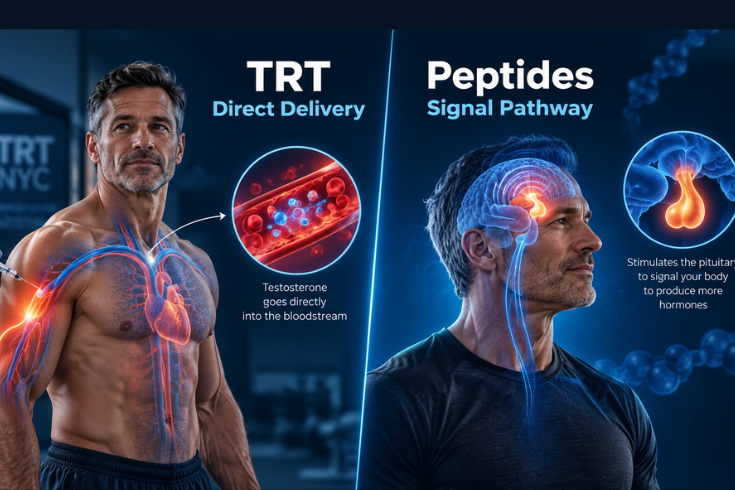
TRT is a direct swap: testosterone from an outside source, injection, gel, or cream, enters your bloodstream and takes over the job your testes would otherwise be doing. Under Endocrine Society clinical practice guidelines, a hypogonadism diagnosis requires both consistent symptoms and confirmed low testosterone on repeat blood testing, not one or the other. It’s also worth knowing that the FDA has specifically noted that no testosterone product is approved for low levels caused solely by aging, separate from a diagnosed medical condition.
The tradeoff with TRT is that once your body senses adequate testosterone coming from outside, it typically dials back its own signaling to produce less. That’s why TRT is something a clinician monitors on an ongoing basis, tracking values like hematocrit see our breakdown of why hematocrit rises on TRT and how it’s managed — alongside estradiol and other labs, rather than a start-once-and-forget treatment. For a broader look at how TRT’s risk profile holds up under current evidence, our guide on whether testosterone replacement therapy is safe goes into more depth.
What Peptide Therapy Actually Does
Peptides don’t add a finished hormone to your system. They’re small protein fragments that bind to receptors and trigger a response somewhere else in the body, closer to giving an instruction than making a delivery. The peptides most commonly discussed for men’s health, such as Sermorelin, CJC-1295, and Ipamorelin, target the pituitary gland and prompt it to release more of your own growth hormone, a mechanism we unpack specifically in does CJC-1295 increase testosterone?, which is a separate hormonal pathway from testosterone production entirely.
It’s also worth knowing that several of these peptides, including CJC-1295 and Ipamorelin, were flagged by the FDA’s Pharmacy Compounding Advisory Committee as substances with safety concerns for compounding, which is part of why regulatory status varies so much peptide to peptide. Because the mechanism relies on stimulating a gland rather than replacing an end product, peptide therapy generally doesn’t suppress your body’s existing hormone output the way direct replacement can.
Where the “TRT Peptide” Confusion Comes From
Search around long enough and you’ll see the phrase “TRT peptide” used as if it’s a category of testosterone treatment. It isn’t. No peptide currently used in hormone-optimization protocols replaces testosterone directly. The confusion likely comes from the fact that some peptides are marketed alongside testosterone therapy or discussed in the same clinics, which blurs the line for anyone skimming rather than reading closely. If a product is described as a “peptide” that raises testosterone the way TRT does, that claim deserves scrutiny rather than trust.
Comparing the Two Head-to-Head
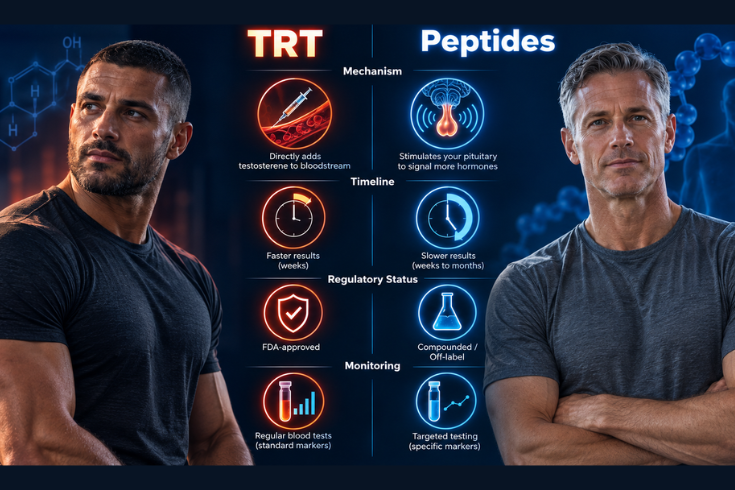
| What You’re Comparing | TRT | Peptide Therapy |
|---|---|---|
| What it does | Replaces testosterone directly | Stimulates your body’s own hormone signaling |
| Hormone system involved | Testosterone / HPG axis | Mostly growth hormone axis |
| Typical timeline to notice effects | Weeks | Months |
| Regulatory status | FDA-approved formulations widely used | Many are compounded or used off-label |
| Ongoing monitoring | Regular labs (hematocrit, estradiol, PSA) | Varies by peptide and provider |
Can Peptides and TRT Be Used Together?
In some treatment plans, yes, a growth-hormone-targeted peptide might be layered onto a TRT protocol to support goals like recovery, sleep quality, or body composition. Our guide on tesamorelin and testosterone together walks through exactly how that pairing works in practice, including why both compounds “belong under a doctor, with bloodwork, not a DIY online stack.” That’s a decision made with individualized lab work and provider oversight, not a default combination. It’s also worth being precise about what peptides can and can’t fix: if testosterone is genuinely low, peptides working on the growth hormone axis won’t correct that. They’re addressing a different system, not a backup plan for testosterone.
Three Questions Worth Asking Before You Decide
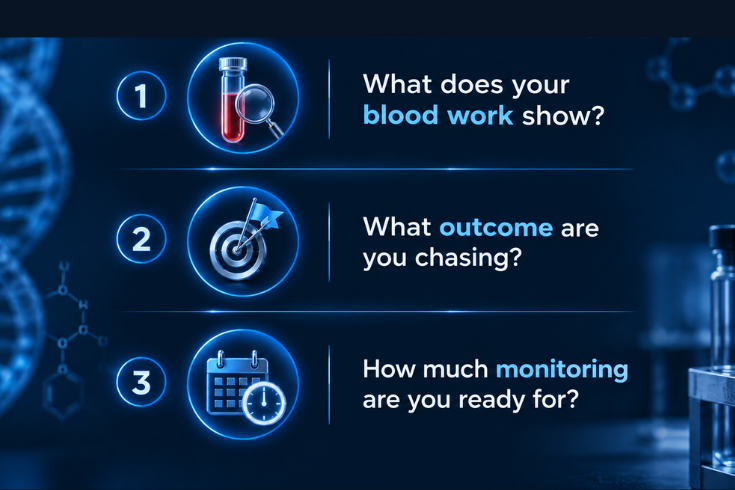
- What does your blood work actually show?
Low energy or poor recovery can have several causes. A testosterone panel, not just how you feel, is the starting point, and our guide on which testosterone test to order explains why total testosterone alone often isn’t enough to know where you stand. - What outcome are you actually chasing?
If it’s specifically sexual health, libido, or symptoms tied to low testosterone, that points toward TRT territory. If it’s sleep quality, tissue repair, or general recovery, peptides are more often the conversation. - How much oversight are you prepared for?
TRT requires ongoing labs and adjustment. Peptide protocols vary widely in how tightly they’re monitored, especially since many aren’t FDA-approved for the uses they’re marketed for.
Common Mistakes People Make Comparing the Two
A lot of confusion comes from treating peptides as a “milder TRT” they’re not a dial-down version of testosterone therapy, they’re a different mechanism aimed at a different hormone. Another common mistake is assuming peptide therapy is automatically safer just because it doesn’t involve direct hormone replacement; “not testosterone” doesn’t mean “no monitoring needed.” And some people choose based on marketing language rather than lab results, which skips the step that actually determines whether either option makes sense for them.
Common Questions About Peptides and TRT
Is TRT a steroid?
Testosterone is technically classified as an anabolic-androgenic steroid hormone, so prescribed TRT does fall under that broader category. That’s a different conversation from steroid misuse, which typically involves doses well above what’s used to restore normal levels. A qualified healthcare professional can walk through how a monitored, prescribed dose differs from non-medical use.
Does TRT age your face?
Some men notice changes in oiliness or acne while on TRT, which can affect how skin looks, but there isn’t strong evidence that properly monitored TRT accelerates facial aging. Reactions vary by individual, and any noticeable skin changes are worth raising with a provider.
What does Joe Rogan use for TRT?
Joe Rogan has discussed using testosterone therapy publicly on his podcast, but specific details of anyone’s protocol are individualized and can change. Public commentary isn’t a template, what’s appropriate depends on your own labs and a provider’s guidance, not on replicating someone else’s regimen.
Why do I feel so good on TRT?
When testosterone is genuinely low, restoring it to a normal range can noticeably improve energy, mood, and focus, since testosterone affects multiple systems in the body. That said, feeling better isn’t proof that TRT was necessary in the first place, it’s typically considered only after blood work confirms a deficiency, not based on symptoms alone.
Learn More With TRT NYC
TRT NYC publishes evidence-informed educational content about testosterone, TRT, and related men’s health topics like peptide therapy. Explore our related guides to better understand your options and prepare informed questions for a qualified healthcare professional.
Written by Tejanshu Jaluthria Published: September 8, 2026
Medical Disclaimer: This content is for informational and educational purposes only. TRT NYC does not provide medical advice, diagnosis, treatment, prescriptions, or healthcare services. The information on this website should not replace advice from a qualified healthcare professional. Always speak with an appropriate licensed medical professional about symptoms, medications, laboratory results, or treatment decisions.
References
- Bhasin S, et al. Testosterone Therapy in Men With Hypogonadism: An Endocrine Society Clinical Practice Guideline. J Clin Endocrinol Metab. 2018. pubmed.ncbi.nlm.nih.gov/29562364
- U.S. FDA. FDA Drug Safety Communication: FDA Cautions About Using Testosterone Products for Low Testosterone Due to Aging. fda.gov
- U.S. FDA. Pharmacy Compounding Advisory Committee (PCAC) Briefing Document, Bulk Drug Substances Nominated for Category 2/3, Including Growth Hormone Peptides. fda.gov/media/182088/download