
What Is TRT? A Plain-English Guide to Testosterone Replacement Therapy No Jargon, No Hype
 By TRT NYC Editorial Team
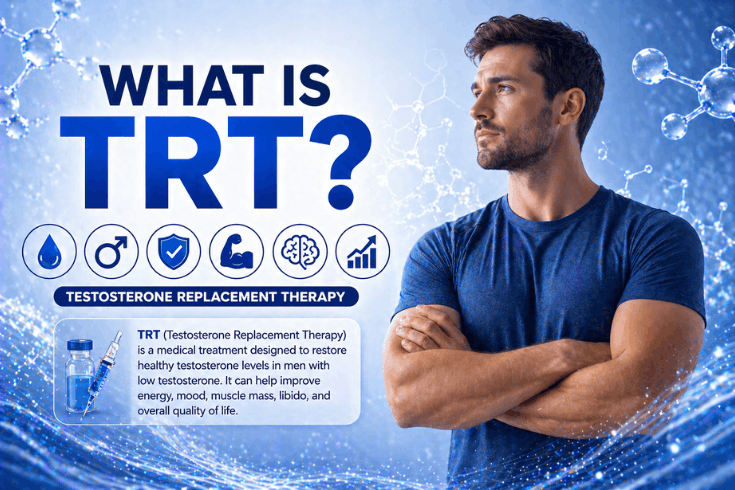
If you’ve typed “what is TRT” into a search engine, you’ve probably already noticed the problem: every answer is either buried in medical jargon, loaded with bodybuilding hype, or so cautious it tells you nothing useful. At TRT NYC, we treat men with testosterone deficiency every day — and we believe every man deserves a straight, evidence-based answer. This guide explains exactly what TRT is, how it works, who genuinely needs it, what the real benefits and risks are, and what starting treatment actually looks like. No hype. No scare tactics. Just the clinical facts.
What Is TRT? The Clinical Definition
Testosterone replacement therapy (TRT) is a medically supervised treatment that restores testosterone levels in men whose bodies no longer produce sufficient amounts of the hormone on their own. It is prescribed exclusively for men diagnosed with hypogonadism — a clinical condition defined by low testosterone levels combined with symptoms that impair health and quality of life [1].
TRT is not a performance-enhancing drug. It is not a shortcut to bigger muscles. It is a hormone replacement protocol analogous to thyroid hormone replacement for hypothyroidism or insulin therapy for type 1 diabetes designed to bring a deficient hormone back to a normal, healthy physiological range.
The Endocrine Society defines clinical hypogonadism as total testosterone consistently below 300 ng/dL on two separate morning blood draws, combined with signs and symptoms of testosterone deficiency [1]. When both criteria are met, TRT is a medically indicated, evidence-supported treatment option.
What Does TRT Do to Your Body?
TRT works by supplementing the testosterone your body is no longer producing at adequate levels. Testosterone regulates dozens of physiological processes simultaneously:
- Muscle protein synthesis: testosterone binds to androgen receptors in muscle cells and signals them to build and maintain lean mass
- Bone remodeling: testosterone stimulates osteoblast activity, maintaining bone mineral density
- Red blood cell production: testosterone stimulates erythropoietin signaling, increasing oxygen-carrying capacity
- Central nervous system function: testosterone modulates dopamine, serotonin, and GABA activity, directly influencing mood, motivation, and cognitive function
- Fat metabolism: testosterone promotes lipolysis and inhibits visceral fat cell differentiation
- Sexual function: testosterone drives libido and supports the neurological and vascular mechanisms of erectile function
When testosterone is deficient, all of these systems are simultaneously compromised. TRT does not add testosterone above what the body needs — it restores it to the range at which these systems function normally.
How Testosterone Replacement Therapy Works Step by Step
- Evaluation: Physician reviews symptoms, history, and orders a morning testosterone panel (total T, free T, LH, FSH, SHBG, estradiol, CBC, CMP, PSA)
- Diagnosis: Two morning draws confirming low testosterone + clinical symptoms = hypogonadism diagnosis
- Protocol design: Delivery method and starting dose selected based on baseline levels, lifestyle, and clinical picture
- Initiation: Treatment begins; energy and libido improvements noticed within 3–6 weeks; full benefit at 3–6 months
- Monitoring: Blood work repeated at 6–8 weeks, then every 3–6 months: testosterone, hematocrit, estradiol, PSA, lipids
- Optimization: Dose adjusted based on labs and symptom response to maintain optimal therapeutic range
Who Needs TRT? Symptoms of Low Testosterone and Eligibility
TRT is appropriate for men who have both clinical symptoms of testosterone deficiency and confirmed low testosterone on blood work. Symptoms alone are not sufficient. Lab values alone are not sufficient. Both must be present.
Core symptoms that may indicate a need for evaluation:
- Persistent fatigue and low energy not explained by sleep or lifestyle
- Significant reduction in sex drive (libido)
- Erectile dysfunction, particularly alongside reduced desire
- Depression, emotional flatness, or increased irritability
- Brain fog, poor concentration, or memory difficulties
- Loss of muscle mass despite consistent exercise
- Unexplained increase in body fat, particularly abdominal
- Decreased bone density or unexplained stress fractures
- Poor sleep quality or insomnia
- Loss of motivation, drive, and competitive edge
Men experiencing three or more of these symptoms persistently should request a testosterone blood test. For a complete breakdown, see our guide: Low Testosterone Symptoms: 15 Signs Men Ignore.
TRT for Men Over 40 Why Age Matters
Testosterone declines approximately 1–2% per year after age 30. By age 45, roughly 40% of men have significantly lower testosterone than they did in their 20s and approximately 20% of men over 60 meet clinical criteria for hypogonadism.
In our NYC practice, we see the cumulative effect most clearly in men in their late 40s and 50s: multiple symptoms fatigue blamed on work, weight gain blamed on diet, low mood attributed to life circumstances that together paint a clear hormonal picture. Age does not determine eligibility. The clinical picture symptoms plus labs does.
How Do You Know If You Need TRT?
You cannot know based on symptoms alone. You need a blood test two morning testosterone draws (7–10 AM) on separate days. If both results are consistently below 300 ng/dL and you have matching symptoms, you meet the diagnostic criteria for clinical hypogonadism.
Ask your doctor to test: Total testosterone · Free testosterone · LH · FSH · SHBG · Estradiol · Prolactin · CBC · CMP · PSA (men over 40)
A physician who orders only total testosterone is missing critical context. Free testosterone can be low even when total testosterone appears borderline-normal particularly in men with elevated SHBG.
Types of TRT: Injections, Gels, Pellets
Testosterone Replacement Therapy comes in several delivery methods, each with unique advantages and trade-offs. Choosing the right form of TRT depends on your lifestyle, dosing preferences, budget, and how your body responds to testosterone. Below is a detailed breakdown of the most common TRT options available today.
Quick Answer
The four main types of TRT are injections, gels/creams, pellets, and patches. Injections remain the most popular and cost-effective option, while gels offer needle-free convenience, pellets provide long-lasting passive delivery, and patches deliver steady 24-hour absorption.
1. Testosterone Injections The Most Common Form
Testosterone cypionate or enanthate, injected intramuscularly or subcutaneously every 7–14 days, is the most widely used form of TRT in the United States. It’s the gold standard for predictable, optimizable testosterone replacement.
Why Patients Choose It
- Most cost-effective TRT option available
- Precise dosing control with easy weekly adjustments
- Largest body of clinical data supporting safety and efficacy
- Flexible frequency weekly, twice-weekly, or every two weeks
Consideration
Some men experience a “peak and trough” effect between injections, where energy and mood fluctuate as testosterone levels rise and fall. Weekly or twice-weekly dosing minimizes this substantially. In our practice at TRT NYC, testosterone injections are the protocol we recommend most frequently — predictable, optimizable, and well-studied.
2. Testosterone Gels and Creams
Applied daily to the shoulders, upper arms, or inner thigh, testosterone gels and creams absorb transdermally throughout the day for a steady release of hormone.
Why Patients Choose It
- No injections required ideal for needle-averse patients
- Daily application creates stable, consistent testosterone levels
- Easy dose adjustment under physician guidance
Consideration
Transfer risk is a real concern — testosterone gel can be inadvertently passed to partners or children through skin contact. Additionally, absorption varies significantly between individuals, and some men never achieve adequate testosterone levels with topical application alone.
3. Testosterone Pellets
Rice grain-sized pellets are implanted sub dermally in the hip under local anesthesia during a brief in-office procedure. They release testosterone slowly and steadily over 3–6 months.
Why Patients Choose It
- Fully passive treatment no daily application, no weekly injections
- Consistent, steady hormone release without daily fluctuations
- Long-lasting only 2–3 procedures per year
Consideration
The dose cannot be adjusted once implanted, which limits flexibility. The minor procedure carries small risks of infection or pellet extrusion, and re-implantation every 3–6 months is required to maintain therapeutic levels.
4. Testosterone Patches
Applied nightly, testosterone patches deliver a steady stream of hormone over a 24-hour period through the skin.
Why Patients Choose It
- Daily consistent delivery without peaks and troughs
- No injections required
- Simple, predictable routine
Consideration
Skin irritation is reported in up to 30–40% of users, which is why patches are less commonly prescribed in current clinical practice compared to injections or gels.
TRT Delivery Methods at a Glance
| TRT Type | Frequency | Key Benefit | Main Drawback | Best For |
|---|---|---|---|---|
| Injections | Every 7–14 days | Most cost-effective & precise | Requires self-injection | Most patients seeking optimal results |
| Gels/Creams | Daily | Needle-free, stable levels | Transfer risk to others | Needle-averse patients |
| Pellets | Every 3–6 months | Fully passive, long-lasting | Dose can’t be adjusted mid-cycle | Set-and-forget convenience |
| Patches | Nightly | Steady 24-hour delivery | Skin irritation in 30–40% | Patients who can’t tolerate gels |
Testosterone Therapy Benefits What the Science Actually Shows
Sexual Function: The Testosterone Trials (NEJM, 2016) found significant improvements in sexual desire, erectile function, and sexual activity versus placebo in hypogonadal men.
Body Composition: A meta-analysis of 58 RCTs found TRT significantly increased lean body mass and reduced fat mass, with effects most pronounced in men with the lowest baseline testosterone.
Bone Density: The Testosterone Trials demonstrated significantly increased volumetric bone mineral density and bone strength — effects comparable to bisphosphonate therapy in some patients.
Mood and Cognitive Function: TRT produced significant improvements in depressive symptoms, mood, and energy in multiple controlled trials [5]. Research confirms improvements in spatial memory and cognitive processing speed following testosterone optimization.
Metabolic Health: TRT in hypogonadal men with type 2 diabetes or metabolic syndrome improved insulin sensitivity, reduced waist circumference, and lowered fasting glucose in multi-year studies.
Critical caveat: These benefits apply to men with clinically confirmed testosterone deficiency. TRT does not produce the same magnitude of benefit in men whose testosterone is already in the normal range. Accurate diagnosis comes first.
TRT Side Effects An Honest, Evidence-Based Assessment
Erythrocytosis (elevated hematocrit): Most clinically significant risk. Testosterone stimulates red blood cell production — hematocrit above 54% can increase blood viscosity. Management: routine blood monitoring; dose reduction or therapeutic phlebotomy if needed [8].
Testicular atrophy and reduced sperm production: Exogenous testosterone suppresses LH and FSH, reducing the testes’ own production. Men who want to preserve fertility should discuss HCG co-administration before starting TRT.
Estrogen elevation: Testosterone aromatizes to estradiol. Excess conversion — more common in men with higher body fat can cause water retention, mood changes, or gynecomastia. Management: estradiol monitoring; aromatase inhibitors if clinically indicated.
Acne and oily skin: Testosterone stimulates sebaceous glands. Mild acne is common in initial months; rarely requires treatment discontinuation.
Sleep apnea: TRT can worsen pre-existing obstructive sleep apnea. Screen before initiation.
What TRT does NOT cause (per current evidence):
- Prostate cancer the TRAVERSE trial found no increased incidence in appropriately screened men
- Heart attacks or stroke the TRAVERSE trial (2023, n=5,246, 33 months) found no increased rate of major cardiovascular events versus placebo
All side effects are manageable with appropriate monitoring. Physician-supervised TRT with regular labs is essential.
TRT vs. Boosting Testosterone Naturally What Actually Works?
Lifestyle interventions with clinical evidence:
- Resistance training: Heavy compound lifting supports acute and baseline testosterone [10]
- Sleep optimization: Restricting sleep to 5 hours reduced testosterone 10–15% within one week in a JAMA study 7–9 hours is foundational
- Body fat reduction: Reducing visceral fat decreases aromatase activity, raising free testosterone
- Stress management: Chronic cortisol suppresses the HPG axis — measurable hormonal effect
- Vitamin D and zinc: Deficiency in both is associated with lower testosterone; supplementation in deficient men produces modest improvement
What natural methods cannot do:
If testosterone is at 180 ng/dL due to primary or secondary hypogonadism, no lifestyle change restores it to a healthy range. Natural optimization may move a man from 280 to 320 ng/dL. It will not move a man from 180 to 550 ng/dL. Natural optimization is always a valuable complement to TRT — but not a substitute for clinical treatment in confirmed hypogonadism.
Common Myths About TRT Debunked With Evidence
Myth 1 TRT is just steroids it’s cheating: Reality TRT restores testosterone to normal physiological range under physician supervision for a diagnosed medical condition. Anabolic steroid abuse uses 5–10x the therapeutic dose for performance enhancement. Calling TRT “steroids” is equivalent to calling insulin therapy “doping.
Myth 2 TRT will give you a heart attack: Reality: The TRAVERSE trial (2023) the largest cardiovascular safety trial of testosterone therapy ever conducted — found no significant increase in major cardiovascular events versus placebo. Untreated hypogonadism is associated with increased cardiovascular risk.
Myth 3 TRT causes prostate cancer.” Reality: Decades of research including the TRAVERSE trial have not established a causal link between TRT and prostate cancer in appropriately screened men. The hypothesis originated from a 1941 case study and has not been supported by modern evidence.
Myth 4 Once you start TRT, you’re on it forever: Reality: TRT is not irreversible. Men who discontinue typically see testosterone return toward baseline within weeks to months as the HPG axis recovers. Structured restart protocols exist for men who want to stop.
Myth 5 You’re too young for TRT: Reality: Hypogonadism has no minimum age. Secondary hypogonadism can occur in men in their 20s and 30s. The cause of deficiency not the patient’s age determines the appropriate treatment approach.
Who Should NOT Start TRT Important Contraindications
Absolute contraindications:
- Active prostate cancer or breast cancer
- Hematocrit above 54% prior to treatment
- Uncontrolled or severe congestive heart failure
- Men under 18 years of age
Relative contraindications require careful evaluation:
- Men wishing to maintain fertility alternative protocols (HCG, clomiphene) may be more appropriate
- Untreated severe obstructive sleep apnea — should be treated before or alongside TRT
- History of polycythemia vera
- Severe untreated lower urinary tract symptoms (LUTS)
When to seek immediate medical evaluation rather than hormone optimization:
- Sudden onset of multiple symptoms possible pituitary pathology requiring urgent imaging
- Symptoms accompanied by severe headache or vision changes
- Testicular mass or pain rule out testicular cancer first
This content is for educational purposes only. It does not constitute medical advice. Consult a licensed healthcare provider before beginning any hormone therapy.
The Bottom Line on What TRT Is and Whether It’s Right for You
TRT is a medically supervised treatment that restores testosterone in men whose bodies no longer produce sufficient levels — and the evidence supporting its benefits in appropriately diagnosed patients is substantial. It is not a lifestyle product, not a shortcut, and not something to approach without a thorough clinical evaluation. When prescribed correctly, monitored appropriately, and used by the right patient, TRT can produce meaningful, lasting improvements in energy, sexual function, body composition, mood, and overall quality of life.
The question is not whether TRT works it does. The question is whether you are the right candidate: confirmed low testosterone on blood work, symptoms that impair your quality of life, and no clinical contraindications.
If you’re experiencing symptoms of low testosterone and want a definitive clinical evaluation, the team at TRT NYC offers comprehensive hormone workups performed by licensed physicians with specialized expertise in men’s health and testosterone optimization. We serve patients throughout New York City and the surrounding metropolitan area.
Frequently Asked Questions About TRT
Q: What does TRT do to your body?
A: TRT restores testosterone to a normal physiological range, improving the systems it regulates: muscle protein synthesis, bone density, red blood cell production, mood, cognitive function, fat metabolism, and sexual function. Most men notice meaningful improvements in energy and libido within 3–6 weeks, with full benefit established at 3–6 months of consistent treatment.
Q: Is TRT the same as steroids?
A: No. TRT restores testosterone to a normal physiological range under physician supervision for a diagnosed medical condition. Anabolic steroid abuse uses doses 5–10 times higher than the therapeutic range to achieve supraphysiological levels for performance enhancement. The medical intent, dosing, and safety profile are fundamentally different.
Q: What are the side effects of TRT?
A: The most clinically significant side effect is erythrocytosis — elevated red blood cell count — managed through routine blood monitoring. Other side effects include reduced sperm production, possible estrogen elevation, mild acne, and potential worsening of sleep apnea. All are manageable with proper physician supervision. TRT does not cause prostate cancer or heart attacks in appropriately screened men per current evidence [9].
Q: How do you know if you need TRT?
A: You need a blood test — two morning testosterone draws on separate days. If both results are consistently below 300 ng/dL combined with symptoms including fatigue, low libido, mood changes, muscle loss, or brain fog, you meet clinical criteria for hypogonadism. Symptoms alone are not sufficient — both lab confirmation and clinical symptoms are required for diagnosis.
Q: Does TRT really work?
A: Yes — for men with confirmed testosterone deficiency. The Testosterone Trials (NEJM, 2016) and dozens of controlled studies confirm significant, measurable improvements in sexual function, bone density, mood, body composition, and energy in hypogonadal men [3]. TRT does not produce the same magnitude of benefit in men whose testosterone is already within the normal range.
Q: How long do you have to be on TRT?
A: TRT is not a fixed-duration treatment. Many men continue long-term due to sustained quality-of-life improvements. Men who stop typically see testosterone return toward baseline over weeks to months as the HPG axis recovers. Duration is decided with your physician based on your individual goals and treatment response.
Q: Is TRT safe long-term?
A: Current evidence supports long-term safety in appropriately selected and monitored patients. The TRAVERSE trial (2023) a 33-month RCT with 5,246 participants found no increased risk of major cardiovascular events, prostate cancer, or serious adverse outcomes versus placebo [9]. Long-term safety depends on proper patient selection, appropriate dosing, and regular laboratory monitoring.
Disclaimer: This article is for informational purposes only and does not constitute medical advice. Always consult a qualified healthcare provider before beginning any hormone therapy.