TRT and Hair Loss: Does TRT Cause Baldness?
 By TRT NYC Editorial Team
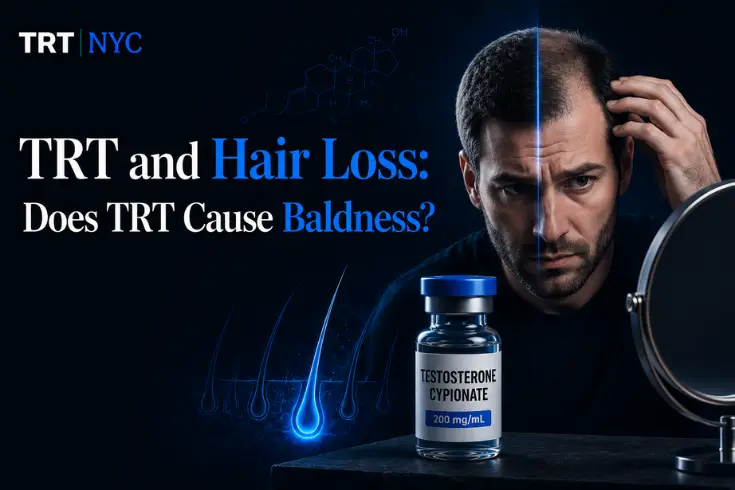
TRT can accelerate hair loss but only in men genetically prone to male-pattern baldness. Testosterone converts to DHT, the hormone that shrinks sensitive hair follicles. If you’re not predisposed, TRT won’t make you bald; if you are, options like finasteride and minoxidil can help slow it. Here’s the full story and how to protect your hair.
Hair loss is one of the most common worries men have before starting testosterone therapy. The honest answer is nuanced: TRT doesn’t create baldness out of nowhere, it can speed up a process your genetics already control. This guide explains the mechanism, your risk, and what you can do. (For all side effects, see TRT side effects.)
Does TRT Cause Hair Loss?
Not directly, and not for everyone. TRT can accelerate male-pattern baldness (MPB) in men who are genetically predisposed to it. If hair loss runs in your family and you have sensitive follicles, raising testosterone (and therefore DHT) can speed up thinning. But if you don’t carry that genetic sensitivity, TRT won’t turn you bald. So “does TRT cause hair loss?” really means “am I already prone to it?”
How TRT Causes Hair Loss
Here’s the mechanism: some testosterone converts into DHT (dihydrotestosterone) via the enzyme 5-alpha-reductase. DHT is a more potent androgen and in men with the genetic trait, it binds to and shrinks scalp hair follicles over time, producing the classic receding hairline and crown thinning. More testosterone can mean more DHT, which is why TRT can push along a process that was already programmed in your genes. (DHT is also why TRT and prostate health are linked, see TRT and prostate health.)
Does HRT Cause Hair Loss?
“HRT” is broader than TRT, but for men, male HRT is usually testosterone, so the hair-loss mechanism is the same: testosterone → DHT → follicle shrinkage in predisposed men. Other hormones in some HRT protocols can affect hair differently, but the testosterone/DHT pathway is the main driver of scalp hair loss in men on hormone therapy. Bottom line: whether you call it HRT or TRT, the hair-loss risk comes down to DHT and your genetics.
Who’s at Risk of Hair Loss on TRT?
You’re more likely to see TRT-accelerated hair loss if:
- Male-pattern baldness runs in your family
- You already have a receding hairline or thinning crown
- You started losing hair young
If you have a full head of hair with no family history of balding, your risk is low. Knowing your risk before starting helps you plan, see is TRT right for me.
How to Prevent or Slow Hair Loss on TRT
If you’re at risk and want to protect your hair, options (all best discussed with a doctor) include:
- Finasteride :- blocks the conversion of testosterone to DHT. Effective for many men, but it has potential side effects (including sexual ones), so weigh it with your provider.
- Topical minoxidil :- stimulates hair growth at the follicle; works independently of hormones.
- DHT-blocking shampoos (e.g., ketoconazole) :- a mild adjunct.
- Dose optimization :- keeping testosterone at a sensible replacement level (not supraphysiologic) limits excess DHT.
- Start early :- treatments work best before significant loss.
Don’t start finasteride on your own, discuss the trade-offs, since blocking DHT has its own effects.
Is TRT Hair Loss Reversible?
Partly, and it depends on timing. Hair that’s miniaturized but not gone can sometimes recover with treatment (finasteride/minoxidil), but follicles that have fully died don’t regrow. That’s why acting early matters — once a follicle is lost, it’s usually permanent. If you stop TRT, you remove the extra DHT push, but your underlying genetic balding continues regardless.
Should You Avoid TRT If You’re Worried About Hair?
For most men with genuinely low testosterone, hair-loss risk isn’t a reason to skip TRT, especially since it’s manageable with finasteride and minoxidil. The benefits of TRT (energy, libido, mood, muscle) usually outweigh the cosmetic risk, and you can protect your hair proactively. If hair is a top priority, raise it with your provider before starting so you can begin prevention alongside therapy.
The Bottom Line
TRT and hair loss come down to genetics and DHT, TRT can speed up male-pattern baldness in men already prone to it, but it won’t make you bald if you’re not predisposed. The mechanism is testosterone converting to DHT, which shrinks sensitive follicles. If you’re at risk, finasteride, minoxidil, and sensible dosing can slow it and starting early gives the best results.
👉 Thinking about TRT? Confirm your levels first with an at-home testosterone test kit, and review the full TRT side effects so you can plan ahead for hair.
Frequently Asked Questions
Does TRT cause hair loss?
Only in men genetically prone to male-pattern baldness. TRT raises DHT, which shrinks sensitive scalp follicles in predisposed men, accelerating thinning. If you don’t carry the genetic trait, TRT won’t make you bald.
How does TRT cause hair loss?
Some testosterone converts to DHT (dihydrotestosterone) via 5-alpha-reductase. In genetically susceptible men, DHT binds to and miniaturizes scalp hair follicles, causing the receding hairline and crown thinning of male-pattern baldness. More testosterone can mean more DHT.
Does HRT cause hair loss?
For men, HRT is usually testosterone, so the mechanism is the same testosterone converts to DHT, which can accelerate male-pattern baldness in predisposed men. The hair-loss risk comes down to DHT and genetics, whether it’s called HRT or TRT.
Can you prevent hair loss on TRT?
Yes, to a degree. Finasteride (which blocks DHT), topical minoxidil, DHT-blocking shampoos, and sensible dosing can slow or reduce hair loss. They work best started early, before significant loss, and should be used under a doctor’s guidance.
Is TRT hair loss reversible?
Partly. Thinning, miniaturized hair can sometimes recover with treatment, but fully lost follicles don’t regrow. Acting early gives the best chance. Stopping TRT removes the extra DHT push but doesn’t stop underlying genetic balding.
Should I avoid TRT if I’m worried about going bald?
Usually not, since hair loss is manageable with finasteride and minoxidil, and the benefits of TRT often outweigh the cosmetic risk. If hair is a priority, tell your provider before starting so you can begin prevention alongside therapy.
Written by the TRT NYC Editorial Team. Reviewed against current dermatology and endocrinology guidance. Last updated: June 2026.
Medical disclaimer: This article is for educational purposes only and is not medical advice, diagnosis, or treatment. Medications like finasteride have potential side effects. trtnyc.com is an independent informational resource, not a medical provider. Always consult a licensed healthcare provider before starting TRT or hair-loss treatment.