What Counts as a Normal Testosterone Level for Men?
For most adult men, a normal testosterone level falls between 300 and 1,000 nanograms per deciliter (ng/dL) of total testosterone. Levels below 300 ng/dL on two separate morning blood tests, paired with low testosterone symptoms, typically point to a clinical condition called hypogonadism — and may indicate a need for evaluation, lifestyle change, or Testosterone Replacement Therapy (TRT).
But here’s the catch normal” isn’t one fixed number. It shifts with age, time of day, lab method, sleep quality, and even what you ate the night before. A 25-year-old at 350 ng/dL may feel sluggish and depleted, while a 65-year-old at the same number may feel perfectly fine. That’s why understanding your testosterone level and whether you need treatment like Testosterone Replacement Therapy requires more nuance than a single number.
This guide breaks down exactly what a normal testosterone level for men really means, the most common low testosterone symptoms, how to test testosterone correctly, and when low levels actually become a medical concern worth treating.
Why “Normal” Is More Complicated Than You Think
When you look at a lab report, you’ll see a “reference range” usually something like 264–916 ng/dL or 300–1,000 ng/dL. That range is a statistical average, not a personal target.
Here’s why the picture is more layered than it appears:
- Reference ranges vary by lab. Different labs use slightly different testing methods, so a reading of “low normal” at one lab might fall just below the cutoff at another.
- Testosterone fluctuates throughout the day. Levels peak in the early morning (around 7–10 AM) and dip in the late afternoon. A test taken at 4 PM can read 20–30% lower than one taken at 8 AM. This is one of the biggest reasons men are misdiagnosed.
- Age matters a lot. Testosterone naturally declines about 1% per year after age 30. What’s normal at 50 is very different from what’s normal at 25.
- Lab values don’t always match symptoms. Two men with identical readings can feel completely different. Doctors who specialize in hormone replacement therapy look at the whole picture — lab values, low testosterone symptoms, lifestyle, and medical history.
- “Within range” doesn’t mean optimal. Being at the bottom of the normal range may technically be “normal” but functionally low for your body and goals.
This is why endocrinologists and TRT specialists rarely diagnose low testosterone based on a single blood test. The right diagnosis combines bloodwork, symptoms, medical history, and often more than one lab draw sometimes weeks apart.
Normal Testosterone Levels by Age
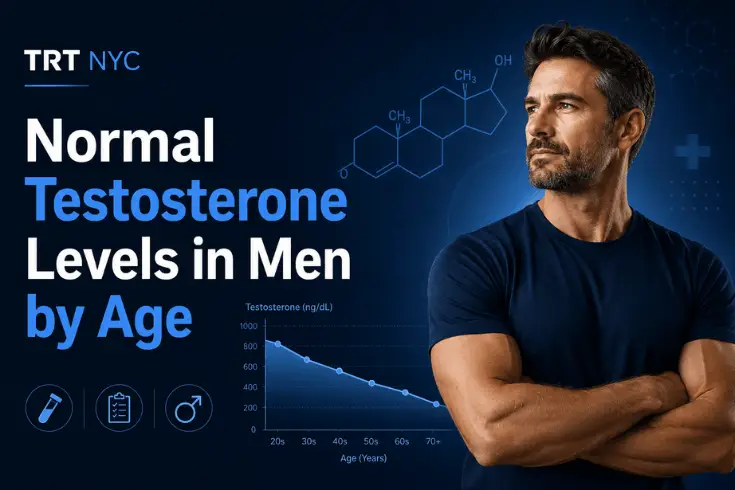
Testosterone levels peak in late adolescence and early adulthood, then gradually decline over the decades. Here’s a general look at average total testosterone ranges by age group:
| Age Group | Average Total Testosterone (ng/dL) |
|---|---|
| 15–19 years | 250 – 1,200 |
| 20–29 years | 400 – 1,080 |
| 30–39 years | 350 – 950 |
| 40–49 years | 300 – 900 |
| 50–59 years | 280 – 800 |
| 60–69 years | 240 – 720 |
| 70+ years | 200 – 650 |
These numbers are approximations drawn from common clinical reference data. Your individual “optimal” level depends on how you feel, your overall health, and any underlying conditions. If your number sits at the low end of normal but your symptoms are significant, that may still warrant a deeper conversation with a doctor about low testosterone treatment.
It’s worth noting that recent research has prompted some clinicians to lower the “normal” threshold slightly, with cutoffs around 264 ng/dL gaining acceptance. Still, most men feel and function best when their testosterone sits well above the bare minimum.
Total vs. Free Testosterone: What’s the Difference?
When discussing testosterone levels, it’s important to know there isn’t just one number to track. A complete picture requires understanding three measurements.
Total Testosterone
This is the total amount of testosterone circulating in your blood — both bound (attached to proteins like SHBG and albumin) and unbound. It’s the most commonly reported value on lab tests, but it doesn’t tell the whole story.
Free Testosterone
Free testosterone is the small percentage (usually 1–4%) that is not attached to proteins. This is the biologically active form the part your body can actually use to support muscle, mood, libido, and energy. Free testosterone often correlates more closely with low testosterone symptoms than total levels do.
Bioavailable Testosterone
This includes free testosterone plus the loosely-bound fraction attached to albumin. It’s also usable by the body and gives a more accurate picture of hormone availability in some men, especially older men.
Why this matters: A man can have a normal total testosterone reading but a low free testosterone level and still feel symptoms. This is common in older men or those with elevated SHBG (sex hormone-binding globulin), which “locks up” testosterone and makes it unavailable. Knowing how to test testosterone properly means measuring all of these markers, not just total T.
Low Testosterone Symptoms in Men
Low testosterone — sometimes called “Low T” — can show up in subtle and not-so-subtle ways. The most common low testosterone symptoms include:
- Persistent fatigue or low energy, even after rest
- Reduced sex drive (low libido)
- Erectile difficulties
- Loss of muscle mass and strength despite training
- Increased body fat, especially around the abdomen
- Mood changes: irritability, depression, anxiety, or brain fog
- Poor sleep quality or insomnia
- Reduced facial or body hair
- Decreased motivation, drive, and confidence
- Hot flashes or night sweats (in more significant cases)
- Reduced bone density (often discovered after a fracture)
These symptoms rarely appear all at once. Men typically notice one or two creeping in, dismiss them as stress or aging, and only connect the dots later. Many of these signs also overlap with other conditions like thyroid disorders, sleep apnea, depression, or chronic stress which is why blood testing is essential before assuming testosterone is the cause. Hormone replacement therapy should never be self-prescribed or started based on symptoms alone.
Low Testosterone Symptoms in Men Over 40
While Low T can affect men of any age, low testosterone symptoms in men over 40 often look slightly different partly because they overlap with normal aging, and partly because the body has had more years to compensate before things tip over.
Here’s how Low T tends to present after 40:
- Energy crashes in the afternoon, even with adequate sleep and caffeine
- Stubborn belly fat that won’t respond to the diet and workout routines that used to work
- Mental fog, especially in the second half of the day
- Loss of “edge” — reduced ambition, motivation, and competitiveness
- Slower workout recovery and noticeable decline in strength
- Mood swings, irritability, or feeling unusually flat emotionally
- Sleep problems, including waking up multiple times at night
- Changes in sexual function — reduced morning erections are often the earliest warning sign
- Joint stiffness and slower healing from minor injuries
Many men in their 40s assume these are inevitable signs of aging but they often aren’t. Healthy hormone levels can be maintained well into later decades with the right combination of lifestyle changes, medical evaluation, and (when appropriate) low testosterone treatment.
If you’re a man over 40 noticing several of these patterns at once, it’s worth talking to a doctor about a full hormone panel. Catching changes early gives you more options and better outcomes.
What Causes Testosterone Levels to Drop?
Testosterone decline isn’t always due to aging. Several factors can suppress production at any age:
Primary Causes (testicles can’t produce enough)
- Injury or trauma to the testicles
- Genetic conditions (such as Klinefelter syndrome)
- Cancer treatments like chemotherapy or radiation
- Mumps orchitis (an inflammation from infection)
- Undescended testicles in childhood
Secondary Causes (brain doesn’t signal the testicles properly)
- Pituitary gland disorders or tumors
- Obesity and metabolic syndrome
- Type 2 diabetes
- Chronic stress and elevated cortisol
- Use of opioids, anabolic steroids, or certain medications
- Severe sleep deprivation
- Excessive alcohol consumption
Lifestyle Contributors
- Poor diet (especially low in healthy fats, zinc, and vitamin D)
- Sedentary lifestyle
- Chronic over-training without recovery
- Endocrine disruptors (certain plastics, pesticides, and household chemicals)
- Long-term high stress without recovery
In many cases, low testosterone is the result of a deeper health issue, not the cause. Addressing the root condition often improves levels naturally sometimes enough to avoid the need for Testosterone Replacement Therapy entirely.
How to Test Testosterone the Right Way
Knowing how to test testosterone properly can be the difference between an accurate diagnosis and months of confusion. A testosterone test is a simple blood draw, but how and when it’s done significantly affects the results.
Best Practices for Testing Testosterone
- Test in the morning — ideally between 7 AM and 10 AM, when testosterone levels are highest.
- Test on two separate days — a single low reading isn’t enough for a diagnosis.
- Fast for 8–12 hours if your doctor recommends it — eating can lower testosterone temporarily.
- Avoid testing during illness or after a poor night’s sleep — both can falsely lower results.
- Skip alcohol for 24–48 hours before testing.
- Get a complete panel — including total testosterone, free testosterone, SHBG, LH, FSH, estradiol, prolactin, and a CBC for hematocrit.
What the Numbers Mean
- Above 450 ng/dL: Generally considered healthy for most adult men
- 300–450 ng/dL: Borderline; symptoms determine next steps
- Below 300 ng/dL: Considered clinically low, especially with symptoms
- Below 200 ng/dL: Significantly low; treatment is usually recommended
Should You Use At-Home Testosterone Tests?
At-home testosterone test kits have become popular and can be a good starting point for awareness. However, they’re best used as a screening tool, not a diagnostic one. If results come back low, follow up with a doctor and a full lab panel to confirm. Self-treating based on at-home results alone can be risky.
Remember, these are guidelines — not strict rules. A skilled clinician interprets your numbers in context, alongside your symptoms and overall health.
When Low Testosterone Becomes a Medical Concern
Not every man with a “low” reading needs treatment. The medical term hypogonadism requires both:
- Consistently low testosterone levels (typically below 300 ng/dL on at least two morning tests), AND
- Clinical symptoms that affect quality of life
Without symptoms, a low number may not need treatment. With symptoms but borderline numbers, lifestyle changes are often the first step. When both criteria are met and symptoms persist, that’s typically when doctors discuss low testosterone treatment options, including TRT.
It’s also worth noting that low testosterone can have downstream effects on long-term health, including bone density, cardiovascular function, mood regulation, insulin sensitivity, and metabolic health. So addressing it isn’t just about energy or libido — it’s about overall well-being and long-term aging.
Treatment Options: Lifestyle vs. Testosterone Replacement Therapy
If your testosterone levels are low, treatment usually starts with addressing reversible factors before moving to medical intervention.
Lifestyle First
For mild to moderate cases, these strategies can meaningfully raise testosterone:
- Strength training — especially compound lifts like squats, deadlifts, and presses
- Quality sleep — 7–9 hours per night, consistently. Sleep is when most testosterone is produced.
- Weight loss — particularly visceral fat reduction, which converts testosterone into estrogen
- Stress management — chronic stress elevates cortisol, which suppresses testosterone
- Nutrition — adequate protein, healthy fats, zinc, magnesium, and vitamin D
- Reducing alcohol intake
- Treating underlying conditions — like sleep apnea, thyroid disorders, or diabetes
For many men especially younger ones these adjustments alone can move testosterone levels significantly within 3–6 months.
Medical Treatment: TRT
When lifestyle adjustments aren’t enough, Testosterone Replacement Therapy (TRT) may be considered. TRT involves restoring testosterone to a healthy physiological range using one of several delivery methods:
- Injections (intramuscular or subcutaneous, typically weekly or twice-weekly)
- Topical gels or creams (applied daily to the skin)
- Patches (worn on the skin)
- Pellets (implanted under the skin every 3–6 months)
- Oral formulations (newer prescription options, like testosterone undecanoate)
The goal of TRT isn’t to push levels above normal — it’s to restore them to a healthy mid-range, ideally relieving low testosterone symptoms while minimizing side effects.
TRT Benefits and Risks at a Glance
Like any medical treatment, Testosterone Replacement Therapy comes with both potential benefits and risks. A balanced view is essential.
| Potential TRT Benefits | Potential TRT Side Effects & Risks |
|---|---|
| Improved energy and reduced fatigue | Acne or oily skin |
| Better libido and sexual function | Increased red blood cell count (hematocrit) |
| Increased muscle mass and strength | Suppressed natural testosterone production |
| Improved mood and mental clarity | Reduced sperm production / fertility concerns |
| Better bone density | Possible breast tissue tenderness |
| Reduced body fat (with exercise) | Worsened sleep apnea (in some men) |
| Stabilized blood sugar in some men | Need for ongoing bloodwork and monitoring |
| Improved cognitive sharpness | Possible water retention or mild swelling |
A Word on TRT Safety and Fertility
TRT safety is well-established when administered under proper medical supervision with regular bloodwork. However, men who plan to have children should discuss TRT fertilit. considerations with their doctor before starting — testosterone replacement can suppress sperm production, sometimes for months after stopping. Alternatives like clomiphene or hCG may be more suitable for men trying to preserve fertility.
TRT is not a quick fix or a performance-enhancing shortcut. It’s a long-term medical decision that should be made with a qualified provider who monitors your hormone levels, blood markers, prostate health, and overall well-being throughout treatment.
Frequently Asked Questions
What is considered a low testosterone level for men?
A total testosterone level below 300 ng/dL on two separate morning blood tests, combined with low testosterone symptoms like fatigue, low libido, or low mood, is generally considered low testosterone (hypogonadism). Some men experience symptoms even in the 300–450 ng/dL range, especially if their free testosterone is also low.
What is a healthy testosterone level for a man over 50?
For men over 50, a healthy total testosterone level typically falls between 280 and 800 ng/dL. However, “healthy” depends on how you feel and your overall health. Many men over 50 function well in the 400–600 ng/dL range. Symptoms — not just numbers — guide treatment decisions.
What are the most common low testosterone symptoms in men over 40?
The most common low testosterone symptoms in men over 40 include persistent fatigue, stubborn belly fat, brain fog, reduced sex drive, mood changes, slower workout recovery, and disrupted sleep. Many men dismiss these as normal aging, but they often respond well to medical evaluation and treatment.
How do I test testosterone correctly?
To test testosterone correctly, schedule your blood draw between 7 AM and 10 AM, fast if your doctor recommends it, avoid alcohol and intense exercise for 24 hours beforehand, and request a full panel including total testosterone, free testosterone, SHBG, LH, FSH, and estradiol. One reading is not enough — testing should be repeated on a separate day.
Can I increase my testosterone naturally?
Yes, in many cases. Strength training, quality sleep, weight loss, stress reduction, and a nutrient-rich diet can all support healthy testosterone production. Vitamin D, zinc, and magnesium are particularly important. Natural improvements are usually most effective when low levels are tied to lifestyle factors rather than medical conditions.
How often should I test my testosterone levels?
If you have no symptoms and aren’t on therapy, routine testing isn’t necessary. If you’re experiencing symptoms, an initial workup is appropriate. For men on TRT, levels are typically checked every 3–6 months in the first year, then 1–2 times per year once stable.
Is TRT safe long-term?
For men with diagnosed low testosterone, TRT safety has been studied extensively and is considered safe under proper medical supervision. Long-term use requires regular monitoring of testosterone, hematocrit, PSA (prostate marker), and lipid profile. Your doctor will adjust dosing based on your response and labs.
Will TRT shrink my testicles or affect fertility?
TRT can reduce testicular size and lower sperm production because external testosterone suppresses the body’s own signaling. This is why TRT fertility planning is important — men hoping to conceive may benefit from alternatives like hCG or clomiphene, which support natural production rather than replacing it.
What’s the difference between TRT and hormone replacement therapy?
Testosterone Replacement Therapy is one specific type of hormone replacement therapy focused on restoring testosterone in men with diagnosed deficiency. The broader term “hormone replacement therapy” can apply to any hormone — including thyroid, cortisol, or estrogen — depending on the patient’s needs.
Can young men have low testosterone?
Yes. Although less common, men in their 20s and 30s can develop low testosterone due to genetic conditions, injury, obesity, anabolic steroid use, chronic illness, or significant lifestyle stressors. Symptoms in younger men should never be dismissed — early evaluation is important.
Final Thoughts: Your Number Is Just the Starting Point
Understanding what a normal testosterone level for men looks like is helpful — but your lab number is only one piece of a much bigger puzzle. Age, low testosterone symptoms, lifestyle, free testosterone, SHBG, sleep quality, and overall health all factor into what’s “normal” for you.
If you’ve been feeling persistently tired, mentally foggy, low in motivation, or experiencing changes in libido, sleep, or strength — especially if you’re a man over 40 — don’t dismiss it as just aging. These can be early signs of low testosterone, and they deserve a proper evaluation. Equally, a single low reading doesn’t automatically mean you need Testosterone Replacement Therapy. The right path forward depends on the full clinical picture.
Knowing how to test testosterone correctly, understanding your symptoms, and working with a knowledgeable provider can put you back in control of your health. Whether the answer is targeted lifestyle changes, deeper medical investigation, or low testosterone treatment such as TRT — the goal is the same: helping you feel like yourself again.
If you’re experiencing symptoms of low testosterone, consider consulting a qualified healthcare professional who can review your labs, evaluate your symptoms, and help determine whether Testosterone Replacement Therapy or another approach is right for you.
Medical Disclaimer: This article is for educational purposes only and is not intended to diagnose, treat, or replace professional medical advice. Always consult a licensed healthcare provider before starting or changing any treatment, including Testosterone Replacement Therapy.