RUT Testosterone Booster Review: Does It Actually Work?
 By TRT NYC Editorial Team
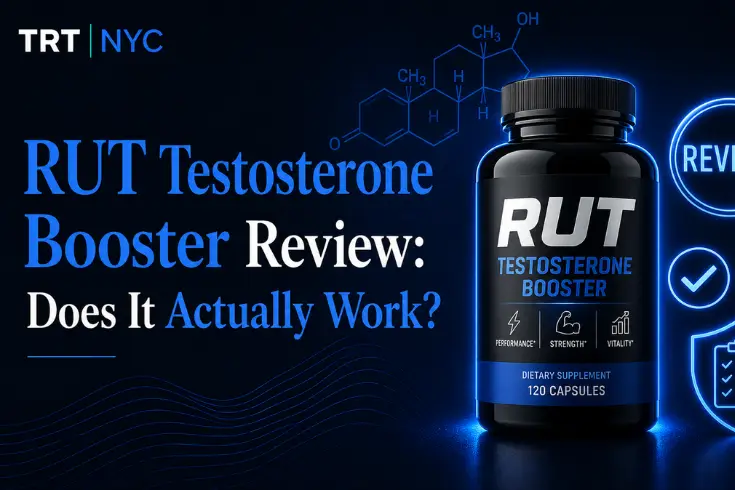
RUT is Redcon1’s natural testosterone booster, a supplement with ingredients like fenugreek, boron, and herbal extracts meant to support your own testosterone. It’s not testosterone or TRT. Like most boosters, evidence for big increases is limited and results vary. It may modestly help men low in certain nutrients, but it won’t fix clinically low testosterone.
Disclosure: this review may contain affiliate links, see our affiliate disclosure. Our assessment is independent and evidence-based.
Natural “test boosters” are everywhere, and RUT is one of the more popular. So does it actually do anything? Here’s our honest, no-hype review. (For how testosterone really works, see our complete TRT guide.)
What Is RUT Testosterone Booster?
RUT is a natural testosterone-support supplement from the brand Redcon1. Like other boosters, it’s marketed to help support your body’s own testosterone production through vitamins, minerals, and herbal extracts not by adding any actual testosterone. That’s the crucial distinction, RUT is a dietary supplement, not a hormone or a medication, and it’s worlds apart from prescription TRT.
RUT Ingredients: What’s Inside
Test boosters like RUT typically combine ingredients such as:
| Ingredient type | Common examples | What it’s claimed to do |
|---|---|---|
| Minerals | Zinc, boron, magnesium | Support normal testosterone if deficient |
| Herbal extracts | Fenugreek, tribulus, ashwagandha | Marketed for libido/T support |
| Vitamins | Vitamin D, B vitamins | Support if you’re low |
Always check the current product label, as formulas change. The key point most of these have modest or mixed evidence, and they work best when you’re actually deficient not as a way to push normal testosterone higher. This is the same reality covered in best supplements to take while on TRT.
Does RUT Testosterone Booster Actually Work?
Here’s the honest answer: don’t expect dramatic results. Some ingredients (like zinc and vitamin D) can support testosterone if you’re deficient, and ashwagandha has some evidence for stress and possibly testosterone. But for men who already have adequate nutrition, natural boosters generally produce small or no meaningful increase in testosterone. It’s similar to food-based claims like does celery increase testosterone plausible nutrient support, not a game-changer. If you have genuine low testosterone symptoms, a supplement won’t fix it.
Benefits Users Report
Anecdotally, some users report better energy, libido, gym motivation, or sleep on RUT. Whether that’s the ingredients, correcting a deficiency, or placebo is hard to separate. These can be real subjective benefits — just don’t assume your blood testosterone jumped. The only way to know your actual level is to test it and compare to normal levels.
Side Effects and Safety
RUT is generally well tolerated as a supplement, but possible issues include stomach upset, and herb-specific effects (some men react to fenugreek or high-dose herbs). Supplements aren’t tightly regulated like drugs, so quality varies by brand choose reputable ones, and check with your doctor if you take other medications.
RUT vs TRT: Booster vs Real Testosterone
This is the most important comparison:
| RUT (booster) | TRT | |
|---|---|---|
| What it is | Supplement | Prescription testosterone |
| Raises testosterone | Modestly, if at all | Yes, reliably |
| Treats low T | No | Yes |
| Needs a doctor | No | Yes |
A booster like RUT is not a substitute for TRT, and it’s nothing like steroids either. If your testosterone is genuinely low, the real solution is medical, see whether TRT is right for you.
Who Should (and Shouldn’t) Try RUT
- Might benefit: healthy men who want general nutritional support, may be low in zinc/vitamin D, and have realistic expectations.
- Shouldn’t rely on it: men with diagnosed low testosterone or clear symptoms, they need proper evaluation, not a booster.
The Bottom Line
Our verdict: ★★★☆☆. RUT is a reasonable general men’s supplement that may offer modest support, especially if you’re low in key nutrients — but it’s not a magic testosterone booster, and the evidence for big increases is limited. Most importantly, it’s not a replacement for TRT and won’t fix clinically low testosterone. If you feel “low,” test your levels before spending on boosters.
👉 Before buying any booster, know your baseline, check your testosterone with an at-home test kit. If it’s genuinely low, talk to a licensed provider about real options.
Frequently Asked Questions
Does RUT testosterone booster work?
Modestly at best. Some ingredients can support testosterone if you’re deficient, but for well-nourished men, natural boosters like RUT usually produce small or no meaningful increase. It won’t fix clinically low testosterone, only medical treatment does that.
What is RUT by Redcon1?
RUT is a natural testosterone-support supplement from Redcon1. It combines vitamins, minerals, and herbal extracts marketed to support your body’s own testosterone production. It contains no actual testosterone and is a dietary supplement, not a medication.
Is RUT a steroid?
No. RUT is a dietary supplement made from natural ingredients, not an anabolic steroid or testosterone. It works very differently and far more weakly than steroids or prescription TRT, with none of the same potency or regulation.
What are RUT side effects?
RUT is generally well tolerated, but possible side effects include stomach upset and reactions to specific herbs like fenugreek. Because supplement quality isn’t tightly regulated, choose reputable brands and consult your doctor if you take other medications.
Is RUT better than TRT?
No, for raising testosterone or treating low T. TRT reliably restores testosterone under medical supervision, while RUT is a supplement with modest effects at most. They’re not comparable one is a treatment, the other a general supplement.
Who should take RUT?
Healthy men wanting general nutritional support, possibly low in zinc or vitamin D, with realistic expectations. Men with diagnosed low testosterone or clear symptoms should get a proper medical evaluation instead of relying on a booster.
Written by the TRT NYC Editorial Team. Reviewed against current evidence on testosterone-boosting supplements (NIH Office of Dietary Supplements). Last updated: June 2026.
Medical disclaimer: This article is for educational purposes only and is not medical advice, diagnosis, or treatment. Dietary supplements are not evaluated like medications. trtnyc.com is an independent informational resource, not a medical provider. Always consult a licensed healthcare provider before starting a supplement.