
Does TRT Change Your Face? Jawline, Skin & Fat (2026)
 By TRT NYC Editorial Team
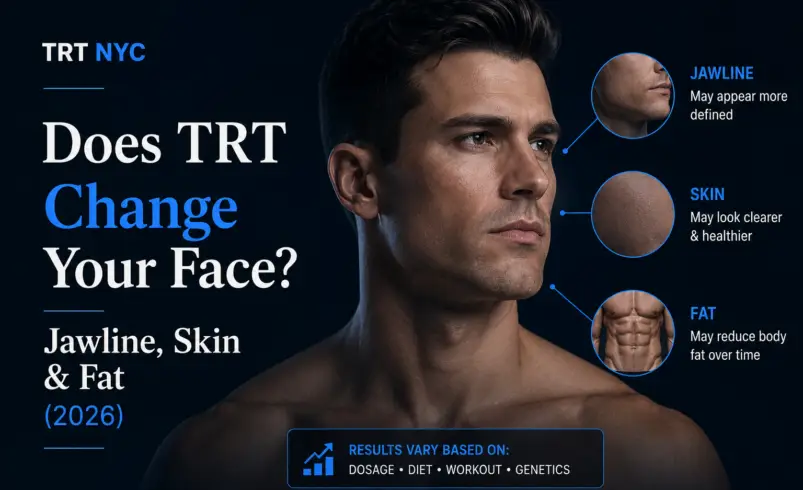
TL;DR — Key Takeaways
- Yes, subtly, over time. TRT mainly changes the face by reducing facial fat.
- Jawline can look sharper as fat drops and tone improves.
- Skin gets thicker and better-toned but oilier / mild acne early on.
- It won’t change bone structure or make you unrecognizable.
- Changes are gradual, building over 3–12 months.
Yes, TRT can subtly change your face over time, mainly by reducing facial fat (sharpening the jawline) and improving skin thickness and tone. It can also cause oilier skin or mild acne early on. But it won’t change your bone structure, the changes are gradual and natural, building over 3–12 months.
“Will TRT change my face?” is one of the most-searched TRT questions and the honest answer is yes, but not the way the dramatic before/afters online suggest. Here’s what actually changes. (For real result photos and timelines, see TRT before and after (face), for the full overview, our complete TRT guide.)
Does TRT Change Your Face?
Yes, but subtly and gradually. The main driver is fat: low testosterone is linked to more facial fat (puffy cheeks, softer chin), and restoring testosterone helps shift fat toward a leaner pattern. Add improved skin and muscle tone, and the face can look leaner and more defined over months. What TRT does not do is reshape your underlying bones or transform you into someone unrecognizable.
Here’s the area-by-area picture:
| Face area | What TRT can do |
|---|---|
| Jawline | Looks sharper as facial fat drops |
| Cheeks / chin | Less fat and puffiness |
| Skin | Thicker, better tone — but oilier early |
| Facial hair | May thicken/grow over months |
| Bone structure | No change in adults |
TRT and Your Jawline
This is the change men notice most. As TRT reduces facial fat and reduces early water puffiness, the jawline and cheekbones look more defined, not because the bone grew, but because there’s less fat softening the outline. Combined with overall body-fat reduction and muscle tone, the face often looks leaner. It’s the same fat-loss mechanism that drives the body transformation men chase.
TRT and Your Skin
Testosterone is active in the skin. Over time it can increase skin thickness and collagen, softening fine lines for a healthier look the upside covered in HRT benefits for skin in men. The trade-off, in the first few months, skin often gets oilier, and some men get mild acne as oil glands respond — a common, manageable TRT side effect. So skin may look slightly worse before it looks better.
What TRT Won’t Change
Be realistic. TRT will not:
- Change your bone structure — your jaw, cheekbones, and skull are set in adulthood.
- Make you unrecognizable — changes are subtle and natural.
- Erase wrinkles or sun damage — that’s skincare’s job, as we explain in does HRT make you look younger.
Anyone promising a dramatic “jaw transformation” from testosterone alone is overselling it.
How Long Until TRT Changes Your Face?
It’s gradual. Early on (first 3–6 months) you may notice less puffiness and subtle definition; by 6–12 months, jawline definition, facial hair, and skin changes are more visible. This follows the same staged pattern as the rest of your results, see how long does TRT take to work. Patience is key; the face changes slowly.
Does Low Testosterone Affect Your Face?
It can, in reverse. Low testosterone is associated with more facial fat, softer features, and duller skin, which is part of the broader picture of low testosterone symptoms. That’s why men with genuinely low T often see the most facial change when they restore levels — but only if they actually have a deficiency, which means confirming whether TRT is right for you first.
The Bottom Line
Does TRT change your face? Yes, subtly and over months, mainly by reducing facial fat for a sharper jawline, plus thicker, better-toned skin (after an oilier, sometimes acne-prone start). It won’t change your bone structure or transform you overnight. The biggest changes go to men who were genuinely low and pair TRT with training, good diet, and skincare. Judge it over 6–12 months, not weeks.
👉 Want to know if low testosterone is softening your features? Check your levels with an at-home test kit and talk to a licensed provider about whether TRT fits.
Frequently Asked Questions
Does TRT change your face?
Yes, subtly and over time. TRT mainly reduces facial fat, which can sharpen the jawline, and improves skin thickness and tone. Early on it may cause oilier skin or mild acne. It won’t change your bone structure or make you unrecognizable.
Does TRT give you a better jawline?
It can make your jawline look more defined, not by growing bone, but by reducing facial fat and puffiness and improving muscle and skin tone. The effect is gradual and natural, and it’s strongest in men who were carrying extra facial fat from low testosterone.
Does testosterone change your bone structure?
Not in adults. Your jaw, cheekbones, and skull are set after puberty, so TRT won’t enlarge or reshape them. The “sharper” look comes from losing facial fat and improving tone, not from bone growth. Be wary of claims otherwise.
Does TRT make your skin better or worse?
Both, at different times. Early on, skin often gets oilier and some men get mild acne as oil glands respond. Over months, testosterone can increase skin thickness and collagen, improving tone and softening fine lines. Good skincare helps through the transition.
How long until TRT changes your face?
Gradually. In the first 3–6 months you may notice reduced puffiness and subtle definition, by 6–12 months, jawline definition, facial hair, and skin changes become more visible. Like most TRT effects, facial changes build slowly over months.
Does low testosterone cause facial changes?
It can. Low testosterone is linked to more facial fat, softer features, and duller skin. That’s why men with a genuine deficiency often see noticeable facial improvement when they restore levels, though changes depend on having an actual low-testosterone diagnosis.
Written by the TRT NYC Editorial Team. Reviewed against current clinical and dermatologic guidance (Endocrine Society; American Academy of Dermatology). Last updated: June 2026.
Medical disclaimer: This article is for educational purposes only and is not medical advice, diagnosis, or treatment. Individual results vary. trtnyc.com is an independent informational resource, not a medical provider. Always consult a licensed healthcare provider.