

TL;DR — Key Takeaways Most modern TRT protocols use twice-weekly injections (every 3.5 days) for steadier levels. Cypionate and enanthate share a half-life of about 6.9 days, so weekly dosing
TL;DR — Key Takeaways Most modern TRT protocols use twice-weekly injections (every 3.5 days) for steadier levels. Cypionate and enanthate share a half-life of about 6.9 days, so weekly dosing

TL;DR — Key Takeaways The best site depends on your method (IM vs SubQ). Intramuscular (IM): ventrogluteal hip (safest), outer thigh (vastus lateralis), or deltoid. Subcutaneous (SubQ): abdominal fat (~2
TL;DR — Key Takeaways The best site depends on your method (IM vs SubQ). Intramuscular (IM): Ventrogluteal hip (safest), outer thigh (vastus lateralis), or deltoid. Subcutaneous (SubQ): Abdominal fat (~2
TL;DR — Key Takeaways Both deliver effective testosterone, the difference is how levels behave. Subcutaneous (SubQ): Slower absorption → steadier levels, and studies show lower hematocrit and estradiol. Intramuscular (IM):

TL;DR — Key Takeaways Draw your prescribed dose with a wide 18–21G needle, then swap to a thinner needle to inject. Intramuscular (IM): 23–25G, inject at 90° into the thigh,
TL;DR — Key Takeaways Ozempic (semaglutide) likely raises testosterone, indirectly, through weight loss. In one 18-month study of men with obesity/type 2 diabetes on GLP-1 drugs, the share with normal

TL;DR — Key Takeaways Hemoglobin, the oxygen-carrying protein in red blood cells (measured in g/dL). Hematocrit, the percentage of your blood made of red blood cells. Both rise on TRT because testosterone boosts
TL;DR — Key Takeaways Mixed for testosteron, vaping doesn’t clearly lower it, and nicotine can even slightly raise it. The consistent, clearer finding: harm to sperm, vaping is linked to
TL;DR — Key Takeaways Statins lower testosterone only slightly, about 4% in men in meta-analyses. That drop is statistically real but usually not enough to fall below the normal range.
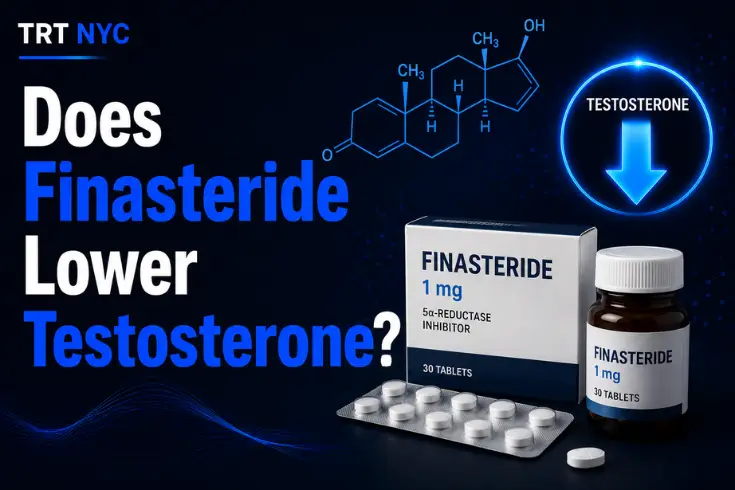
TL;DR — Key Takeaways No, finasteride does not lower testosterone. It often slightly raises it (~10–20%). It blocks the enzyme (5-alpha-reductase) that converts testosterone → DHT, cutting DHT ~70%. That’s
