TRT and Fertility: Does TRT Cause Infertility?
 By Tejanshu Jaluthria
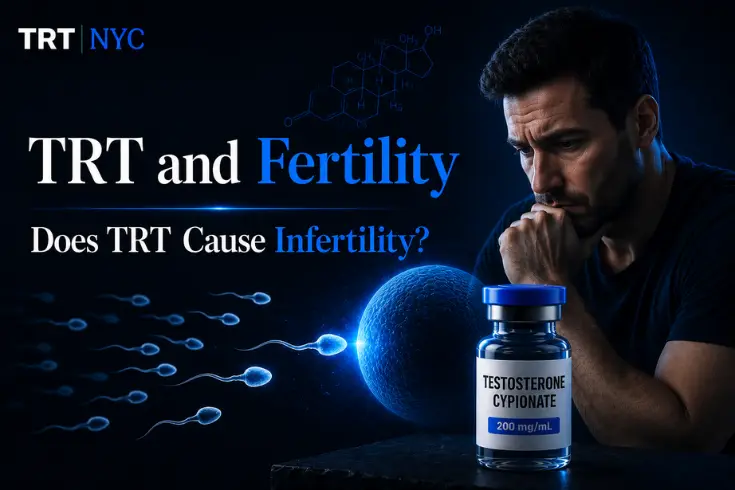
Yes, TRT suppresses sperm production and can cause temporary infertility, because adding testosterone shuts down the natural signals (LH and FSH) that drive sperm. The good news: it’s usually reversible after stopping, and fertility can be preserved during TRT with medications like hCG. If you want children, plan ahead with a doctor. Here’s everything you need to know.
This is one of the most important things to understand before starting testosterone therapy and one many men learn too late. TRT is excellent for symptoms, but it directly affects your fertility. This guide explains how, how to protect it, and how to recover it. (For the full overview, see our complete TRT guide.)
Does TRT Cause Infertility?
Yes, standard TRT typically reduces sperm production, and for many men it drops sperm counts dramatically, sometimes to zero, while on therapy. That’s why reduced fertility is listed among the key TRT side effects. It’s usually temporary and reversible, but not always quickly which is why planning matters if fatherhood is a goal.
How TRT Affects Fertility
Your body makes sperm through a feedback loop: the brain releases LH and FSH, which tell the testicles to produce both testosterone and sperm. When you add testosterone from outside (TRT), the brain senses you have “enough” and stops sending LH and FSH, so the testicles power down, including the part that makes sperm. The result is lower sperm count and often smaller testicles. This is the same suppression that confirms TRT is working but it’s also why it hits fertility.
How to Maintain Fertility on TRT
You don’t always have to choose between TRT and fertility. To maintain fertility while on TRT, doctors often add hCG (human chorionic gonadotropin), which mimics LH and keeps the testicles working, preserving sperm production and testicular size during therapy. Some men use protocols built specifically around fertility from the start. This must be doctor-managed, not improvised. If fertility matters, discuss it before starting and reconsider whether standard TRT is even the right first step (see is TRT right for me).
How to Increase Sperm Count While on TRT
If your sperm count has dropped on TRT, options to rebuild it (under a doctor) include:
- Adding hCG to restart testicular function
- Switching off testosterone to fertility-sparing alternatives (below)
- Supportive basics, healthy weight, no smoking, limited alcohol, good sleep, and managing heat exposure
These take time, sperm production runs on a ~3-month cycle, so improvements aren’t instant. A fertility specialist can tailor the approach.
Fertility Recovery After Stopping TRT
For most men, sperm production recovers after stopping TRT but the timeline varies widely. Many recover meaningful sperm counts within 6–12 months, while some take longer, and a minority have prolonged suppression. Recovery depends on age, how long you were on TRT, the dose, and your baseline fertility. A doctor may use a “restart” protocol (often hCG and/or clomiphene) to speed things up. The key point: recovery is common but not guaranteed to be fast, so don’t rely on it as your only plan.
TRT Alternatives If You Want Kids
If you have low testosterone and want to preserve fertility, your doctor may recommend alternatives to standard TRT that raise your own testosterone without shutting down sperm:
- Clomiphene (Clomid) :- stimulates your natural LH/FSH; see Clomid and TRT.
- Enclomiphene :- a similar approach.
- hCG-based protocols :- with or instead of testosterone.
These can relieve low-T symptoms while keeping fertility intact for many men.
When to See a Fertility Specialist
See a urologist or fertility specialist before starting TRT if you may want children, if you’ve been on TRT and want to conceive, or if sperm counts haven’t recovered after stopping. Complex cases (very low baseline counts, prolonged suppression) need specialist care, this isn’t something to self-manage with online protocols.
The Bottom Line
TRT and fertility don’t mix well by default: standard testosterone therapy suppresses the LH and FSH signals that drive sperm, lowering fertility while you’re on it. The effect is usually reversible, and fertility can be preserved during TRT with hCG or maintained using alternatives like clomiphene. The golden rule: if you want kids now or later talk to a doctor before you start.
👉 Considering TRT but want to protect fertility? Confirm your levels first with an at-home testosterone test kit, and review whether TRT is right for you and fertility-sparing options with a provider.
Frequently Asked Questions
Does TRT cause infertility?
Yes, standard TRT typically suppresses sperm production and can cause temporary infertility, sometimes dropping sperm counts to zero while on therapy. It happens because added testosterone shuts down the LH and FSH signals that drive sperm. It’s usually reversible after stopping.
Is TRT-related infertility reversible?
Usually, yes. Most men recover sperm production after stopping TRT, often within 6–12 months, though some take longer. Recovery depends on age, dose, and how long you were on TRT, and a doctor may use a restart protocol with hCG or clomiphene to help.
How can I stay fertile on TRT?
Doctors often add hCG, which mimics LH and keeps the testicles producing sperm during TRT. Some men use fertility-focused protocols from the start, or choose alternatives like clomiphene instead of standard TRT. This should always be doctor-managed.
How long after stopping TRT does sperm count recover?
It varies — many men recover meaningful sperm counts within 6–12 months, but some take longer, and a minority have prolonged suppression. Since sperm production runs on roughly a 3-month cycle, recovery is gradual, not instant.
Can I take TRT and still have kids?
Possibly, with planning. Using hCG alongside TRT can preserve sperm production for many men, and fertility-sparing alternatives like clomiphene can raise testosterone without shutting down sperm. Talk to a doctor before starting if fatherhood is a goal.
What are fertility-friendly alternatives to TRT?
Clomiphene (Clomid), enclomiphene, and hCG-based protocols can raise your own testosterone while preserving fertility, since they work with your natural signals instead of replacing them. A doctor can determine which fits your situation.
Written by the TRT NYC Editorial Team. Reviewed against current clinical guidelines (Endocrine Society; urology/fertility guidance). Last updated: June 2026.
Medical disclaimer: This article is for educational purposes only and is not medical advice, diagnosis, or treatment. Fertility outcomes vary, and recovery is not guaranteed. trtnyc.com is an independent informational resource, not a medical provider. Consult a licensed physician or fertility specialist before starting or stopping testosterone therapy.