Benefits of Testosterone Replacement Therapy: 10 Proven Effects
 By Tejanshu Jaluthria
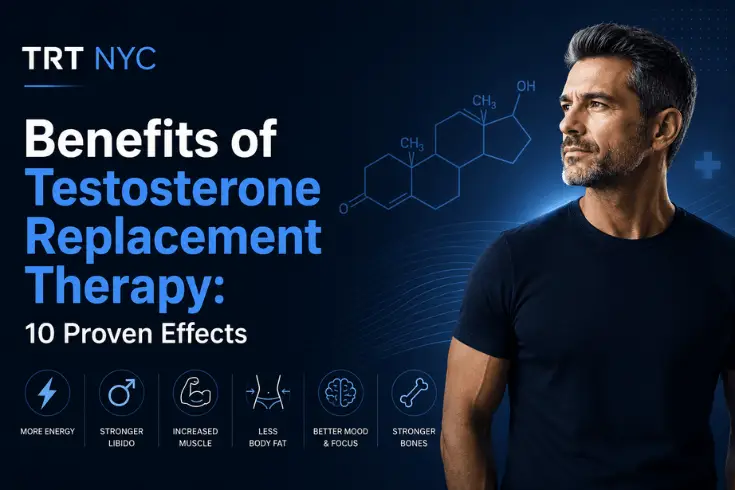
The main benefits of testosterone replacement therapy are more energy, stronger libido and erections, increased muscle and strength, less body fat, better mood and focus, and stronger bones. These benefits show up in men with genuinely low testosterone and build over weeks to months. TRT restores normal levels not superhuman ones and works best alongside good habits. Here are the 10 proven benefits and when to expect each.
If you’ve been told testosterone replacement therapy can be “life-changing,” it’s worth knowing what’s actually backed by evidence versus hype. For men with diagnosed low testosterone, the benefits are real and measurable. This guide walks through each one, the timeline, and who gets the most out of it. (For the full overview, see our complete TRT guide.)
What Are the Benefits of TRT?
When testosterone is restored to a healthy range, improvements span energy, sex, body, brain, and bones. Here’s the quick view with timing:
| Benefit | When it typically appears |
|---|---|
| Energy & mood | 2–4 weeks |
| Libido & erections | 3–6 weeks |
| Focus / mental clarity | 3–6 weeks |
| Muscle & strength | 3–6 months |
| Fat loss | 3–6 months |
| Bone density | 6–12 months |
10 Proven Benefits of Testosterone Replacement Therapy
1. More energy and less fatigue
One of the first and most noticeable benefits, that bone-deep tiredness of low T lifts as levels normalize.
2. Higher libido and better erections
Testosterone is the main driver of male sex drive. TRT restores desire and supports erections, see how to restore energy and libido with TRT. (If erections lag, it may be estrogen or blood flow, more here.)
3. More muscle and strength
Testosterone boosts muscle protein synthesis. Combined with training, TRT increases lean muscle and strength, though at a replacement dose, your workouts do the building. See will 100mg of testosterone a week build muscle and the TRT workout plan.
4. Less body fat (especially belly fat)
TRT shifts body composition, reducing fat, particularly visceral belly fat, which also feeds estrogen.
5. Better mood and emotional stability
Low testosterone is linked to low mood and irritability; restoring it often improves mood, drive, and emotional steadiness.
6. Sharper focus and mental clarity
Many men report the “brain fog” of low T clearing, better concentration, memory, and decision-making.
7. Stronger bones
Testosterone maintains bone density. Over time, TRT improves bone mineral density and lowers fracture risk in deficient men.
8. Better metabolic health
TRT can improve insulin sensitivity and metabolic markers, especially in men with low T and excess weight.
9. Healthier red blood cell production
Testosterone supports red blood cell production, which can help low-T-related anemia. (Note: this same effect must be monitored so hematocrit doesn’t go too high, see TRT side effects.)
10. Improved motivation and quality of life
Beyond any single metric, men often describe getting their “edge,” drive, and sense of self back, the benefit that matters most day to day.
Benefits Timeline: When TRT Kicks In
Energy, mood, and libido improve first (within weeks), while muscle, fat, and bone changes build over months. The landmark NEJM Testosterone Trials confirmed improvements in sexual function, mood, and vitality, and broader reviews show gains in lean mass and fat loss in men with low testosterone. For the realistic month-by-month arc, see TRT before and after.
Who Gets the Most Benefit From TRT?
The men who benefit most are those who started genuinely low. The bigger your deficit, the bigger the improvement once it’s corrected. If your testosterone is already in a healthy range, TRT won’t add benefits, it only carries risk. That’s why testing first matters: confirm low testosterone (and the symptoms) before expecting results.
Benefits vs Risks: An Honest Balance
TRT’s benefits are real, but they come with responsibilities: regular bloodwork, monitoring hematocrit and estrogen, and managing potential side effects like acne, water retention, and reduced fertility. For most men with diagnosed low testosterone and proper monitoring, the benefits outweigh the manageable risks, but TRT is a long-term medical commitment, not a quick fix.
The Bottom Line
The benefits of testosterone replacement therapy, more energy, libido, muscle, focus, better mood, and stronger bones are well-supported in men with genuinely low testosterone. They build in waves over weeks to months, and they’re biggest when you start low and pair TRT with good training, diet, and sleep. TRT restores your normal; the work maximizes it.
👉 Want to know if you’d benefit? Check your levels first with an at-home testosterone test kit, and read up on low testosterone symptoms to see if low T is holding you back.
Frequently Asked Questions
What are the benefits of TRT?
The main benefits are more energy, stronger libido and erections, increased muscle and strength, less body fat, better mood, sharper focus, and stronger bones. These appear in men with genuinely low testosterone and develop over weeks to months.
How long until you feel the benefits of TRT?
Energy and mood often improve within 2–4 weeks, libido and focus within 3–6 weeks, and muscle and fat changes over 3–6 months. Bone density and full benefits build over 6–12 months.
Does TRT really build muscle?
Yes, in men with low testosterone, it increases lean muscle and strength, especially combined with resistance training. At a replacement dose, your training and diet do most of the building while testosterone makes it more effective.
Does TRT improve mood and energy?
For men with low testosterone, yes, restoring levels commonly improves energy, mood, motivation, and mental clarity. These are often the first benefits men notice, within the first few weeks.
Are the benefits of TRT worth the risks?
For most men with diagnosed low testosterone and proper monitoring, the benefits outweigh the manageable risks like acne, water retention, and reduced fertility. It requires ongoing bloodwork and a doctor’s supervision, so it’s a long-term commitment.
Who benefits most from TRT?
Men who started with genuinely low testosterone benefit most, the larger the deficit, the bigger the improvement. Men with already-normal testosterone get little benefit and take on unnecessary risk, which is why testing first is essential.
Written by, Tejanshu Jaluthria. Reviewed against current clinical guidelines (Endocrine Society; American Urological Association). Last updated: June 2026.
Medical disclaimer: This article is for educational purposes only and is not medical advice, diagnosis, or treatment. trtnyc.com is an independent informational resource, not a medical provider. Always consult a licensed healthcare provider before starting testosterone therapy. Individual results vary.