Managing Fatty Liver Disease Starts in Your Kitchen, Not a Pharmacy: 8 Foods That Actually Work
 By TRT NYC Editorial Team
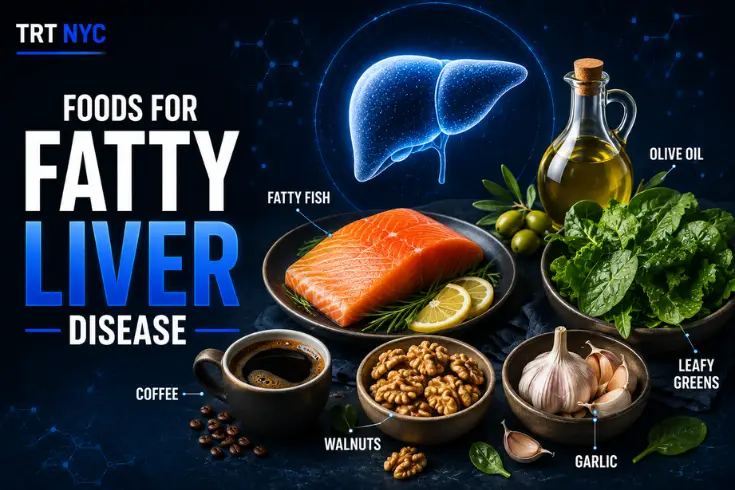
Managing fatty liver disease doesn’t start in a pharmacy, it starts in your kitchen. There’s no approved medication that reverses fatty liver disease on its own, which surprises most people the moment they’re diagnosed. What actually moves the needle is diet, weight management, and consistent lifestyle changes, and eight specific foods have real, clinical research behind their ability to reduce liver inflammation, support natural detox pathways, and help reverse fat buildup over time.
Why a Fatty Liver Diagnosis Feels So Overwhelming
Before getting into the foods themselves, it’s worth naming what makes this diagnosis so frustrating for so many people:
- It’s often silent. Fatty liver disease usually produces no symptoms until it’s already progressed, so hearing the diagnosis can feel like it came out of nowhere.
- The advice online is contradictory. One source says cut all fat, another says eat more healthy fat, and it’s hard to know who to trust.
- There’s no pill to fix it. Unlike high cholesterol or blood pressure, there’s currently no approved medication specifically for reversing fatty liver, which leaves many people feeling like they’re on their own.
- The fear of progression is real. Left unmanaged, fatty liver can progress to fibrosis, cirrhosis, or liver failure, and that uncertainty weighs heavily on people newly diagnosed.
The good news is that diet-driven improvement is one of the most well-supported treatments in modern hepatology, and it’s entirely within your control.
8 Liver-Supporting Foods at a Glance
| Food | Key Compound | How It Helps |
| Coffee | Chlorogenic acid, caffeine | Linked to lower liver enzyme levels and reduced fibrosis risk |
| Fatty fish | Omega-3 fatty acids | Reduces liver fat and inflammation |
| Olive oil | Monounsaturated fats | Improves liver enzyme markers |
| Leafy greens | Fiber, antioxidants | Supports detox pathways and reduces fat accumulation |
| Walnuts | Omega-3s, plant compounds | Improves liver function test results |
| Garlic | Allicin | Associated with reduced body fat in fatty liver patients |
| Green tea | Catechins | Reduces fat accumulation in liver cells |
| Oats | Beta-glucan fiber | Supports blood sugar control and healthy weight |
The 8 Foods Clinically Linked to a Healthier Liver
Coffee
Multiple studies have linked regular coffee consumption to lower liver enzyme levels and a reduced risk of liver fibrosis, making it one of the most surprising and well-supported additions to a liver-friendly diet.
Fatty Fish
Salmon, mackerel, and sardines deliver omega-3 fatty acids shown to directly reduce liver fat content and inflammation in people with fatty liver disease.
Olive Oil
Swapping butter and processed oils for olive oil, a cornerstone of the Mediterranean diet, has been associated with measurable improvements in liver enzyme markers.
Leafy Greens
Spinach, kale, and similar greens provide fiber and antioxidants that support the liver’s natural detoxification processes while helping reduce fat accumulation.
Walnuts
Rich in omega-3s and plant compounds, walnuts have been linked in research to improved liver function test results compared to diets without them.
Garlic
Clinical trials on garlic supplementation have shown reductions in body weight and fat mass specifically in patients with non-alcoholic fatty liver disease.
Green Tea
The catechins in green tea have demonstrated the ability to reduce fat accumulation within liver cells in multiple studies.
Oats
The beta-glucan fiber in oats supports healthy blood sugar regulation, which plays a direct role in preventing further fat buildup in the liver.
Beyond Food: The Habits That Make These Foods Actually Work
Diet alone rarely works in isolation, it needs to be paired with consistent lifestyle habits:
- Losing even 5 percent of your body weight has been shown to measurably reduce liver fat, with gradual loss of 1 to 2 pounds per week being the safest, most sustainable target.
- Getting at least 150 minutes of moderate exercise weekly, like brisk walking, supports both weight loss and direct improvements in liver fat.
- Completely avoiding alcohol is non-negotiable, since alcohol directly accelerates liver damage regardless of how well you’re eating otherwise.
- Protecting a consistent sleep schedule improves how your body manages insulin, which is directly tied to fat storage in the liver.
Weight fluctuations aren’t only diet-driven either, hormone-related weight changes are a factor some men overlook, a connection covered in does TRT cause weight gain.
What’s Quietly Undoing Your Progress
Just as important as what you add is what you cut. Sodas, sweet teas, and packaged snacks with added sugar are among the biggest contributors to ongoing liver fat accumulation, and refined carbs like white bread and white rice behave similarly in the body to sugar once digested. Digestive discomfort can also complicate this picture, and it isn’t always liver-related, hormonal factors can contribute too, a connection explored in can low testosterone cause stomach issues.
Manage the Whole Picture: Blood Sugar, Blood Pressure, and Cholesterol
Fatty liver disease rarely shows up alone, it’s frequently connected to other metabolic conditions that need to be managed together:
- Elevated blood pressure often coexists with fatty liver disease as part of broader metabolic syndrome, an overlap worth understanding further in lower blood pressure on testosterone.
- Cholesterol management is equally important, since fatty liver and abnormal cholesterol levels frequently occur together and influence each other, a relationship detailed in does TRT affect cholesterol.
- Keeping blood sugar within a healthy range reduces the ongoing fat storage process that drives fatty liver progression in the first place.
When to Loop In Your Doctor
Diet and lifestyle changes are powerful, but they work best alongside proper medical guidance:
- Always consult your doctor before starting any new vitamins, herbal products, or supplements, since some can actually place additional strain on the liver rather than helping it, a caution worth keeping in mind when reviewing options like those covered in best supplements to take while on TRT.
- This caution matters even more for certain hormone treatments, since specific formulations are known to carry meaningfully higher liver risk than others, a distinction explained in toxic testosterone in men.
- If you have diabetes, high cholesterol, or a specific fibrosis stage from a prior test, share that with your doctor so your food and lifestyle plan can be tailored accordingly.
Conclusion
Fatty liver disease can feel overwhelming precisely because it’s silent and there’s no pill to fix it, but that also means the solution is fully within your control. Coffee, fatty fish, olive oil, leafy greens, walnuts, garlic, green tea, and oats each bring real, research-backed benefits to the table, and paired with weight loss, exercise, and cutting back on sugar and alcohol, they give your liver a genuine chance to heal.
Frequently Asked Questions
What is the fastest way to reverse a fatty liver?
The fastest, most evidence-backed approach combines gradual weight loss of 1 to 2 pounds per week, regular exercise, complete alcohol avoidance, and a whole-foods diet rich in fiber and healthy fats, with noticeable improvement often within a few months.
Will fatty liver disease go away?
In many cases, especially early-stage fatty liver, the condition can be significantly reduced or reversed through sustained diet and lifestyle changes, though more advanced stages like fibrosis may not fully reverse.
What are the best supplements for fatty liver disease?
Some research supports vitamin E and milk thistle for certain patients, but supplements should only be used under a doctor’s guidance, since some can worsen liver strain rather than help it.
What are the different stages of fatty liver disease?
The condition typically progresses through simple fatty liver, non-alcoholic steatohepatitis (inflammation), fibrosis, and cirrhosis, with each stage carrying increasing risk and requiring different levels of medical monitoring.
Can coffee really help fatty liver disease?
Yes, multiple studies have linked regular coffee consumption to lower liver enzyme levels and reduced risk of fibrosis progression in people with fatty liver disease.
How much weight loss is needed to improve fatty liver?
Losing just 5 percent of body weight has been shown to reduce liver fat, while losing 7 to 10 percent can significantly improve liver inflammation and fibrosis in many patients.
Is intermittent fasting good for fatty liver disease?
Some research suggests intermittent fasting may support weight loss and improved insulin sensitivity, both beneficial for fatty liver, but it should be approached with medical guidance, especially for those with existing health conditions.
Can fatty liver disease be reversed without medication?
Yes, since there is currently no medication approved specifically to reverse fatty liver disease, diet, weight loss, exercise, and alcohol avoidance remain the primary and most effective treatment approach.
Disclaimer
This article is for informational and educational purposes only and is not a substitute for professional medical advice, diagnosis, or treatment. Always consult a qualified healthcare provider for proper diagnosis, staging, and a personalized treatment plan for fatty liver disease.
Sources
- Mayo Clinic, Fatty Liver Disease (MASLD): Diagnosis and Treatment
- American Liver Foundation, Diet and Fatty Liver Disease
- National Institute of Diabetes and Digestive and Kidney Diseases (NIDDK), NAFLD Overview
- Harvard T.H. Chan School of Public Health, Coffee and Liver Health
- Cleveland Clinic, Nutrition for Liver Health