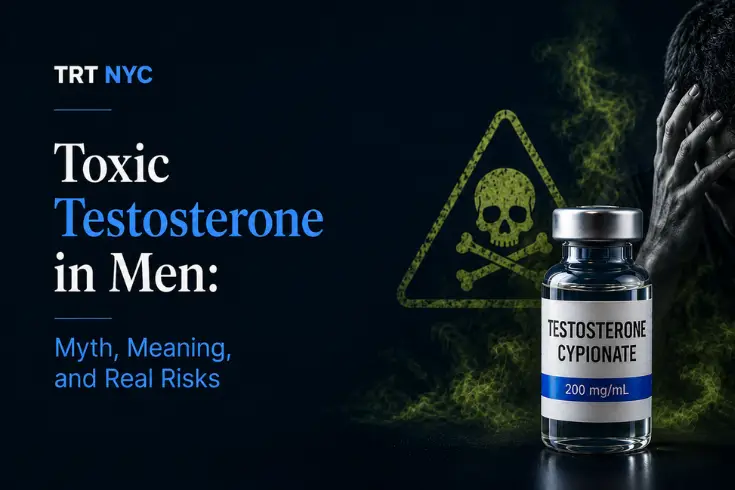
Toxic Testosterone in Men: Myth, Meaning, and Real Risks
 By Tejanshu Jaluthria
Testosterone itself is not “toxic” there’s no medical condition called toxic testosterone. The phrase usually refers to the harm caused by abnormally high testosterone, typically from steroid abuse or overdosing, which can raise hematocrit, blood pressure, aggression, acne, and fertility problems. Properly dosed, monitored TRT keeps testosterone in a safe, healthy range, the opposite of “toxic.”
“Toxic testosterone” is a phrase that shows up in headlines and gym talk, but it mixes up culture and biology. Here’s what it actually means medically and where the real risks lie. (For the full picture, see our complete TRT guide.)
Is Testosterone “Toxic”? What People Really Mean
When people say “toxic testosterone,” they usually mean one of two things:
- A cultural idea (linking testosterone to “toxic masculinity”) — that’s social commentary, not medicine.
- A medical concern about testosterone being too high and causing harm.
This article focuses on the medical side: testosterone is a normal, essential hormone, with real benefits at healthy levels. The problems come from excess, not from testosterone existing.
There’s No Medical Condition Called “Toxic Testosterone”
Doctors don’t diagnose “toxic testosterone.” What does exist is the harm from supraphysiologic (far-above-normal) levels, almost always from anabolic steroid abuse or overdosing not from medical testosterone therapy. This is the key distinction explored in TRT vs steroids: same hormone, very different doses and oversight.
When Testosterone Levels Become Harmful
Pushing testosterone well above normal carries real risks:
| Effect of too-high testosterone | Why it matters |
|---|---|
| High hematocrit | Thicker blood, clot risk — see high hematocrit on TRT |
| High blood pressure | Strain on the heart — see lowering BP on testosterone |
| High estrogen / gyno | From aromatization — see high estrogen on TRT |
| Acne, oily skin | Common with excess |
| Mood/aggression | Linked to very high levels — see does TRT make you aggressive |
| Infertility | Suppressed sperm — covered in TRT and fertility |
These are exactly why testosterone needs to be monitored, and they overlap with the standard TRT side effects when doses run high.
Signs of Too Much Testosterone
Possible signs of excessive levels include persistent acne, irritability or aggression, sleep problems, frequent flushing, elevated blood pressure, and rising hematocrit on bloodwork. Because some signs are subtle, the only reliable check is testing compare results to normal testosterone levels using the right testosterone test.
Toxic Testosterone vs Healthy TRT
This is the heart of it, medical TRT restores testosterone to a normal range and is monitored. It is not “toxic testosterone.” The harm associated with the phrase comes from abuse, megadoses, and no oversight, which is why even high doses for muscle (the topic of will 100mg build muscle) should be medically guided. Done right, TRT is safe for most men with genuinely low testosterone.
How to Keep Testosterone in a Safe Range
- Use only a prescribed, monitored dose not “more is better.”
- Get regular bloodwork (testosterone, hematocrit, estrogen).
- Adjust with your doctor, not a forum.
- Avoid black-market steroids and megadosing.
The Bottom Line
There’s no medical condition called “toxic testosterone.” Testosterone is a normal, beneficial hormone; the harm people mean comes from abnormally high levels caused by abuse or overdosing raising hematocrit, blood pressure, acne, aggression, and infertility risk. Properly dosed, monitored TRT keeps you in a healthy range and is the opposite of “toxic.” The danger is excess and lack of monitoring, not testosterone itself.
👉 Know your real numbers, not the hype, check your testosterone with an at-home test kit and keep levels in a safe range with a licensed provider.
Frequently Asked Questions
Is testosterone toxic to men?
No. Testosterone is a normal, essential hormone, not a toxin. At healthy levels it’s beneficial. Harm comes from abnormally high levels, usually from steroid abuse or overdosing not from testosterone existing or from properly dosed therapy.
What is toxic testosterone?
There’s no real medical condition by that name. The phrase usually refers to the harm caused by abnormally high (supraphysiologic) testosterone, typically from anabolic steroid abuse, or it’s used as cultural commentary unrelated to biology.
Can too much testosterone harm you?
Yes. Excessively high testosterone can raise hematocrit and blood pressure, worsen acne, increase estrogen and gynecomastia risk, affect mood, and suppress fertility. That’s why levels are monitored and doses kept in a normal range.
What are signs of too much testosterone?
Possible signs include persistent acne, irritability or aggression, sleep problems, flushing, high blood pressure, and rising hematocrit on bloodwork. Because signs can be subtle, testing is the only reliable way to confirm.
Does high testosterone cause aggression?
Very high levels, especially from abuse, are linked to irritability and aggression in some men. At normal, properly dosed therapeutic levels, this is far less of a concern and isn’t a typical effect of well-managed TRT.
Is TRT the same as toxic testosterone?
No. Medical TRT restores testosterone to a normal, monitored range and is the opposite of “toxic testosterone,” which refers to harm from megadoses and abuse without oversight. Dose and monitoring make all the difference.
Written by the TRT NYC Editorial Team. Reviewed against current clinical guidance (Endocrine Society; NIDA on anabolic steroids). Last updated: June 2026.
Medical disclaimer: This article is for educational purposes only and is not medical advice, diagnosis, or treatment. trtnyc.com is an independent informational resource, not a medical provider. Always consult a licensed healthcare provider about testosterone therapy.