



The Surprising Truth About TRT and Erectile Dysfunction
Testosterone replacement therapy is prescribed to correct low testosterone — a condition that affects energy, mood, muscle mass, and sexual health. For most men, it delivers real and meaningful improvements. But there is one outcome that surprises many: even after starting TRT, some men find that their erections do not fully recover.
The question of whether TRT can cause ED is one of the most searched and most misunderstood topics in men’s health. The honest answer is nuanced. TRT does not typically cause erectile dysfunction directly, but men who experience ED while on TRT are often dealing with secondary factors that the therapy was never designed to address.
This guide explores exactly why ED while on TRT happens, what the clinical evidence points to, and what a structured, medically sound approach to fixing it actually looks like. Whether you are newly on testosterone therapy or have been on it for years, understanding this distinction could change everything about how you approach the problem.
Why ED Happens During Testosterone Therapy
To understand why some men develop or continue to experience ED while on TRT, it helps to recognize how erections actually work. An erection is not a simple hormonal switch. It is the result of coordinated activity between your cardiovascular system, nervous system, hormonal balance, and psychological state. Testosterone plays a role — but only one role among many.
When any part of that system is impaired, erection quality suffers regardless of what your testosterone levels show on paper. Here are the most clinically relevant reasons why ED happens during TRT:
High Estrogen (Elevated Estradiol)
This is one of the most overlooked contributors to erectile dysfunction on testosterone therapy. When the body receives additional testosterone through TRT, some of it naturally converts to estrogen through a process called aromatization. If estrogen climbs too high, it can blunt erection signals, suppress sexual motivation, and disrupt the hormonal balance required for healthy erectile function.
Men who experience ED while on TRT and have elevated estradiol often notice that other symptoms accompany the sexual issues — water retention, mood fluctuations, or increased sensitivity in chest tissue. A blood test measuring estradiol (E2) levels can confirm whether this is a factor and guide the appropriate response.
Suboptimal Testosterone for Your Individual Body
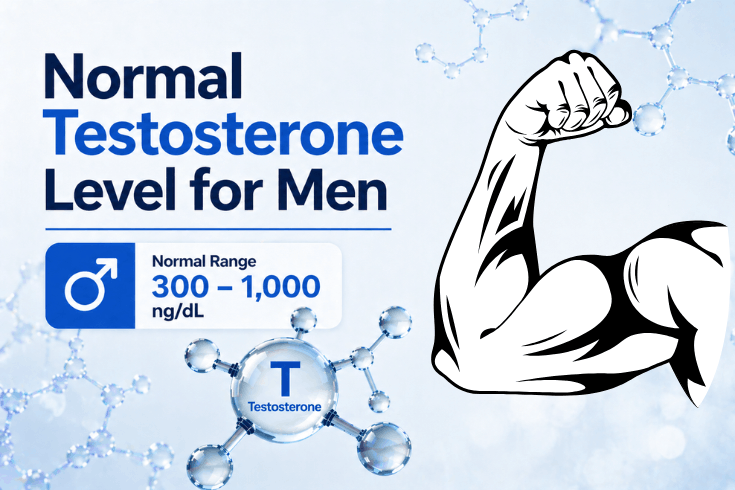
The clinical reference range for testosterone spans from roughly 264 to 916 ng/dL — an enormous window. Falling within this range does not automatically mean your levels are optimal for you. Some men need levels in the upper half of that range to experience full symptomatic relief, including restored erectile function. A protocol that keeps you in the lower or middle zone may still leave sexual performance issues unresolved.
Poor Vascular Health and Blood Flow
Erections are fundamentally a blood flow event. Arterial stiffness, high blood pressure, elevated cholesterol, and diabetes all reduce the penile blood flow needed for firm, sustained erections. These conditions exist independently of testosterone and require their own targeted treatment. Improving hormones without addressing cardiovascular health often produces only partial results.
Elevated Hematocrit
Testosterone therapy increases red blood cell production — a known and expected effect. But when hematocrit rises too high, blood thickens and circulation slows throughout the body, including in the penile tissue. Routine monitoring through a complete blood count (CBC) is an important part of any well-managed TRT protocol and can identify this issue before it affects sexual function.
Psychological Factors
Performance anxiety, chronic stress, depression, and unresolved emotional tension are powerful suppressors of erectile function. The brain initiates the arousal process, and if mental barriers are present, no level of testosterone optimization will override them. Psychological contributors to erectile dysfunction are common, clinically significant, and highly treatable — but they must be identified first.
TRT and Erectile Dysfunction Causes: Quick Reference
| Root Cause | Why It Leads to ED while on TRT | How It Is Detected |
| Elevated Estradiol | Hormonal imbalance disrupts erection signaling | Estradiol (E2) blood test |
| Suboptimal T Levels | Testosterone not reaching your personal optimal range | Total T and Free T bloodwork |
| Vascular Issues | Insufficient blood flow to penile tissue | Cardiovascular assessment |
| High Hematocrit | Thickened blood restricts circulation | Complete blood count (CBC) |
| Psychological Factors | Anxiety and stress override arousal signals | Clinical or therapeutic evaluation |
| Lifestyle Habits | Poor circulation and hormonal disruption | Self-review and lab work |
Libido vs Erection Quality: Why TRT Affects Them Differently
One of the most important things to understand about testosterone therapy and sexual health is that libido and erectile function are not the same thing — and TRT does not affect them in the same way.
Sex drive, or libido, is strongly regulated by testosterone. When TRT successfully raises testosterone levels, most men notice a meaningful improvement in sexual desire, motivation, and mental engagement with sex. This improvement often appears relatively early in the treatment process and is one of the most consistently reported benefits of testosterone therapy.
Erectile function is a different story. It depends on vascular health, neural signaling, and psychological readiness just as much as it does on hormones. A man experiencing ED while on TRT may have excellent libido — he wants sex, thinks about it, and feels driven — but still cannot achieve or maintain the erection quality he needs. This disconnect is one of the clearest diagnostic signals in men’s sexual health.
| Key Insight: If your sex drive has improved since starting TRT but you are still dealing with ED while on TRT, this pattern tells you something important: the testosterone is working. The erectile issue lies elsewhere — most likely in vascular health, estrogen levels, or an unaddressed psychological factor. |
Step by Step: How to Fix Erectile Dysfunction on TRT
Resolving erectile issues on testosterone therapy requires a systematic approach rather than guesswork. Each step below builds on the last, and together they address the full range of contributing factors — not just the hormonal ones.
Step 1 Run a Complete Blood Panel
Before adjusting anything, get accurate data. A comprehensive lab panel should include:
- Total Testosterone and Free Testosterone — to assess actual hormone levels in your system
- Estradiol (E2) — to check for excess aromatization and estrogen-related suppression
- Complete Blood Count (CBC) — to evaluate hematocrit and red blood cell concentration
- Comprehensive Metabolic Panel — to check blood sugar, liver health, and kidney function
- Prolactin — elevated prolactin can significantly dampen sexual response
- Thyroid function (TSH) — thyroid imbalances frequently manifest as sexual health symptoms
Step 2 Individualize Your TRT Protocol
A protocol that is not tailored to your specific physiology is one of the most common reasons men experience ED while on TRT for an extended period. Work with your prescribing physician to evaluate your dosage, injection frequency, and delivery method. The goal is not just to land within the ‘normal’ range — it is to find the level at which your body actually functions optimally.
Step 3 Address Elevated Estrogen Carefully
If bloodwork shows high estradiol, your doctor may consider adding an aromatase inhibitor to your protocol. This medication slows the conversion of testosterone into estrogen, helping to restore the hormonal balance needed for healthy sexual function. This must be managed with care — driving estrogen too low creates its own set of problems, including joint pain, low mood, and reduced sexual interest.
Step 4 Improve Cardiovascular Health Actively
Because erectile function is fundamentally driven by blood flow, cardiovascular fitness directly translates to erection quality. Regular aerobic exercise — at least 150 minutes per week — improves arterial flexibility and circulation. Combined with a diet that supports heart health, blood pressure management, and eliminating smoking, these changes often produce noticeable improvements in sexual performance within weeks to months.
Step 5 Use PDE5 Inhibitors as a Bridge
Sildenafil (Viagra) and tadalafil (Cialis) are medically accepted for use alongside testosterone replacement therapy. For men managing ED while on TRT, these medications can provide reliable support during the optimization period while underlying causes are being corrected through protocol adjustments and lifestyle changes. Always consult your physician before adding any medication to your TRT protocol.
Step 6 Take Psychological Health Seriously
If anxiety, stress, or performance-related psychological pressure are contributing factors, addressing them through therapy particularly with a specialist experienced in sexual health — is not optional, it is essential. Psychogenic erectile dysfunction responds very well to structured therapeutic approaches, and resolving it often unlocks improvements that physical interventions alone could not achieve.
Lifestyle Factors That Silently Worsen Erection Quality
Many men on testosterone therapy are surprised to learn how significantly lifestyle habits influence erection quality. Even when a TRT protocol is well optimized, these factors can quietly sustain ED while on TRT — making them a critical part of any complete treatment strategy.
| Lifestyle Factor | How It Impairs Erections | What to Change |
| Sedentary lifestyle | Reduces cardiovascular output and blood flow | 150+ minutes of cardio exercise per week |
| Poor diet | Promotes inflammation and arterial stiffness | Prioritize whole foods, reduce processed intake |
| Alcohol consumption | Depresses the nervous system’s arousal response | Moderate or eliminate alcohol use |
| Smoking | Constricts blood vessels and damages arterial walls | Quit — even gradual reduction improves outcomes |
| Chronic stress | Raises cortisol, directly suppresses sexual function | Active stress management: sleep, mindfulness, therapy |
| Sleep deprivation | Lowers overnight testosterone production, raises cortisol | Target 7 to 9 hours of quality sleep nightly |
Myths vs Facts: TRT and Erectile Dysfunction
| Common Myth | The Real Fact |
| TRT directly causes erectile dysfunction | TRT rarely causes ED directly — contributing factors are almost always secondary and addressable |
| If TRT is working, ED should disappear automatically | TRT restores testosterone, not blood flow or psychological readiness — those need separate attention |
| You should not need ED medication while on TRT | PDE5 inhibitors can safely complement TRT and are medically accepted for combined use |
| Higher testosterone always means stronger erections | Erection quality depends on vascular health, nerve function, and mental state — not testosterone alone |
| ED on TRT means the therapy is failing | It usually signals a secondary, treatable cause — not that testosterone therapy itself is ineffective |
Conclusion: You Have More Options Than You Think
Experiencing ED while on TRT is frustrating — especially when you have already taken meaningful steps to address your hormonal health. But the most important thing to take away from this article is that erectile dysfunction during testosterone therapy is not a permanent outcome. It is, in the vast majority of cases, a solvable problem.
The key is to stop treating it as a testosterone problem and start treating it as the multi-system issue it actually is. Blood flow, estrogen balance, hematocrit, psychological wellbeing, and lifestyle habits all play measurable roles in erectile function — and each one can be assessed, monitored, and improved with the right medical support.
Whether you have been dealing with ED while on TRT for weeks or months, the path forward is the same: accurate bloodwork, a personalized TRT protocol, targeted lifestyle changes, and, where needed, appropriate medical interventions. With the right approach, most men achieve a level of sexual health that meets or exceeds what they experienced before starting therapy.
Frequently Asked Questions
Is it normal to have ED while on TRT?
Yes, more common than most men expect. Experiencing ED while on TRT does not mean your therapy has failed. It most often means there is an underlying contributor — elevated estrogen, vascular issues, psychological stress, or a suboptimal protocol — that has not yet been identified or addressed. A structured clinical evaluation typically reveals the cause.
Does TRT cause high estrogen that leads to ED?
It can, in some men. Testosterone naturally converts to estrogen through aromatization, and higher testosterone levels from TRT can accelerate this process. If estradiol rises too high, it can suppress erection quality and libido. This is why estrogen monitoring is a standard part of well-managed testosterone therapy.
Why does my sex drive improve on TRT but not my erections?
Because libido and erectile function rely on different mechanisms. Testosterone drives sexual desire. But erections also require healthy blood vessels, nerve signals, and a calm mental state — none of which are directly controlled by testosterone levels. Improved desire with persistent erection problems points clearly toward a vascular or psychological contributor.
How long before erection quality improves on TRT?
Most men see meaningful improvement within three to six months once the protocol is properly individualized and any secondary issues are addressed. If vascular or psychological contributors are present, additional targeted interventions will extend the timeline — but significant improvement is achievable for the majority of men.
Can I take Viagra or Cialis while on TRT?
In most cases, yes. PDE5 inhibitors are a medically accepted, commonly used approach for men managing ED while on TRT. They work by improving blood flow to penile tissue and are considered safe alongside testosterone therapy in most patients. Always have your physician review your full health profile before starting any combined medication regimen.
What causes low libido on testosterone therapy?
Low libido during testosterone therapy can result from estrogen that is too high or too low, elevated prolactin, thyroid dysfunction, or psychological stress. If sex drive has not improved despite testosterone levels rising, a comprehensive blood panel will usually identify the specific reason.