How to Start TRT Safely Through Telehealth: A Step-by-Step Guide
 By Atul Sharma

To start TRT safely through telehealth, get baseline morning bloodwork, choose a licensed online provider that requires labs and a prescription, review your results with a real clinician, and begin treatment only if your levels are low with scheduled follow-up labs. Avoid any website that skips bloodwork or sells testosterone without a prescription. Here’s the full step-by-step.
Telehealth TRT is testosterone replacement therapy delivered through a licensed online clinic, you complete an online consultation, get blood tests, and (if your testosterone is low) receive a prescription and medication by mail, with virtual follow-ups. It’s legal and safe when a licensed provider requires real bloodwork and ongoing monitoring. This guide shows you exactly how to do it safely, how to spot a sketchy provider, what it costs, and how to get the best results whether you’re in NYC or anywhere else.
What Is Telehealth TRT?
Telehealth TRT means managing testosterone replacement therapy remotely instead of at an in-person clinic. A licensed provider reviews your symptoms and lab results over video or messaging, prescribes treatment if you qualify, and arranges medication delivery plus follow-up labs. The medical standards are the same as in person, diagnosis by bloodwork, a real prescription, and regular monitoring. The only difference is convenience. (New to the basics? Start with our full testosterone replacement therapy guide.)
How to Start TRT Safely Through Telehealth: Step by Step
Step 1: Check whether your symptoms point to low testosterone
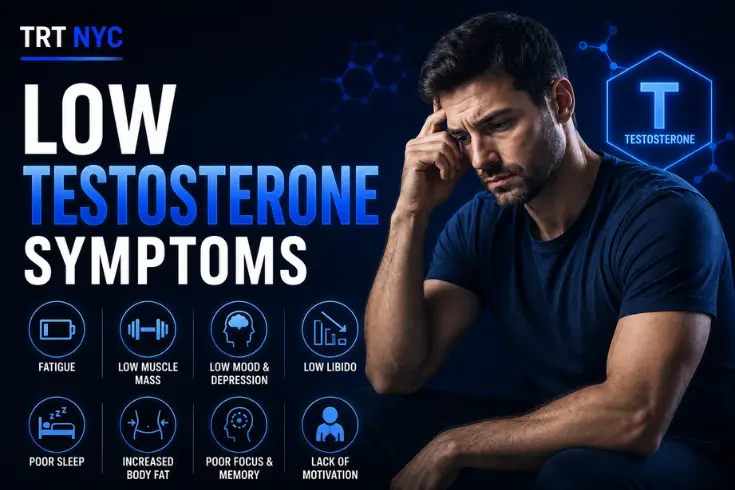
Before anything, see if your symptoms fit fatigue, low libido, brain fog, weight gain, low mood, or weak workouts. These are the classic low testosterone symptoms. Symptoms alone don’t confirm it, but they tell you whether testing is worth it.
Step 2: Get baseline bloodwork
Testosterone is diagnosed by a morning blood test (levels peak in the morning), ideally on two days. A proper panel includes total and free testosterone, LH/FSH, SHBG, estradiol, hematocrit, and PSA. You can use an at-home testosterone test kit or a local lab, here’s which test to get. Total testosterone consistently below ~300 ng/dL with symptoms is the threshold for treatment.
Step 3: Choose a licensed, legitimate telehealth provider
This is the step that makes it “safe.” Pick a provider with real licensed clinicians, required bloodwork, transparent pricing, and ongoing monitoring (see the red-flag table below). For the legal side of getting testosterone online, see how to get testosterone online safely and legally.
Step 4: Complete your online consultation
You’ll review your symptoms, history, and lab results with the clinician over video or secure messaging. Be honest about your health history and goals (including fertility, see Step 6 cautions).
Step 5: Get your prescription and medication
If your labs confirm low testosterone, the provider prescribes treatment, usually injections, gel, or cream shipped to your door. The exact dose is set by your prescriber and adjusted from your labs. Never start testosterone without a prescription or buy it from no-prescription sites.
Step 6: Follow your monitoring schedule
Safety lives in the follow-ups. Expect repeat labs around 6 weeks, 3 months, then every 3–6 months in year one tracking testosterone, hematocrit, estradiol, and PSA. Your dose is fine-tuned over time.
How to Choose a Safe, Legitimate Telehealth TRT Provider
The difference between safe and dangerous telehealth TRT is the provider. Use this checklist:
| 🚩 Red flags (avoid) | ✅ Green flags (safe) |
|---|---|
| “No prescription needed” | Requires a valid prescription |
| Skips blood tests | Requires baseline + follow-up labs |
| No named licensed clinicians | Real, verifiable licensed providers |
| No follow-up or monitoring | Scheduled monitoring plan |
| Hidden pricing, “guaranteed” results | Transparent pricing, realistic claims |
| Ships from overseas, no pharmacy | Licensed US pharmacy |
If a service hits any red flag, stop; it’s a safety and legal risk, since testosterone is a controlled substance that legally requires a prescription.
How to Start TRT Safely Through Telehealth in NYC
If you’re in New York City, telehealth TRT works the same way with two local notes. First, your provider must be licensed in New York to prescribe to you. Second, your bloodwork is easy to arrange: an at-home kit shipped to your apartment, or a quick draw at a nearby lab (Quest/Labcorp locations are everywhere in NYC). After that, the consult, prescription, and follow-ups all happen online, and medication ships to your address, no commuting across the city for every visit. This is why many NYC men choose telehealth: same monitoring, far less hassle.
How to Maximize Your TRT Results on Telehealth
Starting safely is half the job, getting results is the other half. To get the most from telehealth TRT:
- Stay consistent with your dosing schedule — steady levels beat skipped doses.
- Do your follow-up labs on time — that’s how your dose gets optimized.
- Sleep 7–8 hours and strength train — both amplify TRT’s effects (see the TRT workout plan).
- Lose excess belly fat — it converts testosterone to estrogen.
- Watch estrogen — if you feel bloated or moody, ask about estradiol before assuming you need an aromatase inhibitor.
Most men feel more energy and libido in 3–6 weeks; here’s how TRT restores energy and libido and what the timeline looks like.
Telehealth TRT vs In-Person: Which Is Safer?
Both are safe when monitoring is done right. Here’s how they compare:
| Factor | Telehealth TRT | In-person clinic |
|---|---|---|
| Convenience | High — from home | Requires visits |
| Cost | Often lower, transparent | Can be higher |
| Monitoring | Same labs, done remotely | In-clinic labs |
| Best for | Straightforward low-T cases | Complex/high-risk cases |
| Safety | Equal if labs + prescription required | Equal |
The takeaway: for most healthy men with clear low-T symptoms, telehealth is just as safe and more convenient. Complex cases (heart disease, prostate issues, fertility goals) may be better in person.
Safety, Monitoring & Who Should Be Cautious
Testosterone is a controlled substance, and getting it without a prescription is both illegal and dangerous (counterfeit/contaminated product is common). Even with a legit provider, some men need extra caution or in-person care first: those with prostate or breast cancer, untreated severe sleep apnea, high hematocrit, uncontrolled heart failure, men actively trying to conceive (TRT can suppress fertility), and anyone under 18. Tell your provider your full history and current medications. For the legal framework around buying online, the DEA classifies testosterone as a Schedule III controlled substance, meaning a prescription is mandatory.
A Realistic Example
A 42-year-old with months of fatigue and low libido orders an at-home test that comes back around 250 ng/dL. He picks a telehealth provider that requires a confirmatory morning lab and a video consult with a licensed clinician. His prescription ships to his door, and he books follow-up labs at 6 weeks and 3 months. By month three he’s in a healthy range with normal hematocrit, feeling sharper and stronger, all without a single in-person clinic visit.
The Bottom Line
Starting TRT safely through telehealth comes down to doing it the legitimate way: confirm low testosterone with morning bloodwork, choose a licensed provider that requires labs and a prescription, treat only if your levels are low, and keep up with monitoring. Skip any site that offers testosterone without a prescription or blood test. Done right, telehealth TRT is as safe as in-person care and far more convenient.
👉 First step: check where your testosterone actually stands. Compare the best at-home testosterone test kits, then read how to get testosterone online safely and legally to choose the right path.
Frequently Asked Questions
Is telehealth TRT legal?
Yes, telehealth TRT is legal when a licensed provider evaluates you, requires bloodwork, and writes a prescription. Testosterone is a controlled substance, so the prescription is mandatory. Sites selling it without a prescription are operating illegally.
Do you need a prescription for online TRT?
Yes, always. Testosterone is a Schedule III controlled substance, so any legitimate telehealth provider requires a prescription based on your labs. “No prescription needed” is a clear sign of an illegal, unsafe operation.
Can you start TRT without an in-person visit?
Yes. A licensed telehealth provider can diagnose low testosterone from morning bloodwork (done at home or a local lab) and a virtual consultation, then prescribe and ship treatment. In-person care is only needed for complex or high-risk cases.
How do I know if an online TRT clinic is legit?
Look for required bloodwork, real named licensed clinicians, a valid prescription, ongoing monitoring, transparent pricing, and a licensed US pharmacy. Avoid any clinic with “no prescription,” no labs, hidden pricing, or guaranteed results.
How much does telehealth TRT cost?
Most telehealth TRT is cash-pay and transparent, often a startup package (labs + first month) plus a monthly plan that bundles medication, visits, and follow-up labs. Injections are usually the most affordable option. See the cost of TRT for ranges.
How fast can you start TRT through telehealth?
Often within a week or two the timeline mostly depends on how quickly you complete your bloodwork. Once labs are reviewed and you’re approved, the prescription ships quickly. No legitimate provider skips labs to go faster.
Written by the TRT NYC Editorial Team. Reviewed against current clinical guidelines (Endocrine Society) and DEA controlled-substance rules. Last updated: June 2026.
Medical disclaimer: This article is for educational purposes only and is not medical advice, diagnosis, or treatment. trtnyc.com is an independent informational resource, not a medical provider, and reading it does not create a doctor–patient relationship. Always consult a licensed healthcare provider before starting testosterone therapy. Individual results vary.