
What Testicle Massage Actually Does For Your Health
 By Trevor Jaxon
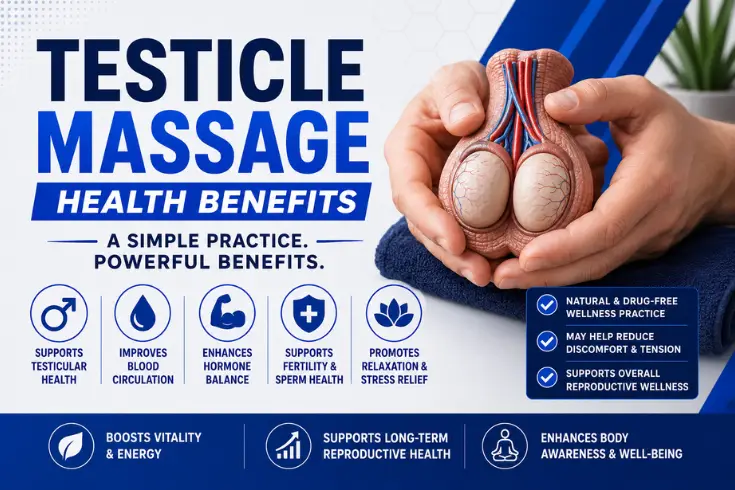
Testicle massage is one of the more searched topics in men’s health, and there are real physiological reasons for that. The testicles produce both testosterone and sperm, and gentle massage may support local circulation, reduce scrotal tension, and build the anatomical awareness that makes self-examination meaningful. Potential benefits include circulation support, influence on testosterone-producing Leydig cells, stress reduction, and earlier recognition of lumps or changes that may signal a health problem.
Clinical research specifically on testicle massage is limited. That caveat matters. What is supported is the underlying physiology, and understanding how the testicles work is what gives the practice a rational basis.
What follows is a grounded look at what the science actually says, what benefits have a credible physiological foundation, and how to approach this as a real health habit rather than a wellness trend.
Why the testicles are central to men’s hormonal health
The testicles serve two functions that directly affect how a man feels day to day. They produce testosterone and they produce sperm. Both depend heavily on an adequate blood supply and a stable hormonal environment.
Testosterone inside the testicles is made by specialized cells called Leydig cells. These cells respond to signals from the pituitary gland and convert cholesterol into testosterone through a series of enzymatic steps, as documented in the NCBI StatPearls reference on Leydig cell histology. Leydig cell function is the primary driver of circulating testosterone in men.
Blood flow to the testicles is not just a passive background condition. A study indexed in PubMed found that testicular circulation directly limits how much testosterone can leave the testicle and enter systemic circulation. When blood flow to the area is reduced, less testosterone moves into the bloodstream regardless of how active the Leydig cells are. This is the physiological link that gives testicular massage its most credible argument.
Understanding these basics also helps men recognize when something is clinically off. The signs of low testosterone covers what declining hormone levels look like in practice and when they are worth having evaluated by a provider.
How blood flow to the testicles may influence testosterone levels
Massage increases local blood flow. That is not specific to the testicles. It is a basic effect of manual pressure on soft tissue throughout the body. What makes it relevant here is the direct relationship between testicular circulation and testosterone output.
This does not mean that massage will raise your serum testosterone to a clinically meaningful or lasting degree. There is no controlled trial demonstrating that. What it means is that supporting circulation to a hormone-producing organ is not an unreasonable practice, and it aligns with established testicular physiology.
If your testosterone is clinically low, the starting point is bloodwork and a conversation with a licensed provider, not a self-care routine. A clear breakdown of what normal testosterone levels look like for men at different ages gives you the context to understand where your own numbers may stand before that conversation.
What the research says about testicle massage and sperm health
Research linking testicle massage directly to improved sperm parameters is limited. What is established is that spermatogenesis, the process by which sperm are produced, is highly dependent on adequate testicular blood flow and precise temperature regulation. Sperm develop in the seminiferous tubules of the testicles, which require a temperature a few degrees below core body temperature and a sustained blood supply, as described in the NIH overview of spermatogenesis.
Better circulation to the testicular tissue supports the environment in which sperm mature. Direct research connecting massage to measurable improvements in sperm count or motility has not been done in rigorous clinical settings, but the physiological rationale is not unfounded.
Men managing fertility concerns alongside a low testosterone diagnosis will find the two issues often intersect in ways that require careful planning. The relationship between testosterone therapy and fertility has its own considerations, and working with a provider who understands both goals is essential.
The case for regular testicular self-examination
One of the clearest documented benefits of handling your testicles regularly is the anatomical awareness it builds, and that awareness has real clinical value. Testicular cancer is the most common solid tumor in men between the ages of 15 and 35, and it is among the most treatable when caught at an early stage.
The National Cancer Institute states that most testicular cancers are first discovered by men themselves, either by chance or during self-examination. There is no standard population-wide screening program for testicular cancer, which means the burden of early detection falls on the individual. Men who examine themselves monthly have a genuine advantage over men who do not.
A regular massage habit is, in practice, a regular self-examination habit. Becoming familiar with the normal size, shape, and texture of your testicles makes it far more likely that you will notice something that has changed. Any new lump, hardness, or shift in size should be evaluated by a provider promptly, not watched to see if it resolves.
How chronic stress suppresses testicular function
Cortisol, the stress hormone the body releases in response to sustained pressure, directly suppresses the pituitary signals that drive Leydig cell activity. This means chronic stress is not just bad for mood and sleep. It actively works against testosterone production at the hormonal level.
Massage of any kind engages the parasympathetic nervous system, which governs rest and recovery. Scrotal tissue has a high concentration of nerve endings and responds to gentle pressure in ways many men find measurably calming. Whether that stress-reduction effect meaningfully shifts testosterone over time has not been tested in controlled trials, but the mechanism linking chronic stress to suppressed testosterone is well established in men’s endocrinology.
Men experiencing fatigue, reduced libido, low mood, or disrupted sleep alongside declining testosterone levels may find that addressing stress as part of a broader health approach makes a real difference. If those symptoms are persistent, a hormone panel with a licensed provider is worth doing rather than waiting.
How to do this safely and what to avoid
Safety matters with any practice involving sensitive anatomy. Gentle is the operative word. The testicles are highly sensitive structures, and pressure that is even slightly too firm can cause significant pain and potential injury. Start with a warm shower or bath. Heat relaxes the scrotal tissue and makes the area easier to examine comfortably. Use clean hands.
A small amount of fragrance-free oil or water-based lubricant can reduce friction if preferred. Roll each testicle gently between the thumb and forefingers. The goal is steady, light contact that promotes circulation and lets you feel for any changes in texture, shape, or size. You are not pressing, compressing, or pulling. Two to three minutes per side is enough.
- Do not massage if you have acute pain, visible swelling, or redness in the area.
- Do not massage if you have a lump that has not yet been evaluated by a provider.
- Do not use any device or implement beyond your hands.
If you have a varicocele, which is an enlargement of the veins within the scrotum, speak to your urologist or men’s health provider before starting a self-massage routine. That condition warrants specific guidance rather than a general recommendation.
Making testicular health part of your regular routine
Testicle massage is a low-risk, accessible self-care habit with a reasonable physiological basis and a clear benefit in terms of self-examination awareness. It is not a clinical treatment, and it will not reverse a documented testosterone deficiency on its own. But for men who are not regularly examining themselves or paying attention to testicular health, it is a concrete and practical starting point.
Men in New York dealing with low testosterone symptoms, fertility questions, or declining energy have access to licensed providers who can run proper bloodwork and give them real answers. A guide to low testosterone symptoms lays out what to watch for across both physical and psychological signs, which is useful before any provider appointment. For men who have already confirmed low levels and want to understand clinical options, the breakdown of benefits of testosterone replacement therapy is a useful next step.
A self-care habit is one part of the picture. A clinical evaluation is what tells you what is actually going on.
Frequently asked questions about testicle massage and men’s health
Can testicle massage raise testosterone levels?
There is no clinical trial demonstrating that testicle massage raises serum testosterone to a meaningful or lasting degree. The physiological argument is that improved blood flow to the testicles may support Leydig cell activity, since research has shown that testicular circulation directly limits how much testosterone enters the bloodstream. That gives the practice a credible basis in theory, but it does not make it a treatment for low T. If your levels are clinically low, a licensed provider can evaluate your options, including testosterone replacement therapy.
How often should you examine your testicles?
Once a month is the generally recommended frequency. The best time is during or after a warm shower, when the scrotal skin is relaxed and the anatomy is easier to feel clearly. Monthly consistency builds the familiarity with your own baseline that makes it possible to notice when something has changed, which is the primary clinical value of the habit.
Is testicle massage safe for most men?
For most healthy men, gentle testicular massage is safe when performed correctly, meaning light manual pressure, warmth, and clean hands. Do not massage if you have acute pain, swelling, redness, a known varicocele without provider clearance, or a lump that has not been evaluated. Pain during or after is a clear signal to stop and see a provider rather than continue.
Can testicle massage improve fertility or sperm quality?
Direct clinical research on massage and sperm parameters is limited. The physiological rationale is that better circulation to the testicular tissue supports the environment in which sperm develop, since spermatogenesis depends heavily on blood supply and precise temperature regulation. Fertility outcomes depend on many variables beyond local circulation, and men with fertility concerns should work with a reproductive urologist or men’s health specialist who can assess sperm health directly.
What should I do if I find a lump during a self-exam?
See a provider as soon as possible, ideally within a few days rather than waiting to see if it changes. A painless lump that is firm, attached to the testicle itself rather than floating freely in the scrotum, or that has recently appeared or grown, should be evaluated promptly. The National Cancer Institute confirms that most testicular cancers are first discovered through self-examination, and early-stage detection is associated with significantly better outcomes.
This article is for general educational purposes only and is not a substitute for medical advice. Readers should consult a qualified healthcare provider before making any decisions about their health or treatment.