Does TRT Make You Aggressive? Roid Rage Myth Explained
 By Tejanshu Jaluthria
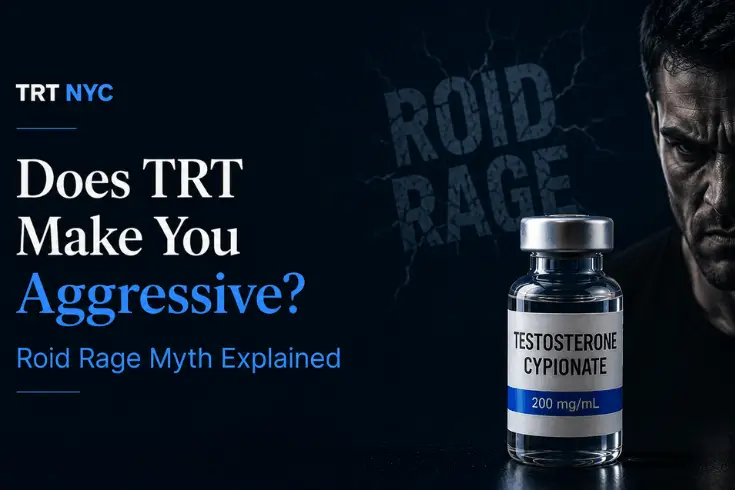
At proper therapeutic doses, TRT does not typically make you aggressive in fact, it often improves mood, irritability, and well-being by correcting low testosterone. “Roid rage” is linked to high-dose anabolic steroid abuse, not medical TRT. Some men feel mood swings during dose changes or if estrogen is off, but stable, monitored TRT usually steadies mood.
The “testosterone makes men angry” idea is one of the most persistent myths about TRT. Here’s what the evidence and clinical experience actually show. (For the full overview, see our complete TRT guide.)
Does TRT Make You Aggressive?
For most men on properly dosed, monitored TRT No. Restoring testosterone from low to normal typically makes men feel better: more stable, less irritable, less low. Irritability and short temper are actually common low testosterone symptoms, so correcting a deficiency often reduces aggression rather than causing it. Improved mood is a recognized benefit of TRT.
The “Roid Rage” Myth: Abuse vs Therapy
“Roid rage” comes from anabolic steroid abuse using doses far above normal, often without supervision. That’s a completely different scenario from medical TRT, exactly the distinction explained in TRT vs steroids and toxic testosterone in men. Supraphysiologic levels can affect mood and aggression; therapeutic levels that simply restore normal testosterone do not carry the same reputation. Conflating the two is the root of the myth and it’s why even muscle-focused dosing (the topic of will 100mg build muscle) should stay medically guided.
How TRT Usually Affects Mood
Far from causing rage, TRT commonly improves mood, motivation, and emotional stability when it corrects a real deficiency. Low testosterone is associated with low mood and irritability overlapping with the question of low testosterone vs depression and restoring it often lifts those symptoms. For many men, “calmer and more even” is the typical experience, not “angrier.”
When TRT Can Cause Mood Swings
That said, mood changes can happen in specific situations:
| Trigger | Why it affects mood |
|---|---|
| Level swings | Big peaks/troughs from infrequent high doses |
| Estrogen imbalance | High or crashed estrogen affects mood — see high estrogen on TRT |
| Dose too high | Excess testosterone can affect irritability |
| Early adjustment | Hormones settling in the first weeks |
These are usually fixable by smoothing the dose, balancing estrogen, and monitoring they aren’t inherent to TRT, and they fall under standard TRT side effects management.
How to Keep Mood Stable on TRT
- Use a steady dose/frequency smaller, more frequent doses avoid big swings.
- Keep estrogen balanced not too high, not crashed.
- Don’t megadose more isn’t better for mood.
- Monitor with bloodwork, see what testosterone test you need.
- Tell your doctor about persistent mood changes so the protocol can be adjusted.
The Bottom Line
Does TRT make you aggressive? At proper therapeutic doses, generally no, it more often improves mood and reduces the irritability that comes with low testosterone. “Roid rage” is a product of high-dose steroid abuse, not medical TRT. Mood swings, when they happen, usually trace to level swings, estrogen imbalance, or too high a dose. All manageable with steady dosing and monitoring.
👉 Keep your levels steady and your mood on track, monitor your testosterone with an at-home test kit and review any mood changes with a licensed provider.
Frequently Asked Questions
Does TRT make you aggressive?
At proper therapeutic doses, generally no. TRT often improves mood and reduces the irritability tied to low testosterone. Aggression is associated with high-dose steroid abuse, not medical TRT, which simply restores normal levels.
Is roid rage real?
“Roid rage” is linked to anabolic steroid abuse — doses far above normal, often unsupervised. Supraphysiologic testosterone can affect mood and aggression, but that’s very different from therapeutic TRT, which doesn’t carry the same reputation.
Does TRT affect mood?
Yes, usually for the better. By correcting low testosterone, TRT commonly improves mood, motivation, and emotional stability. Low testosterone itself is linked to low mood and irritability, so restoring it often lifts those symptoms.
Why am I more irritable on TRT?
Possible causes include level swings from infrequent high doses, estrogen imbalance (too high or crashed), a dose that’s too high, or normal early adjustment. These are usually fixable by smoothing the dose, balancing estrogen, and monitoring.
Does high estrogen on TRT cause mood swings?
It can. Because testosterone converts to estrogen, both high and crashed estrogen can affect mood. Keeping estrogen balanced — not eliminated — is part of stable mood on TRT and should be managed with your doctor.
Can TRT help with mood and depression?
In men with genuinely low testosterone, restoring levels may improve mood and low-energy symptoms that overlap with depression. TRT isn’t a depression treatment on its own, though, so persistent low mood should be evaluated by a doctor.
Written by, Tejanshu Jaluthria. Reviewed against current clinical guidance (Endocrine Society; NIDA on anabolic steroids). Last updated: June 2026.
Medical disclaimer: This article is for educational purposes only and is not medical advice, diagnosis, or treatment. Persistent mood changes should be evaluated by a clinician. trtnyc.com is an independent informational resource, not a medical provider. Always consult a licensed healthcare provider.