Tesamorelin and Testosterone Together: Benefits & Risks
 By Tejanshu Jaluthria
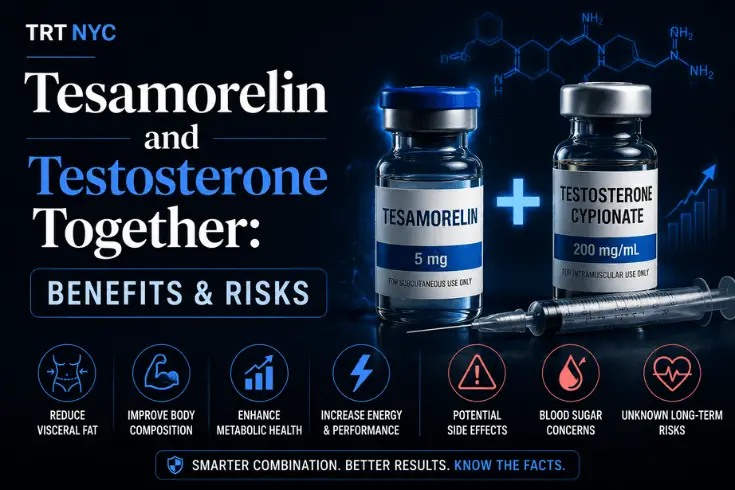
Tesamorelin and testosterone are sometimes used together because they target different systems, tesamorelin is a GHRH peptide that boosts growth hormone and IGF-1 (mainly to cut visceral fat), while testosterone (TRT) restores low testosterone for energy, libido, and muscle. Combined, the goal is better body composition, but both are prescription medications that require medical supervision.
Peptide-plus-testosterone “stacks” are everywhere online, often with big promises and little context. Here’s what tesamorelin and testosterone actually do together, the real benefits, and the risks you need to weigh. (For the testosterone side, our complete TRT guide is the place to start.)
What Is Tesamorelin?
Tesamorelin is a growth-hormone-releasing hormone (GHRH) analog. Instead of injecting growth hormone directly, it signals your pituitary to release more of your own growth hormone, which raises IGF-1. It’s FDA-approved specifically to reduce excess visceral abdominal fat in people with HIV-associated lipodystrophy, every other use (general fat loss, anti-aging, body recomposition) is off-label. It’s a different class of drug from testosterone, and it’s not a steroid.
How Tesamorelin and Testosterone Work Together
The logic behind combining them is that they work on separate pathways:
- Tesamorelin → growth hormone/IGF-1 → targets visceral fat and supports recovery.
- Testosterone (TRT) → restores testosterone for muscle, libido, mood, and energy, the benefits covered here.
Because they don’t overlap, some clinicians and biohackers pair them aiming for leaner body composition than either gives alone. Testosterone helps build and hold muscle (the topic of will 100mg of testosterone a week build muscle), while tesamorelin works on the stubborn deep belly fat. It’s conceptually similar to how people pair TRT with other GH-axis peptides like CJC-1295.
Potential Benefits of Tesamorelin and Testosterone Together
| Goal | Tesamorelin | Testosterone (TRT) |
|---|---|---|
| Visceral fat loss | Primary effect | Indirect (via weight changes) |
| Muscle / strength | Modest, via IGF-1 | Primary effect |
| Energy / recovery | Supports | Strong |
| Libido / mood | Minimal | Primary effect |
On paper the combination addresses both fat and muscle. But “potential” is the key word robust evidence for the combined stack in healthy men is limited, and most data on tesamorelin comes from the HIV population.
Risks and Side Effects
Stacking two hormone-active medications multiplies the things to watch:
- Tesamorelin: injection-site reactions, joint pain, swelling, raised IGF-1, and effects on blood sugar.
- Testosterone: the standard TRT side effects, raised hematocrit, estrogen shifts, and fertility suppression (see TRT and fertility).
- Peptide quality: many tesamorelin products sold online are unregulated “research” peptides of unknown purity — a real safety concern.
This is why both belong under a doctor, with bloodwork, not a DIY online stack.
How It’s Stacked and Dosing Considerations
When done medically, dosing is individualized, TRT is dosed to restore testosterone into a normal range (confirmed by labs — see what testosterone test you need and normal levels), while tesamorelin follows its own injection schedule. There’s no universal “stack protocol,” and copying a dose off a forum is risky. If you’re starting the testosterone side, do it properly, see how to start TRT safely.
Is Tesamorelin and Testosterone Together Right for You?
It may interest men who have confirmed low testosterone and stubborn visceral fat, and who want medically supervised options beyond TRT alone. It’s not for someone just chasing aesthetics with no medical need, and it’s not a beginner move. Start by confirming whether you even have low testosterone symptoms and whether TRT is right for you, then discuss peptides separately with a qualified provider.
The Bottom Line
Tesamorelin and testosterone are used together because they target different systems, tesamorelin for visceral fat via growth hormone, testosterone for muscle, libido, and energy aiming for better body composition. But evidence for the combined stack in healthy men is thin, both are prescription drugs (tesamorelin off-label outside HIV care), and online peptides carry quality risks. Only stack them under medical supervision with bloodwork.
👉 Start with data, not a stack, check your testosterone with an at-home test kit, then talk to a licensed provider about whether TRT — or TRT plus a peptide — fits your goals.
Frequently Asked Questions
Can you take tesamorelin and testosterone together?
Yes, some clinicians prescribe them together because they work on different systems, tesamorelin on growth hormone/visceral fat, testosterone on muscle, libido, and energy. Both are prescription medications that require medical supervision and bloodwork; they shouldn’t be combined on your own.
What does tesamorelin do?
Tesamorelin is a GHRH analog that signals your pituitary to release more of your own growth hormone, raising IGF-1. It’s FDA-approved to reduce excess visceral abdominal fat in people with HIV-associated lipodystrophy; other uses are off-label.
Does tesamorelin build muscle?
Only modestly. By raising growth hormone and IGF-1 it can support lean mass and recovery, but its main, evidence-backed effect is reducing visceral fat. Testosterone is the more direct driver of muscle growth.
Is tesamorelin a steroid?
No. Tesamorelin is a peptide (a GHRH analog) that works on the growth-hormone axis, not an anabolic steroid or testosterone. It’s a completely different class of medication.
What are the side effects of taking tesamorelin and testosterone together?
Combining them stacks the risks: tesamorelin can cause injection-site reactions, joint pain, swelling, raised IGF-1, and blood-sugar effects, while testosterone can raise hematocrit, shift estrogen, and suppress fertility. Medical monitoring is essential.
Is tesamorelin legal and approved?
Tesamorelin is FDA-approved only for HIV-associated lipodystrophy. Using it for general fat loss or body recomposition is off-label, and many products sold online are unregulated research peptides of unknown quality, which is a safety concern.
Written by the TRT NYC Editorial Team. Reviewed against current regulatory and clinical guidance (FDA labeling; Endocrine Society). Last updated: June 2026.
Medical disclaimer: This article is for educational purposes only and is not medical advice, diagnosis, or treatment. Tesamorelin use outside its approved indication is off-label, and both medications require a prescription. trtnyc.com is an independent informational resource, not a medical provider. Always consult a licensed healthcare provider.